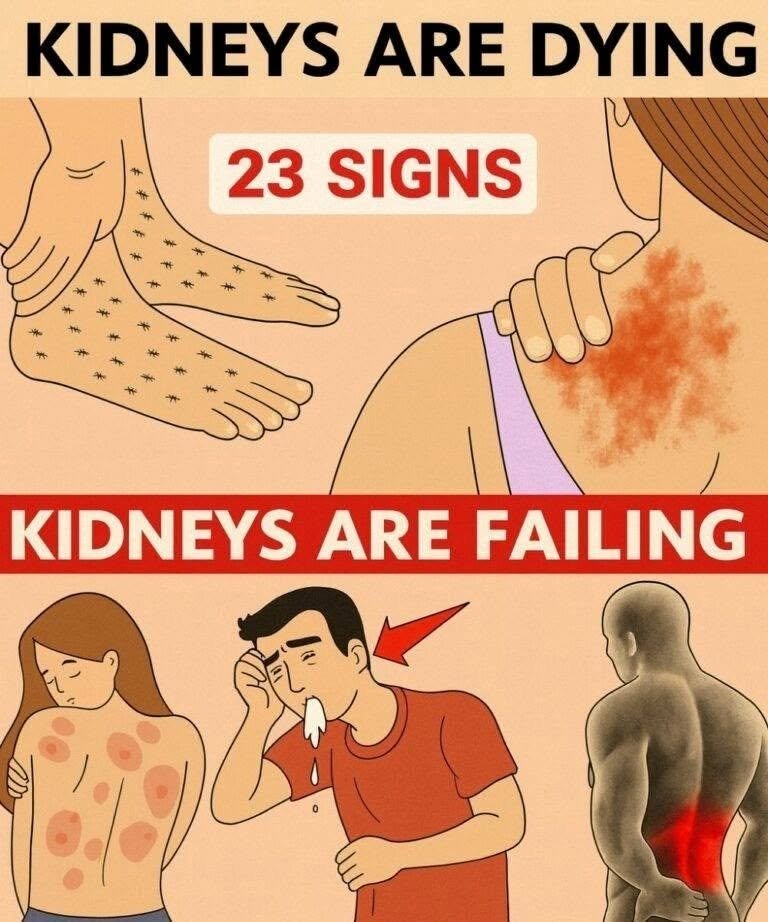
Sensationalist internet lists love throwing around massive numbers like “23 strange signs” to generate clicks, often turning everyday discomforts into terrifying predictions. However, in nephrology and internal medicine, the kidneys are known as quiet, resilient organs—so much so that chronic kidney disease (CKD) is often called a “silent condition” in its early stages because it doesn’t always trigger dramatic symptoms right away.
When kidneys are struggling to filter waste, balance electrolytes, and regulate fluid volume, however, they communicate through several key physiological shifts.
The Clinical Reality: Key Signs Your Kidneys Are Struggling
Rather than two dozen disconnected “strange” quirks, medical diagnostics group renal warning signs into several core physiological categories:
-
Changes in Urination Patterns
-
The Sign: Getting up multiple times during the night to urinate (nocturia), urine that appears foamy or bubbly (indicating protein leakage, or proteinuria), or dark, bloody, or cola-colored urine.
-
Why: Damage to the kidneys’ tiny filtering units (glomeruli) allows proteins or red blood cells to leak into the urine, while impaired concentration abilities alter fluid output.
-
-
Periorbital Edema (Puffiness Around the Eyes)
-
The Sign: Persistent swelling or bags around the eyes, especially in the morning.
-
Why: The kidneys are failing to excrete sodium properly, or a significant amount of protein is being lost through the urine, causing fluid to pool in loose tissues like the face.
-
-
Peripheral Edema (Swelling in the Feet, Ankles, and Hands)
-
The Sign: Shoes feeling suddenly tight or pitting edema in your lower extremities.
-
Why: Reduced kidney function leads to sodium and fluid retention, increasing gravitational fluid pooling in the lower body.
-
-
Persistent, Unexplained Fatigue and Brain Fog
-
The Sign: Deep, bone-weary exhaustion that sleep doesn’t fix, paired with difficulty concentrating.
-
Why: Healthy kidneys produce a hormone called erythropoietin (EPO), which signals bone marrow to make red blood cells. When kidneys struggle, EPO drops, leading to anemia, reduced oxygen delivery, and a buildup of uremic toxins in the blood.
-
-
Uremic Pruritus (Severe, Itchy, Dry Skin)
-
The Sign: An unrelenting, deep skin itch that moisturizers don’t touch.
-
Why: When kidneys fail to filter out minerals like phosphorus and waste products properly, mineral imbalances build up in the blood, triggering severe skin irritation.
-
-
A Metallic Taste in the Mouth or Ammonia Breath
-
The Sign: Food tasting suddenly “off” (especially meat), or a persistent bad taste and ammonia-like breath.
-
Why: A buildup of urea in the blood (uremia) alters taste buds and changes breath odor.
-
-
Nausea, Vomiting, or Loss of Appetite
-
The Sign: Feeling inexplicably nauseous, especially in the mornings, or losing interest in eating.
-
Why: Widespread toxin buildup (uremia) disrupts the gastrointestinal tract and digestive signaling.
-
-
Muscle Cramps and Restless Legs
-
The Sign: Painful nighttime cramps, particularly in the calves.
-
Why: Impaired electrolyte regulation—specifically imbalances in calcium, phosphorus, or magnesium—along with poor fluid balance, makes muscles prone to involuntary spasming.
-
-
Flank or Lower Back Pain
-
The Sign: A dull, deep ache in the middle of the back just below the ribcage (where the kidneys sit).
-
Why: While many backaches are muscular, localized kidney pain can signal conditions like kidney stones, a urinary tract infection (pyelonephritis), or polycystic kidney disease.
-
What You Should Do If You Have Concerns
Because early kidney disease rarely screams for attention, routine wellness screenings are your best defense. A simple blood test (measuring creatinine and calculating eGFR) and a routine urine test (checking for albumin/protein) can evaluate your kidney health long before symptoms appear.
Are you looking at how to support long-term kidney health through diet and hydration, or exploring specific lab markers with your doctor?
