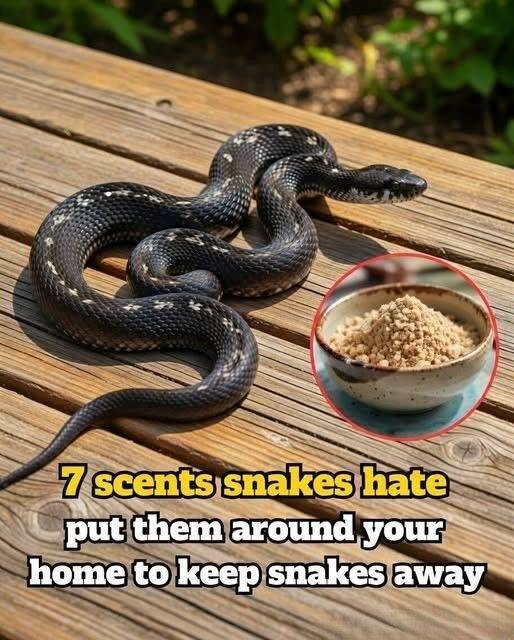
When people look for ways to keep snakes away from their property, popular home and garden advice often turns to strong aromas. Because snakes rely heavily on their sense of smell—flicking their tongues to pick up scent particles in the air and guide them along the ground—certain pungent odors can temporarily disorient or annoy them.
However, herpetologists and pest management experts note that scent repellents alone are rarely a foolproof shield. While strong smells can encourage a passing snake to look elsewhere, they will not stop a snake if a compelling food source (like mice) or a warm nesting spot is waiting on the other side.
The 7 Smells Snakes Dislike (And How They Work)
Here are seven strong aromas that snakes typically avoid, along with realistic guidance on how to use them safely around your home:
1. Peppermint Oil
-
Why They Hate It: Peppermint has an intensely sharp, mentholated scent that overloads a snake’s sensory organs.
-
How to Use It: Mix 15 to 20 drops of pure peppermint essential oil with water and a tiny drop of liquid dish soap (as an emulsifier) in a spray bottle. Mist it around doorways, window sills, foundation cracks, and patio perimeters. Note: Reapply frequently, as rain and sunlight quickly dissipate the scent.
2. Garlic and Onions
-
Why They Hate It: Both contain strong sulfur compounds that produce a pungent odor that snakes find unpleasant.
-
How to Use It: While planting garlic around your garden beds provides a mild deterrent, a more potent method is blending fresh garlic and onions with water, straining the mixture, and spraying it along fence lines or garden borders.
3. Vinegar (White or Apple Cider)
-
Why They Hate It: The high acetic acid content emits a sharp, sour odor that irritates a snake’s sensitive skin and olfactory system.
-
How to Use It: Pour white vinegar around the perimeter of swimming pools, pond edges, or stone pathways where snakes might slither. (Avoid pouring strong vinegar directly onto living grass or plants, as the acid can kill vegetation).
4. Cinnamon and Clove Essential Oils
-
Why They Hate It: These warm, spicy oils contain powerful chemical compounds (like cinnamaldehyde and eugenol) that create a strong burning or irritating sensation when detected by a snake’s Jacobson’s organ.
-
How to Use It: Create a potent spray by mixing a few drops of cinnamon and clove oil with water, or sprinkle cinnamon powder directly across soil pathways where you want to discourage entry.
5. Sulfur (Commercial Snake Repellents)
-
Why They Hate It: Elemental sulfur has a notoriously foul, rotten-egg odor that humans and animals alike try to steer clear of. Many commercial snake granules rely on sulfur as a primary active ingredient.
-
How to Use It: If using commercial sulfur granules, wear gloves and scatter them strictly around the outer property line—never inside living spaces or near children’s play areas, as high concentrations can irritate skin and lungs.
6. Ammonia
-
Why They Hate It: Ammonia mimics the sharp, chemical smell of predator urine and industrial waste, triggering an instinctive avoidance response.
-
How to Use It: Soak rags in pure ammonia and place them in small, open plastic containers (with punched holes in the lids) in damp crawlspaces, sheds, or dark corners of the garage. Caution: Never mix ammonia with bleach or other cleaning products.
7. Marigolds
-
Why They Hate It: While marigolds are famously used as a companion plant to deter garden insects with their earthy, pungent scent, their thick root systems and strong foliage aroma provide a mild deterrent for ground-dwelling pests.
-
How to Use It: Plant borders of marigolds around vegetable gardens or flower beds to create a fragrant perimeter.
The Real Secret to Snake-Proofing Your Yard
If you want to keep snakes away permanently, habitat modification is far more effective than any scent. Snakes are looking for three things: food, water, and shelter. Eliminate those, and they won’t stick around:
-
Clear Out Cover: Keep grass neatly mown, trim low-hanging shrubbery, and elevate firewood piles at least a foot off the ground.
-
Eliminate Rodents: Mice and rats are a snake’s primary food source. Controlling a rodent problem naturally eliminates the main reason a snake visits your yard.
-
Seal Entry Points: Check your foundation, crawlspace vents, and gaps beneath doors, sealing any opening larger than a half-inch with steel wool and mortar.
Are you seeing snakes near your home or garden, or are you looking to proactively landscape your yard to keep pests away?
