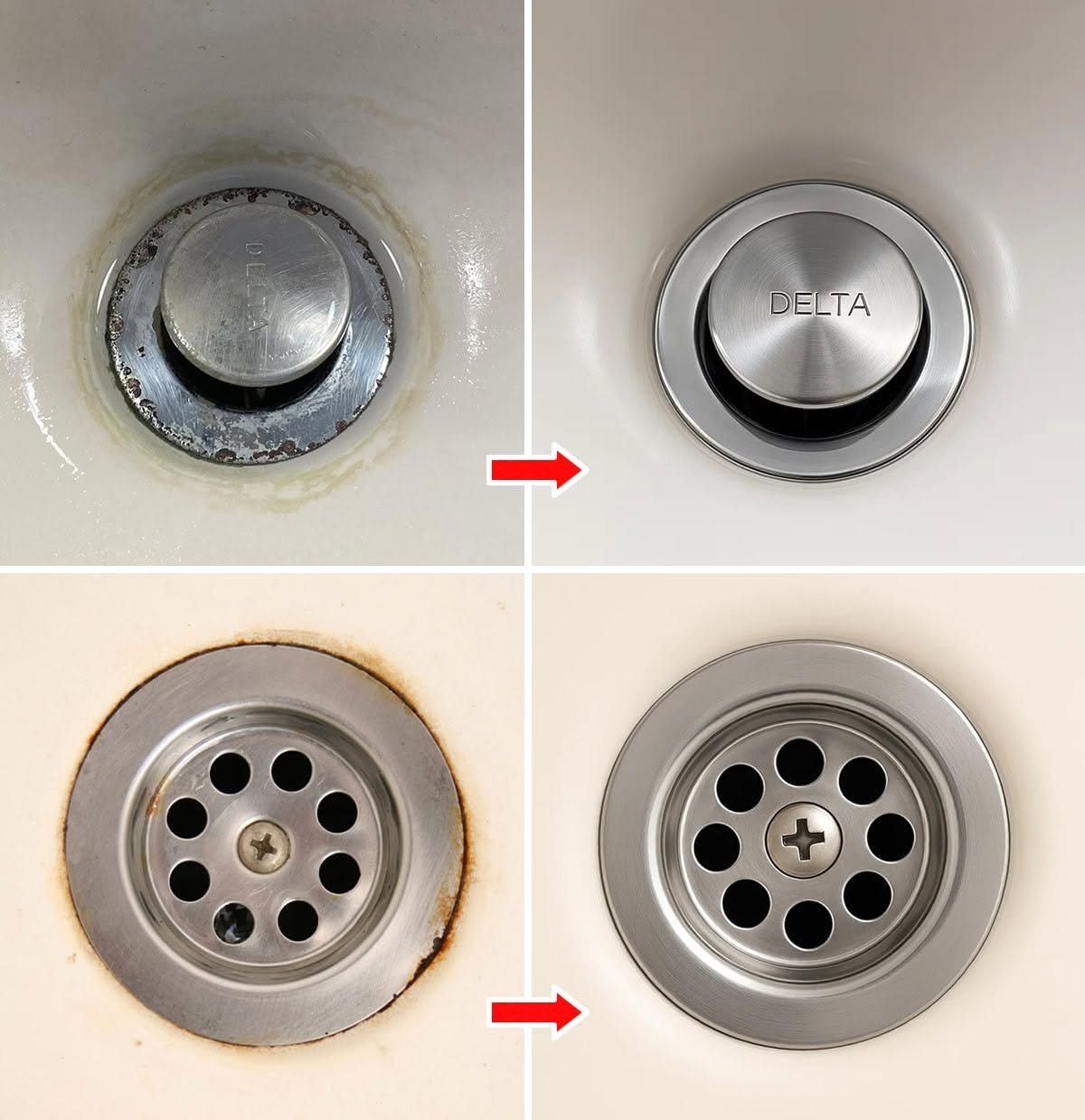
That stubborn dark ring or crusty buildup that forms right where your faucet meets the sink or countertop is usually a combination of mineral scale (limescale/calcium), soap scum, and trapped mold or mildew.
Because water constantly pools in that tight crevice around the base, minerals from hard water dry and leave a rough chalky deposit, which then traps dark dirt and mold spores, creating that ugly ring.
Here is how to safely and effectively dissolve the buildup and make your faucet look brand new without scratching the finish:
The Best Natural Method: The Vinegar Soak
Because the dark ring is largely anchored by mineral deposits, you need a mild acid to break it down. White vinegar is the safest, most effective tool for the job.
-
Soak a Cloth or Paper Towel: Fold a paper towel or a clean rag into a long strip and thoroughly soak it in ordinary white household vinegar.
-
Wrap the Base: Wrap the vinegar-soaked cloth tightly around the base of the faucet where the dark ring is.
-
Let It Sit: Leave the compress in place for 30 to 60 minutes. (If the buildup is very old and thick, you can cover the vinegar cloth with a piece of plastic wrap to keep it from evaporating too quickly).
-
Scrub Gently: Remove the cloth. The acid will have softened and loosened the crust and dark stains. Use an old toothbrush or a soft-bristled nylon brush to scrub around the crevice—the dark ring and mineral crust should lift away easily.
-
Rinse and Dry: Rinse the area thoroughly with clean water and buff it dry with a microfiber cloth to restore the shine.
For Tough Stains: The Baking Soda Paste
If a dark ring or mold stain persists after the vinegar treatment, you can introduce a mild abrasive:
-
Mix equal parts baking soda and hydrogen peroxide (or water) into a thick paste.
-
Apply the paste directly around the base of the faucet.
-
Let it sit for 10 minutes, then gently scrub with an old toothbrush. The baking soda acts as a gentle scouring agent to polish away the remaining discoloration without scratching chrome, brushed nickel, or stainless steel.
Pro-Tip to Prevent It From Coming Back
-
Keep a Microfiber Cloth Handy: Keep a small dry cloth near the sink and give the base of the faucet a quick wipe down after you finish washing your face or doing dishes. Keeping that area dry stops water from pooling and eliminates the environment where minerals and mold thrive.
Are you dealing with hard water buildup on other fixtures like showerheads or glass doors as well?
