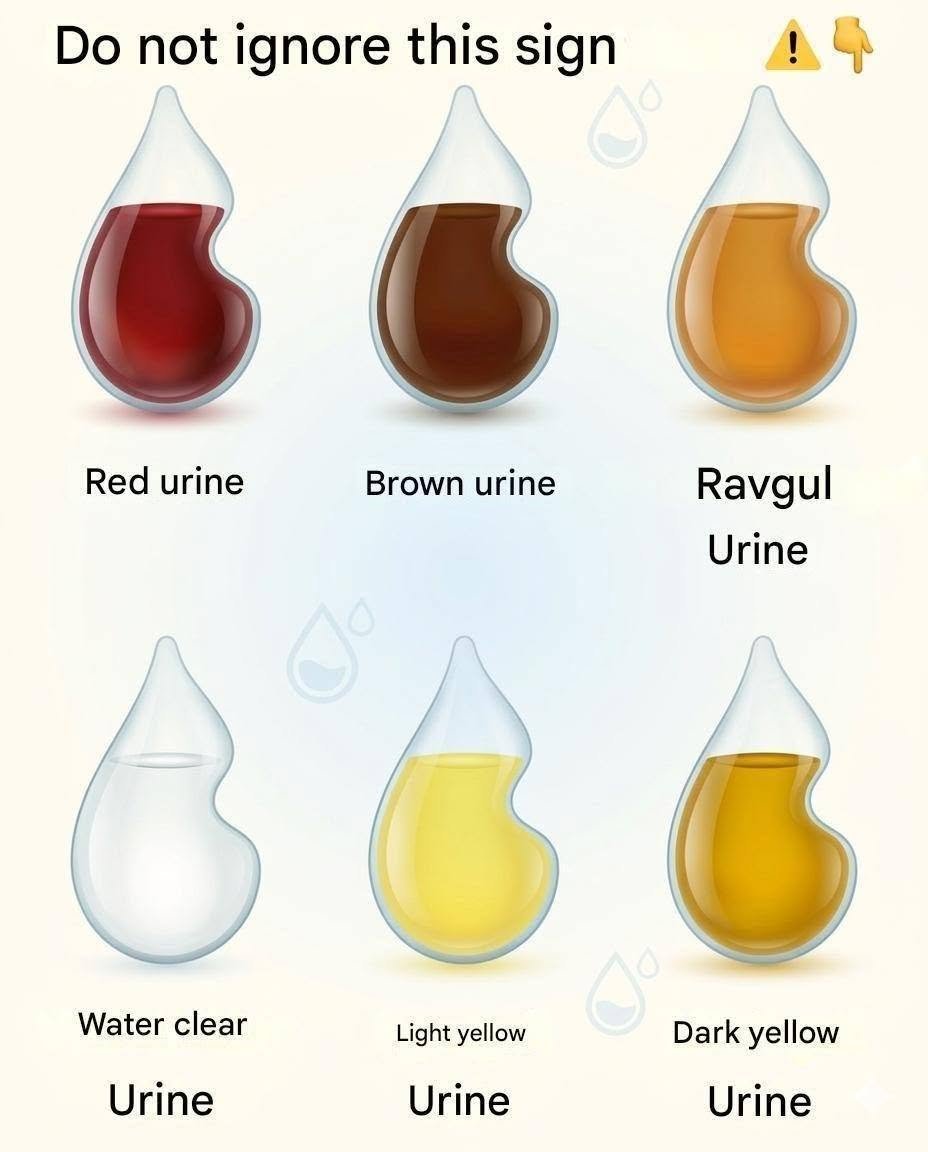
Your urine is a surprisingly informative health report card. Because your kidneys constantly filter waste products, excess minerals, and water from your bloodstream, the color, clarity, and concentration of your urine can tell you a lot about your hydration levels, diet, metabolic health, and even how well your organs are functioning.
Here is a breakdown of what different urine colors mean and when to pay closer attention:
1. Pale Yellow to Transparent (The Healthy Standard)
-
What It Means: This is the ideal range. Pale yellow, straw-colored, or transparent clear indicates you are well-hydrated. The pale yellow pigment comes from urobilin (or urochrome), a natural byproduct created when your body breaks down old red blood cells.
-
Action: Keep up your current fluid intake!
2. Dark Amber or Honey-Colored (Dehydration)
-
What It Means: If your urine looks like dark apple juice, honey, or deep amber, it is a clear sign of dehydration. Your kidneys are conserving water, making your waste products highly concentrated.
-
Action: Drink a large glass of water and focus on steady hydration throughout the day.
3. Cloudy or Milky Urine
-
What It Means: Cloudy urine can be caused by several factors:
-
Urinary Tract Infection (UTI): White blood cells and bacteria fighting an infection often make urine turbid or milky.
-
Kidney Stones or Minerals: Excess mineral crystals (like phosphorus or calcium) can precipitate out of the urine.
-
Dehydration: Highly concentrated urine can sometimes appear cloudy.
-
-
Action: If cloudiness persists for more than a day or is accompanied by burning, frequent urgency, or lower back pain, contact your doctor for a simple urinalysis.
4. Pink, Red, or Brownish-Red
-
What It Means: While this can sometimes be entirely harmless—such as eating beets, blackberries, or rhubarb—it can also indicate blood in the urine (hematuria). Blood can stem from kidney stones, a UTI, an enlarged prostate in men, or, more seriously, bleeding in the urinary tract.
-
Action: Unless you recently ate beets or food dye, any unexplained red or pink urine warrants a prompt call to your doctor to rule out infection, stones, or underlying pathology.
5. Bright Neon Yellow or Orange
-
What It Means:
-
Supplements: High doses of B-complex vitamins (especially vitamin B2 / riboflavin) will turn your urine a striking, harmless neon yellow because your body simply flushes out excess water-soluble vitamins.
-
Medications & Liver Health: Certain medications (like specific antibiotics or anti-inflammatory drugs) can turn urine bright orange. However, persistent dark orange or brownish-orange urine can also indicate an issue with your liver or bile ducts (such as bilirubin spilling into the urine).
-
-
Action: Check your daily multivitamin or supplement bottle; if no vitamins explain it and the color persists, consult your physician.
6. Dark Brown or “Cola-Colored”
-
What It Means: Severely dehydrated urine can look brownish, but true cola-colored urine can signal severe muscle breakdown (rhabdomyolysis), liver disease (like hepatitis or cirrhosis), or internal bleeding.
-
Action: If your urine looks like dark soda and doesn’t clear up after drinking plenty of water, seek medical evaluation promptly.
The Golden Rule of Urine Monitoring
Context matters. If you ate a massive bowl of asparagus, your urine might have a distinct, pungent sulfur smell. If you took a vitamin, it turned neon. But when a color change—especially pink, red, dark brown, or persistent cloudiness—appears out of nowhere and lingers despite proper hydration, it is always wise to let your primary care physician take a look with a quick lab test.
Are you noticing any sudden or unusual changes in your urine color right now, or just curious about what’s normal?
