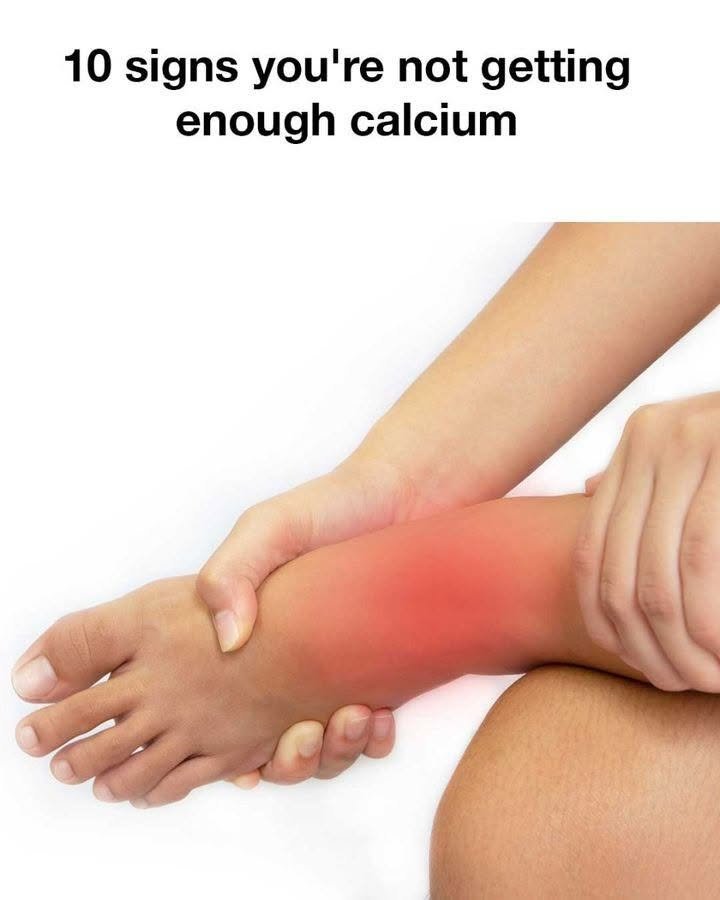
While getting too much calcium (as seen in vitamin D toxicity) poses serious health risks, the opposite problem—chronic calcium deficiency (hypocalcemia)—is also a significant concern. Because calcium is vital not just for bone strength, but for nerve signaling, muscle contraction, and blood clotting, your body will pull calcium directly from your bones if your dietary intake drops too low.
When calcium stores become depleted over time, the body sends subtle—and sometimes startling—warning signs. Here are 10 key signs that you may not be getting enough calcium:
1. Muscle Cramps and Spasms
Calcium plays a direct role in triggering muscle contractions. When calcium levels in the blood drop, your nerves and muscles become hyperexcitable. You might experience painful muscle cramps—particularly in your calves, thighs, and feet—especially at night or during physical activity.
2. Numbness and Tingling in the Extremities
A lack of calcium (paresthesia) profoundly affects the nervous system. One of the classic neurological signs of deficiency is a persistent tingling or “pins and needles” sensation, particularly in the fingers, toes, and around the mouth.
3. Brittle, Weak Nails
Your nails rely on a steady supply of minerals to maintain their structure. If you notice your fingernails splitting, peeling, or breaking with minimal pressure, it can be an outward sign of poor systemic mineral intake, including calcium.
4. Extreme Fatigue and Lethargy
Calcium is deeply involved in cellular energy metabolism. When your body is deficient, you may experience a generalized, heavy sense of fatigue, sluggishness, or a lack of physical stamina that sleep doesn’t seem to fix.
5. Dental Problems and Weak Enamel
Your teeth act as a secondary calcium reservoir for the body. When systemic levels are low, the body may begin leaching minerals from dental structures. This can manifest as weakened tooth enamel, an increased frequency of cavities, or teeth that feel unusually sensitive.
6. Dry Skin and Coarse Hair
Chronic calcium deficiency can take a toll on your integumentary system. People low in calcium frequently report dry, scaly skin and brittle, coarse hair that is prone to breakage or excessive shedding.
7. Bone Weakness (Osteopenia and Osteoporosis)
Because over 99% of the body’s calcium is stored in the bones, a long-term deficiency silently degrades bone density. Over time, this leads to osteopenia (low bone mass) or osteoporosis, making your bones porous, fragile, and significantly more vulnerable to fractures from minor bumps or falls.
8. Severe Premenstrual Syndrome (PMS)
Clinical studies have linked low calcium levels to more intense and uncomfortable PMS symptoms. Insufficient calcium can amplify mood swings, fluid retention, irritability, and painful abdominal cramping during the menstrual cycle.
9. Difficulty Swallowing (Dysphagia)
In more advanced or severe cases of hypocalcemia, poor muscle coordination affects the esophagus. Some individuals experience dysphagia—a sensation of food getting stuck in the throat or difficulty coordinating the muscles required to swallow safely.
10. Brain Fog and Mood Changes
Neurologically, low calcium can impact neurotransmitter release. This often translates to subtle cognitive shifts, including difficulty concentrating (“brain fog”), unwarranted irritability, anxiety, or low moods.
Supporting Healthy Calcium Levels
If you suspect you aren’t getting enough calcium, the best approach is to look at your diet first. Incorporating dairy products (milk, yogurt, cheese), dark leafy greens (kale, bok choy), sardines with bones, almonds, and calcium-fortified foods can make a big difference.
Note: If you are experiencing persistent muscle spasms, numbness, or bone pain, it is always wise to consult a doctor. A simple blood panel can check your serum calcium levels before you start taking high-dose supplements.
