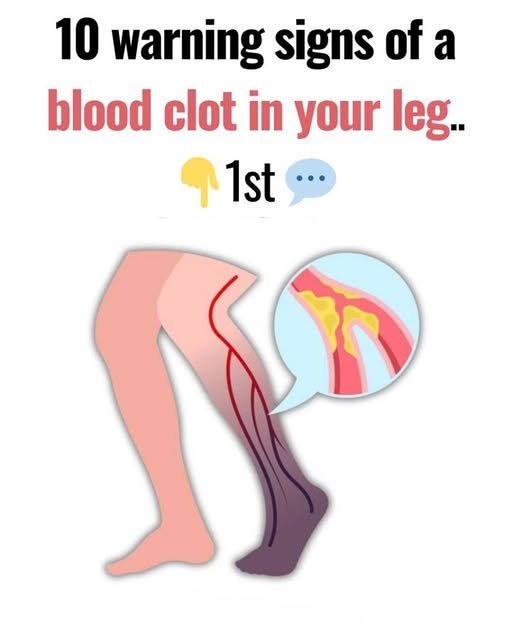
Recognizing the warning signs of a blood clot in the leg—most commonly known as Deep Vein Thrombosis (DVT)—is critically important. If a clot breaks loose, it can travel to the lungs and cause a life-threatening pulmonary embolism.
Here are 10 warning signs of a blood clot in the leg that you should never ignore:
1. Swelling in One Leg
-
What it looks like: Swelling typically occurs in only one leg (though it can occasionally affect both). It may develop suddenly or come on gradually over a few days.
-
Why it happens: The blood clot blocks normal blood flow through the veins, causing fluid to back up and pool in the surrounding tissues.
2. Leg Pain, Cramping, or Tenderness
-
What it looks like: You may feel a persistent ache, throbbing, or cramping sensation in your calf or thigh. It often feels similar to a severe muscle pull or a “charley horse” that won’t go away.
-
Why it happens: The inflammation and pressure caused by the trapped blood irritate the surrounding muscles and nerves.
3. Skin Discoloration (Redness or Paleness)
-
What it looks like: The skin over the affected area may turn noticeably red, purplish, or bluish. In some cases, the skin can appear unusually pale or cool to the touch.
-
Why it happens: Changes in blood flow and oxygen deprivation in the tissue alter the outward appearance of the skin.
4. Increased Warmth or Heat
-
What it looks like: The skin over the painful or swollen part of your leg feels significantly warmer than the surrounding skin or the other leg.
-
Why it happens: The pooling blood and localized inflammation generate extra heat in that specific area.
5. Visible, Enlarged Superficial Veins
-
What it looks like: You might notice veins near the surface of the skin appearing larger, harder, or more prominent than usual around the area of the clot.
-
Why it happens: Blood is being forced to reroute through smaller superficial veins because the main deep vein is blocked.
6. Tenderness to the Touch
-
What it looks like: Pressing gently on your calf muscle or thigh causes sharp pain or extreme tenderness, far beyond what a normal sore muscle would feel like.
7. Pain That Worsens When Walking or Flexing the Foot
-
What it looks like: Standing up, walking, or flexing your foot upward (bringing your toes toward your shin) triggers or sharply intensifies the pain in your calf.
8. Pitting Edema (Indentation Left by Pressure)
-
What it looks like: If you firmly press your thumb into the swollen area of your leg for a few seconds and remove it, the indentation (pit) remains visible for a short time.
9. A Heavy or Aching Sensation
-
What it looks like: A deep, heavy, or dragging feeling in the affected leg, making it feel remarkably tired or difficult to lift.
10. Low-Grade Fever (In Some Cases)
-
What it looks like: A mild, low-grade fever can occasionally accompany a DVT as a systemic response to localized inflammation and tissue irritation.
CRITICAL MEDICAL EMERGENCY:If you suspect you have a blood clot in your leg, do not massage the area (as this can dislodge the clot) and seek emergency medical attention immediately (call emergency services or go to the nearest ER).Seek immediate help if your leg symptoms are accompanied by any signs of a pulmonary embolism (a clot traveling to the lungs), which include:
