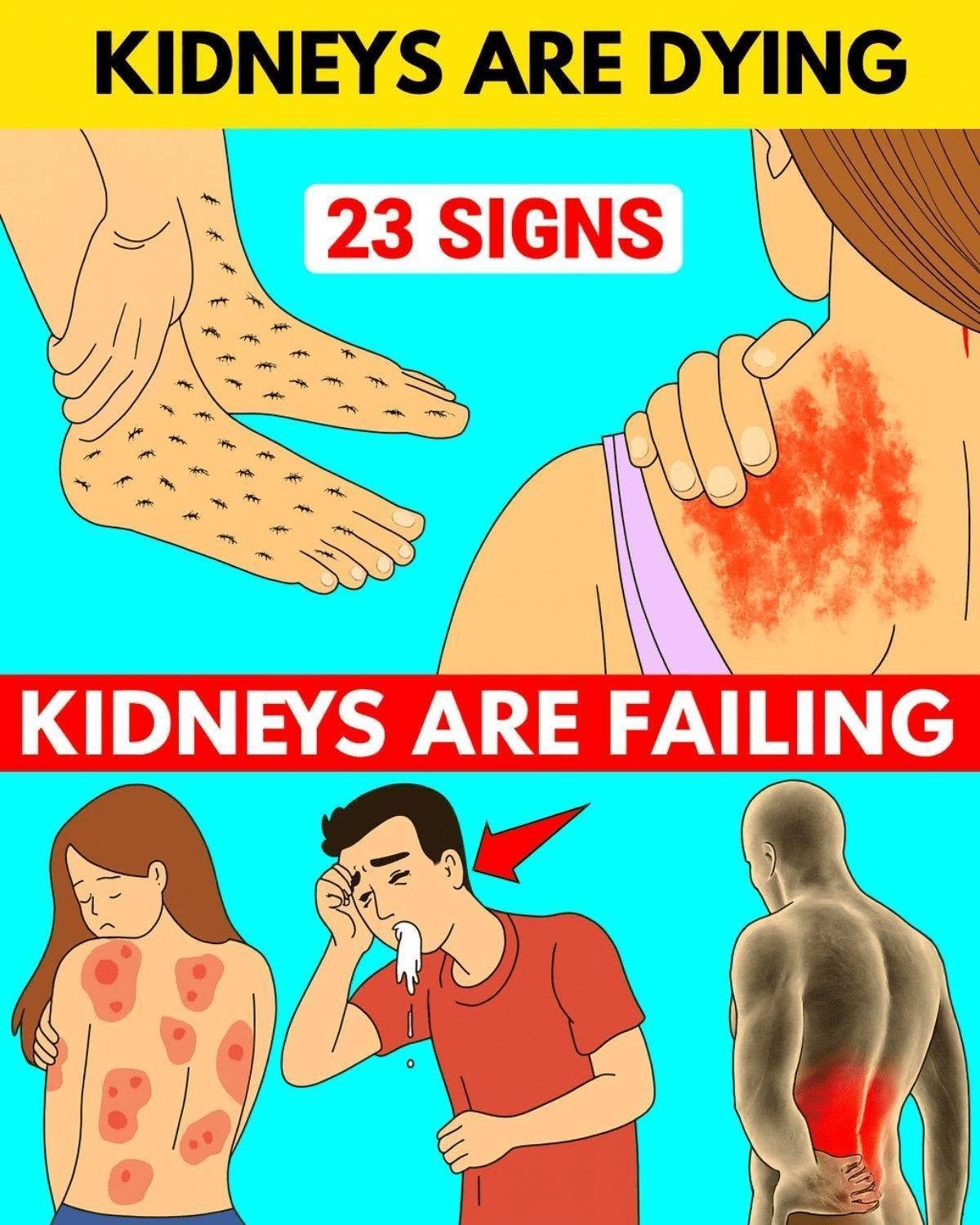
Because the kidneys filter waste, balance fluids, regulate blood pressure, and produce vital hormones, declining kidney function can manifest in subtle, surprising, or seemingly unrelated ways across the entire body. Because early stage chronic kidney disease (CKD) often develops without obvious pain, paying attention to secondary systemic cues is critical.
Here are 23 warning signs that may indicate your kidneys are under strain:
Changes in Urination & Fluid Balance
-
Foamy or Bubbling Urine: Persistent foam—resembling whipped eggs—indicates protein (albumin) is leaking through damaged kidney filters into the urine.
-
Blood in the Urine (Hematuria): Damaged filtering units allow red blood cells to leak into the urine, turning it tea-colored, pink, or brownish.
-
Increased Need to Urinate at Night (Nocturia): When kidney filters are damaged, the urge to urinate increases, particularly during sleep.
-
Puffy Eyes (Periorbital Edema): Leaking protein lowers fluid-retention capacity in blood vessels, causing fluid to pool in delicate tissues like the eyelids.
-
Swollen Feet, Ankles, or Hands: Decreased kidney function leads to sodium and fluid retention, manifesting as gravity-dependent swelling (edema) in lower extremities.
Skin & Sensory Changes
-
Severe, Persistent Itching (Uremic Pruritus): As kidneys fail to remove mineral and metabolic waste, toxins accumulate in the bloodstream, triggering intense, deep skin itching.
-
Metallic Taste in the Mouth (Uremic Fetor): A buildup of urea in the blood (uremia) breaks down into ammonia in saliva, causing a metallic taste and ammonia-scented breath.
-
Changes in Skin Color or Hyperpigmentation: Retained uremic toxins can give the skin a pale, sallow, yellowish, or grayish tint.
-
Dry, Flaky, or Tight Skin: Mineral and fluid imbalances caused by declining kidney health disrupt the skin’s natural moisture barrier.
Neurological & Energy Disruption
-
Unexplained, Deep Fatigue: Damaged kidneys produce less erythropoietin (EPO), a hormone that prompts bone marrow to make red blood cells, leading to anemia and chronic low energy.
-
Brain Fog and Difficulty Concentrating: Toxic buildup combined with anemia reduces oxygen delivery to the brain, causing memory lapses and mental confusion.
-
Trouble Sleeping and Sleep Apnea: High levels of blood toxins disrupt sleep architecture, and fluid retention can constrict upper airways during sleep.
-
Restless Legs Syndrome (RLS): An uncontrollable urge to move the legs, especially at night, is a frequent neurological complication of uremia and nerve irritation.
Gastrointestinal & Metabolic Signs
-
Persistent Nausea and Vomiting: As metabolic waste builds up, the brain’s chemoreceptor trigger zone is activated, leading to recurring nausea.
-
Aversion to Protein or Loss of Appetite: Uremic toxicity often makes high-protein foods (like meat) taste unappealing or bitter.
-
Unexplained Weight Loss: A combination of persistent loss of appetite, nausea, and altered taste can lead to unintended muscle wasting and weight loss.
-
Ammonia-like Breath or Bad Odor: High blood urea nitrogen (BUN) levels cause noticeable changes in breath odor.
Neuromuscular & Cardiovascular Warning Signs
-
Muscle Twitching and Severe Cramps: Imbalances in electrolytes—specifically calcium, sodium, and phosphorus—impair nerve-muscle communication, causing night cramps.
-
Shortness of Breath (Dyspnea): Fluid can build up in the lungs (pulmonary edema), or severe anemia can leave tissues starved for oxygen.
-
Flank or Lower Back Pain: Dull, aching discomfort below the rib cage on one or both sides can signal kidney stones, infections (pyelonephritis), or polycystic kidney disease.
-
Hard-to-Control High Blood Pressure (Hypertension): The kidneys regulate systemic blood pressure; damaged kidneys can release excess renin, driving blood pressure dangerously high.
-
Feeling Constantly Cold: Anemia resulting from low kidney-produced EPO can make an individual feel cold even in warm environments.
-
Gout or Joint Swelling: When kidneys fail to filter out uric acid effectively, uric acid crystals deposit in joints (most commonly the big toe), causing acute, painful swelling.
When to Seek Evaluation
Many of these symptoms can overlap with other medical conditions. If you notice a combination of these signs—especially swelling, changes in urination, or unexplained fatigue—a simple blood test (checking serum creatinine and estimated GFR) and urine test (checking for albumin) can accurately assess your kidney function.
