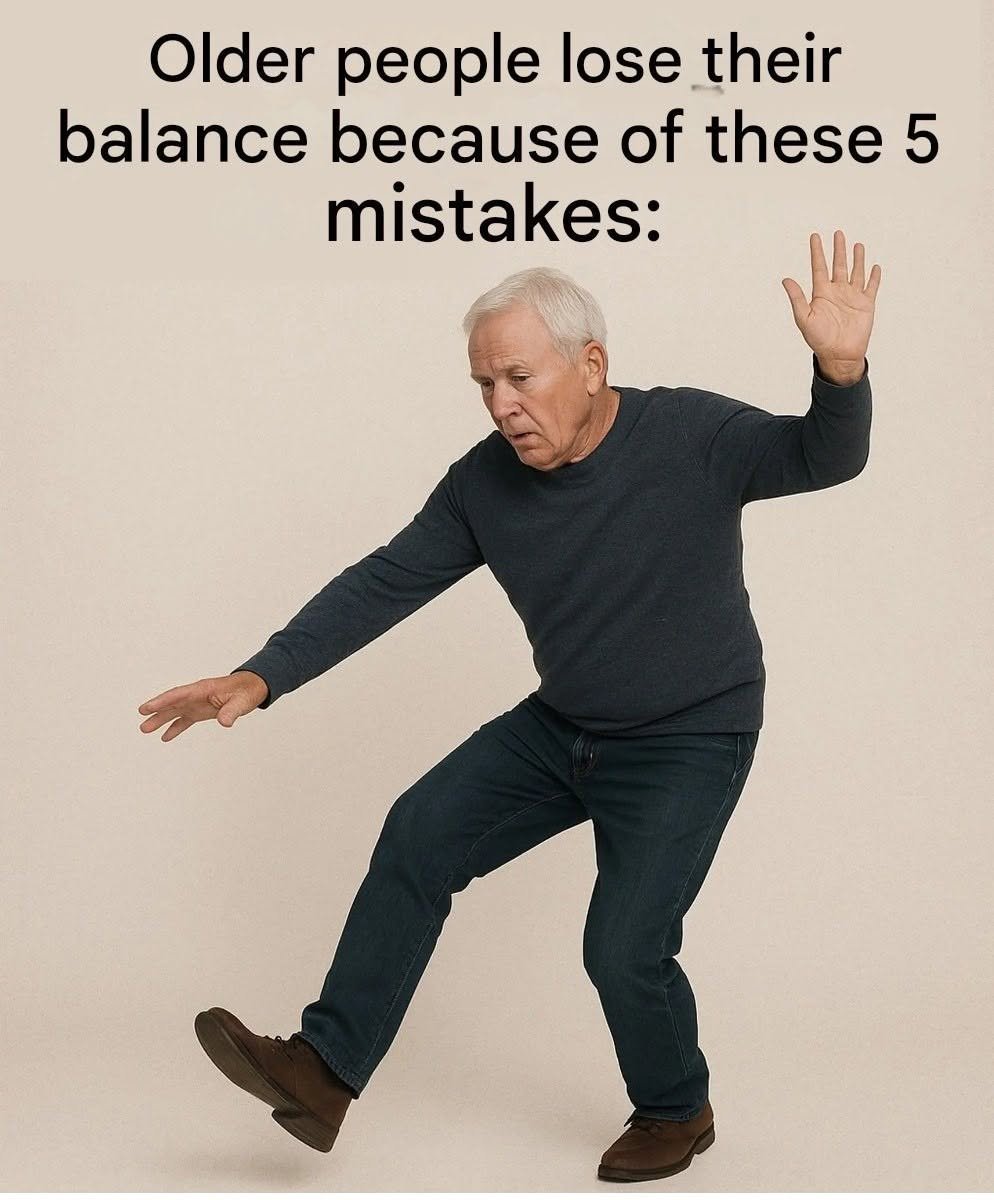
When wellness and senior-care articles highlight common mistakes that cause older adults to lose their balance, they are usually pointing to everyday physical habits, environmental oversights, or unaddressed sensory changes. Maintaining stability relies heavily on three interacting systems: vision, the vestibular system (inner ear), and proprioception (awareness of body position in space).
Let’s look past the alarming headlines and examine five frequent missteps that contribute to balance loss and increased fall risks in older adults.
1. Relying Solely on Seated Rest and Neglecting Lower-Body Strength
-
The Common Mistake: Believing that as you age, you should avoid physical exertion or leg exercises to stay safe.
-
The Clinical Reality: Natural muscle mass declines with age (sarcopenia)—particularly in the calves, quads, and core. When these stabilizing muscles weaken, the body loses its rapid-response capability to make micro-adjustments when footing slips or uneven ground is encountered. Safe, weight-bearing leg and core exercises are essential for maintaining stability.
2. Overlooking Medication Side Effects and Polypharmacy
-
The Common Mistake: Taking multiple prescriptions and over-the-counter medications without regularly reviewing their combined side effects with a physician.
-
The Clinical Reality: Drugs that lower blood pressure (which can cause orthostatic hypotension upon standing), sedatives, antihistamines, and certain antidepressants frequently cause dizziness, lightheadedness, or delayed reaction times. These side effects dramatically impair spatial awareness.
3. Wearing Unsupportive Footwear or Walking in Socks Indoors
-
The Common Mistake: Walking around the house in slick socks, worn-out slippers with no heel structure, or heavy shoes with unbending soles.
-
The Clinical Reality: Feet are packed with sensory receptors that signal to your brain what kind of surface you are standing on. Smooth socks or unsupportive slippers block this vital proprioceptive feedback, making slips on hardwood or tile floors much more likely.
4. Ignoring Subtle Changes in Vision and Hearing
-
The Common Mistake: Assuming gradual blurriness, cataracts, or hearing loss are harmless parts of getting older that don’t need correction.
-
The Clinical Reality: Vision provides immediate spatial orientation. Meanwhile, the inner ear contains both your hearing apparatus and your primary balance organ (the vestibular system). Clinical studies consistently show a strong correlation between untreated hearing loss and an increased risk of falls.
5. Overlooking Common Household Hazards and Poor Lighting
-
The Common Mistake: Assuming familiarity with your home means you don’t need to worry about loose throw rugs, cluttered hallways, or dim night lighting.
-
The Clinical Reality: Even individuals with excellent physical fitness and strength can experience a stumble if an unexpected obstacle is hidden in low light. The nervous system requires adequate time and visual cues to correct a misstep.
