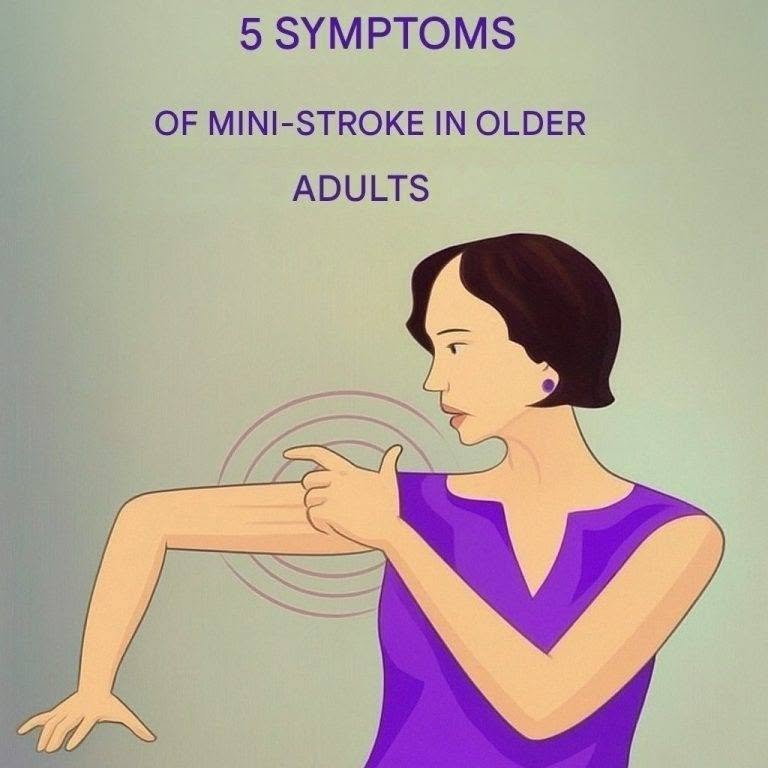
While a Transient Ischemic Attack (TIA)—commonly known as a mini-stroke—causes temporary symptoms that typically resolve within minutes to hours, it is a critical warning sign. In older adults, these fleeting episodes indicate that blood flow to the brain was briefly blocked, signaling a high risk for a major stroke in the near future.
Because older adults may already manage conditions like arthritis, memory changes, or general fatigue, these 5 critical mini-stroke symptoms are often overlooked or attributed to “getting older,” but they should never be ignored:
1. Sudden, One-Sided Weakness or Clumsiness
-
How it manifests: A sudden inability to hold a cup, dropping a utensil, or a leg abruptly “giving out” or feeling unusually heavy while walking.
-
Why it’s ignored: It is frequently mistaken for a pinched nerve, arthritis flare-up, or a temporary loss of balance. However, if the weakness or numbness affects only one side of the body (e.g., one arm or leg) and comes on suddenly, it is a classic TIA red flag.
2. Sudden Speech Glitches or Confusion
-
How it manifests: Brief periods of slurred speech, struggling to find very simple words, or a sudden inability to comprehend what someone else is saying.
-
Why it’s ignored: Family members or caregivers might write this off as a “senior moment,” fatigue, or early memory loss. A TIA-related speech disruption happens abruptly and resolves just as quickly, whereas age-related cognitive changes develop gradually over time.
3. Sudden Vision Loss or “Curtain” Effect in One Eye
-
How it manifests: A sudden, painless blurring or complete loss of vision in one eye, often described as a dark shade or curtain dropping over the field of vision (amaurosis fugax), or sudden double vision.
-
Why it’s ignored: Older adults may assume it is a temporary issue related to cataracts, dry eyes, or eye strain. Because normal vision usually returns within minutes, it is easily brushed aside.
4. Sudden Loss of Balance, Vertigo, or Unsteadiness
-
How it manifests: A sudden, intense wave of dizziness, feeling as though the room is spinning, or an abrupt inability to walk in a straight line without stumbling.
-
Why it’s ignored: Dizziness in seniors is often blamed on low blood pressure, standing up too fast, dehydration, or inner-ear issues. When vertigo occurs suddenly alongside any weakness, numbness, or visual disturbance, it strongly points to a vascular disruption in the brainstem.
5. Sudden Drooping on One Side of the Face
-
How it manifests: One side of the face may feel numb, or the mouth may droop slightly, making a smile look uneven or causing minor drooling while trying to drink.
-
Why it’s ignored: The numbness or tightness may be subtle, and because it usually doesn’t cause physical pain, many people wait to see if it goes away on its own rather than seeking immediate help.
⚠️ What to Do If You Suspect a TIA
Even if every single symptom disappears completely and the individual feels back to 100%, treat a TIA as a medical emergency.
Call emergency services or take them to the nearest emergency department immediately. Early evaluation (including brain imaging and cardiovascular checks) allows doctors to start preventative treatments—such as blood pressure management or blood thinners—dramatically reducing the risk of a full-blown, debilitating stroke in the days and weeks that follow.
