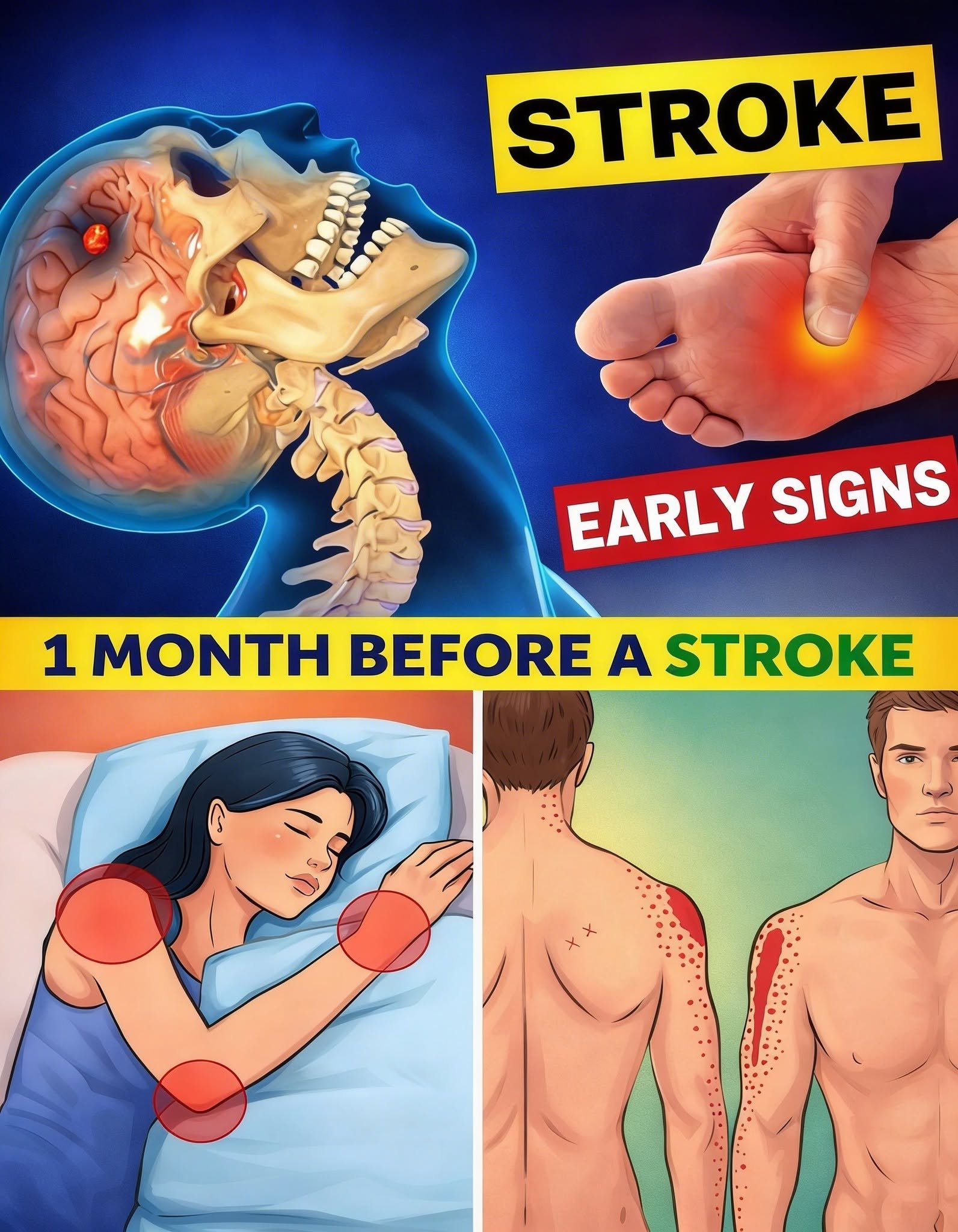
While strokes often occur suddenly, up to 15% of people experience warning signals—often referred to as transient ischemic attacks (TIAs) or “mini-strokes”—in the days or weeks leading up to a full cerebrovascular event. Recognizing these early subtle disruptions and taking active preventive measures can significantly reduce long-term risk.
8 Warning Signs That May Appear Weeks Before a Stroke
-
Transient Weakness or Numbness: Sudden, temporary numbness, tingling, or weakness in a single arm, leg, or one side of the face that resolves on its own.
-
Brief Speech Impairment (Dysphasia): Temporary difficulty speaking, slurred words, or trouble understanding spoken language during routine conversation.
-
Sudden Single or Double Vision Loss: Temporary blurring, double vision, or a brief curtain-like shadow covering vision in one eye (amaurosis fugax).
-
Unexplained Dizziness or Loss of Balance: Unexpected bouts of vertigo, unsteady gait, or loss of coordination without an obvious physical trigger.
-
Sudden, Severe Headaches: Unusually intense, sudden headaches that occur without a clear cause, sometimes accompanied by neck stiffness or facial pain.
-
Unexplained Extreme Fatigue: Persistent, sudden onset of severe lethargy or physical exhaustion as brain tissue experiences subtle changes in perfusion.
-
Sudden Memory Spikes or Confusion: Short bursts of disorientation, spatial confusion, or temporary inability to recall familiar names or places.
-
Difficulty Swallowing (Dysphagia): Brief episodes of coughing, choking, or difficulty steering food/liquids down the esophagus due to transient nerve impairment.
9 Actionable Tips to Lower Stroke Risk
-
1. Control Blood Pressure: Keep blood pressure within optimal ranges (below 120/80 mmHg). Uncontrolled hypertension is the single largest modifiable risk factor for stroke.
-
2. Maintain a Nutrient-Dense, Low-Sodium Diet: Focus on high-potassium, antioxidant-rich foods (like leafy greens, beets, berries, and legumes) while capping sodium intake below 2,000 mg daily to preserve vascular flexibility.
-
3. Stay Consistently Active: Engage in 150 minutes per week of moderate, low-impact aerobic exercise (such as brisk walking or swimming) to improve arterial elasticity and reduce systemic inflammation.
-
4. Manage Blood Sugar Levels: Chronically elevated glucose damages microvascular blood vessel walls over time, doubling stroke risk. Monitor HbA1c levels regularly.
-
5. Optimize Lipid Profiles: Maintain low LDL (“bad”) cholesterol and triglycerides to prevent atheromatous plaque accumulation in the carotid arteries.
-
6. Quit Smoking and Avoid Secondhand Smoke: Nicotine thickens blood and promotes arterial narrowing, while carbon monoxide reduces oxygen capacity in the bloodstream.
-
7. Maintain Hydration: Chronic mild dehydration thickens blood viscosity, making clot formation more likely in narrow or stiffened blood vessels.
-
8. Limit Alcohol Consumption: Excessive alcohol intake raises blood pressure and increases the risk of atrial fibrillation, a major cause of ischemic stroke.
-
9. Screen for Atrial Fibrillation (AFib): Irregular heart rhythms allow blood to pool in the heart chambers, forming clots that can travel directly to the brain. Have irregular pulses evaluated by a physician.
Emergency Response Reminder: The F.A.S.T. Protocol
If acute symptoms occur, every second counts to prevent irreversible brain tissue loss:
-
F – Face Drooping: Ask the person to smile. Does one side of the face droop?
-
A – Arm Weakness: Ask the person to raise both arms. Does one arm drift downward?
-
S – Speech Difficulty: Is speech slurred or strange? Can they repeat a simple sentence accurately?
-
T – Time to Call Emergency Services: Call 911 (or local emergency services) immediately if any of these signs are present, even if they disappear.
