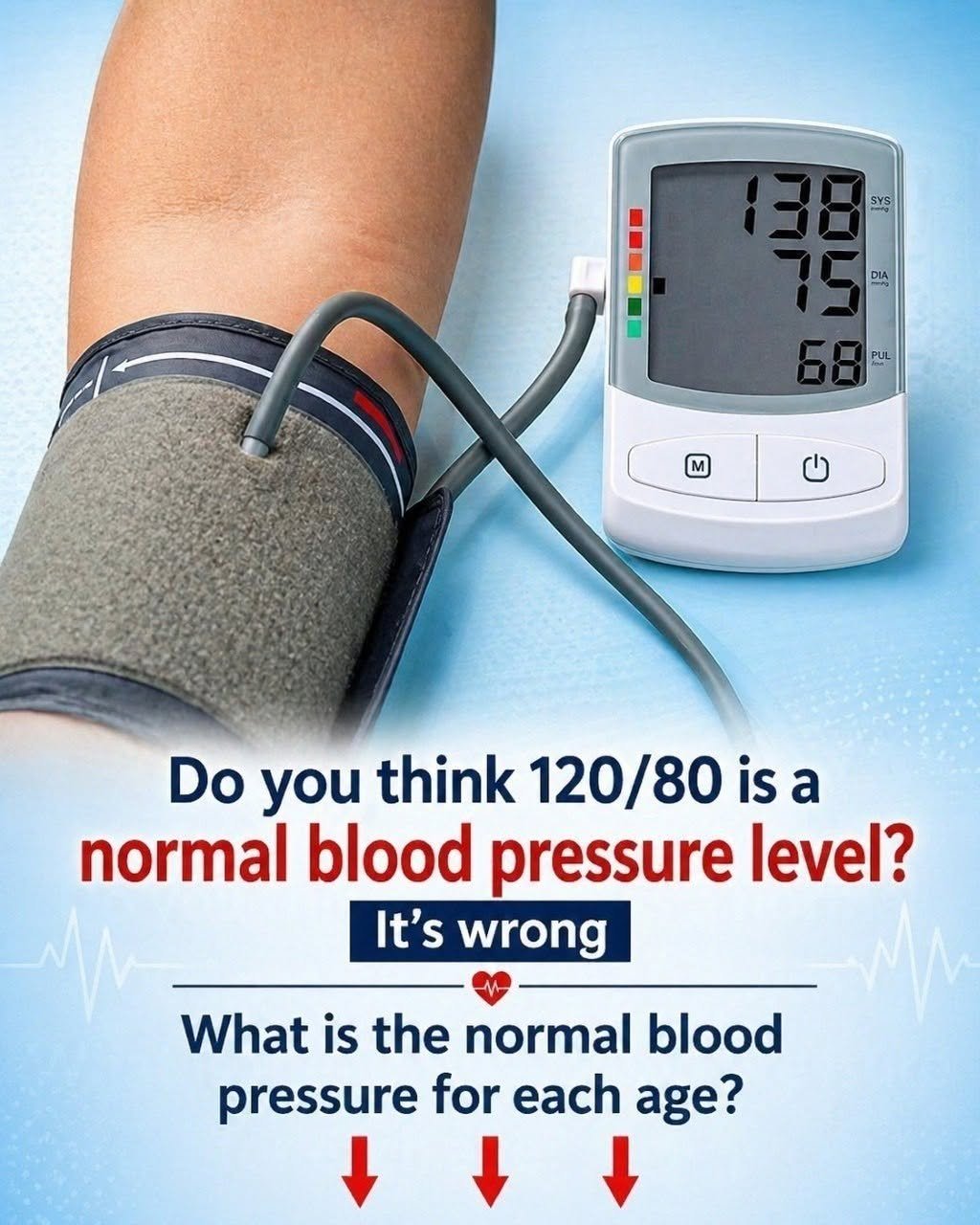
When looking at blood pressure, medical guidelines make an important distinction between what is clinically normal/healthy and what is statistically average for a given age.
For all adults (ages 18 and older), major health organizations like the American Heart Association (AHA) define a normal, healthy target blood pressure as less than 120/80 mmHg.
However, because blood vessels naturally stiffen with time, average blood pressure readings tend to rise as people get older. While a higher reading may be common in older age brackets, “common” does not mean it is ideal for long-term heart health.
Adult Blood Pressure Categories
For any adult, a reading falls into one of these standard categories:
| Category | Systolic (Top Number) | Diastolic (Bottom Number) | |
| Normal | Less than 120 | and | Less than 80 mmHg |
| Elevated | 120–129 | and | Less than 80 mmHg |
| Hypertension Stage 1 | 130–139 | or | 80–89 mmHg |
| Hypertension Stage 2 | 140 or higher | or | 90 or higher mmHg |
Average Blood Pressure Readings by Age Group
While the official target remains under 120/80 mmHg throughout adult life, population data shows how typical averages shift across different decades:
-
Ages 18 to 39: Averages typically hover around 110–120 / 68–78 mmHg. Younger adults generally experience the lowest readings, making it an ideal time to establish healthy baselines.
-
Ages 40 to 59: Averages drift upward to roughly 120–130 / 74–82 mmHg. During these decades, arterial stiffening often begins, and the top number (systolic pressure) starts its gradual climb.
-
Ages 60 and Older: Averages commonly reach 130–140 / 68–80 mmHg. In older adults, the systolic pressure continues to rise while the diastolic number often plateaus or even drops. While doctors individualize treatment goals for older adults (keeping factors like overall frailty or other health conditions in mind), keeping blood pressure as close to optimal ranges as possible remains a priority to prevent strokes and heart attacks.
Normal Ranges for Children and Teens
Unlike adults, pediatric blood pressure standards are not fixed. Instead, a normal reading for children and adolescents (ages 1 to 19) is determined by a combination of their age, height, and biological sex:
-
Toddlers & Preschoolers (1–5 years): Typically average around 95–110 / 53–70 mmHg.
-
School-Aged Children (6–12 years): Typically average around 97–112 / 57–71 mmHg.
-
Adolescents (13–18 years): Typically average around 112–128 / 66–80 mmHg.
A Quick Note on Measurement: A single high reading does not automatically mean you have high blood pressure. Stress, caffeine, physical activity, or even anxiety at the doctor’s office (known as “white coat syndrome”) can cause temporary spikes. Doctors usually look at trends across multiple relaxed measurements before making an assessment.
