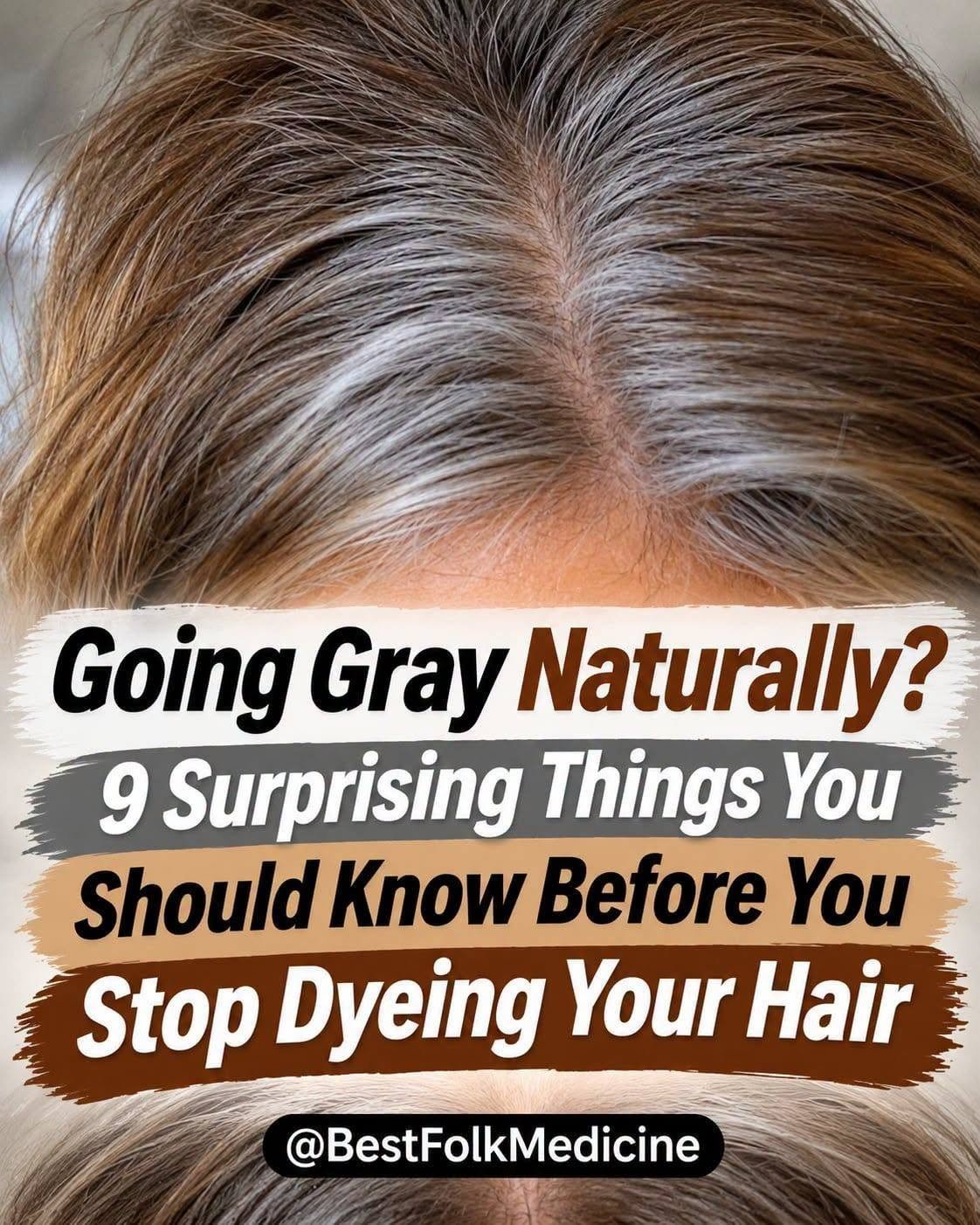
Transitioning to your natural gray hair is a powerful, liberating choice, but stepping away from the dye bottle involves a bit more than simply letting your roots grow out. Hair that goes gray undergoes real physical and textural shifts, and the transition phase can test your patience.
Here are 9 surprising and practical things you should know before you stop dyeing your hair:
1. Gray Hair Isn’t Actually Gray (It’s Transparent)
-
The Reality: Individual hair strands don’t turn a solid gray color; rather, your hair follicles gradually stop producing melanin (the pigment that gives hair its color). As pigment cells fade, new hairs grow in translucent, white, or silver. The “gray” look is simply an optical illusion created by a mix of unpigmented white hairs scattered among your remaining pigmented strands.
2. The Texture Will Feel Different
-
The Reality: Pigment cells also help regulate moisture and elasticity. Without melanin, gray hair often grows in coarser, wiry, drier, or more brittle than pigmented hair. You might find that your usual styling products no longer behave the same way, requiring richer conditioners and hydrating oils.
3. “Silver” Has Many Shades (And Cool Undertones)
-
The Reality: Natural gray hair rarely grows in as a uniform, shiny silver. It often comes in as a mix of charcoal, salt-and-pepper, pewter, or stark white. Furthermore, because gray hair lacks pigment, it is highly susceptible to absorbing environmental pollutants, cigarette smoke, mineral-heavy tap water (like iron or copper), and UV rays, which can give it a dull, yellowish tinge.
4. You Have Three Main Transition Strategies
-
The Reality: Deciding to go gray doesn’t mean you have to endure a harsh, high-contrast demarcation line on your head. You generally have three paths:
-
The Cold Turkey Approach: Stop dyeing entirely and let nature run its course (best for short cuts like a pixie or bob).
-
The Blending/Highlighting Approach: Work with a colorist to weave in lowlights, highlights, or silver toners to soften the grow-out line.
-
The Color Correction Approach: Strip or bleach out permanent dye and tone the hair to closely match your emerging natural silver.
-
5. Your Skin Tone and Wardrobe Might Need a Shift
-
The Reality: Once your hair loses its warm or dark artificial pigment, the colors that look best against your skin may change. Stark white or cool silver hair can wash out warm skin tones unless you adjust your makeup palette or wear clothing colors (like jewel tones, navy, or emerald) that make silver hair pop rather than blend in.
6. Purple Shampoo Is Your New Best Friend (Used Correctly)
-
The Reality: Because white and gray hair lacks pigment to mask warmth, yellow undertones easily take over. Purple shampoo deposits a sheer veil of violet pigment to neutralize brassy, yellow tones. However, don’t overuse it—leaving it on too long or using it every wash can actually make gray hair look dull, dingy, or slightly lavender.
7. Patience Is the Hardest Part
-
The Reality: Hair grows at an average rate of about half an inch per month. A full transition to shoulder-length natural gray can easily take anywhere from 12 to 24 months. Preparing yourself mentally for the awkward “skunk stripe” or grow-out phase is half the battle.
8. Friends and Family Will Have Opinions
-
The Reality: Society has long conditioned people—especially women—to view gray hair as “letting yourself go.” Be prepared for well-meaning friends, family members, or coworkers to comment on your changing hair. Staying confident in your decision makes navigating unsolicited opinions much easier.
9. Freedom and Savings Await on the Other Side
-
The Reality: Once you make it through the transition, the rewards are liberating. No more frantic root touch-ups every four weeks, no more chemical scalp irritation, and a significant drop in your beauty budget. Many people find that embracing their natural texture actually gives their hair a healthier, more vibrant look in the long run.
The Bottom Line: Going gray naturally is a journey of rediscovery. Arming yourself with hydrating products, a good transitional haircut, and a lot of patience will make the process smooth and empowering.
