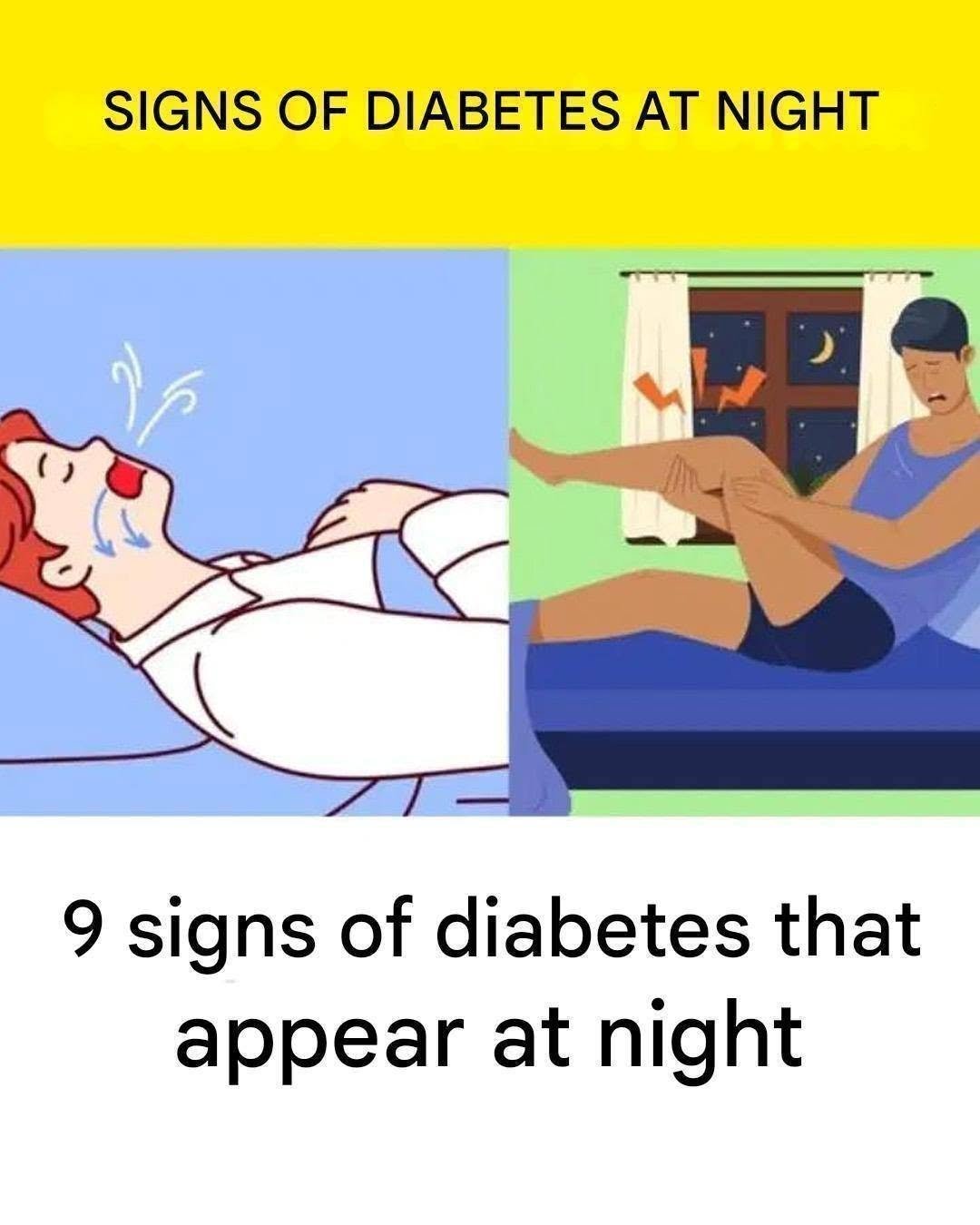
When sensationalized health articles warn about “diabetes signs that appear at night,” it often sounds like an alarming hidden threat. While type 2 diabetes affects blood sugar levels 24 hours a day, the quiet hours of the night can unmask specific physiological shifts that are much easier to notice when you are resting than during the busyness of the day.
When blood glucose levels remain consistently elevated or unstable, the body reacts in distinct ways that frequently disrupt nighttime sleep. Here are nine clinical signs of diabetes that commonly manifest or intensify overnight:
1. Nocturia (Frequent Nighttime Urination)
-
What happens: When excess glucose builds up in the blood, your kidneys work overtime to filter and process the sugar. Because they cannot reabsorb all of it, the excess glucose spills into your urine, drawing extra water along with it through an osmotic effect.
-
The Nighttime Sign: Waking up two or more times a night to empty a full bladder, forcing a disruptive break in your sleep cycle.
2. Polydipsia (Intense Nighttime Thirst)
-
What happens: Directly tied to frequent nighttime urination, the excessive fluid loss leaves your tissues dehydrated and triggers your brain’s thirst mechanisms.
-
The Nighttime Sign: Waking up with a parched, sticky mouth and an intense, unquenchable urge to drink water, often requiring a glass kept right by the bed.
3. Nocturnal Hypoglycemia (Nighttime Low Blood Sugar)
-
What happens: If you take insulin or certain oral diabetes medications (like sulfonylureas), blood sugar can drop dangerously low while you sleep—often triggered by dinner timing, evening exercise, or peak medication windows.
-
The Nighttime Sign: Waking up suddenly in the middle of the night feeling shaky, sweating profusely, disoriented, or experiencing a racing heart and unusually vivid nightmares.
4. Night Sweats and Autonomic Activation
-
What happens: Fluctuating blood glucose levels—particularly nighttime drops—trigger a sympathetic nervous system (“fight or flight”) response, causing the body to release adrenaline and cortisol.
-
The Nighttime Sign: Waking up with damp sheets or drenched pajamas, even though your bedroom is comfortably cool.
5. Diabetic Peripheral Neuropathy (Burning, Tingling, or Pain in the Feet)
-
What happens: Chronically high blood sugar damages the small blood vessels and nerves supplying your extremities.
-
The Nighttime Sign: During the day, physical activity and daily distractions mask nerve discomfort. At night, when you lie still in bed, the lack of distraction makes the “pins and needles” sensation, sharp shooting pains, or an uncomfortable burning heat in the feet and toes feel significantly more intense.
6. Restless Legs Syndrome (RLS) and Muscle Cramps
-
What happens: There is a well-documented clinical link between insulin resistance, peripheral nerve irritation, and circulation changes in the lower limbs.
-
The Nighttime Sign: An irresistible, uncomfortable urge to move your legs while trying to fall asleep, often accompanied by painful calf cramps that ease only when you get up and walk around.
7. Obstructive Sleep Apnea (OSA)
-
What happens: Sleep apnea and type 2 diabetes share a deep, bidirectional relationship; obesity, upper airway tissue changes, and systemic inflammation link the two conditions tightly.
-
The Nighttime Sign: Waking up gasping for air, choking, or experiencing severe, disruptive snoring that repeatedly fractures your sleep architecture.
8. Insomnia and Chronic Sleep Fragmentation
-
What happens: The combined physical disruptions of frequent bathroom trips, nerve pain, blood sugar swings, and sleep apnea make deep, restorative sleep nearly impossible.
-
The Nighttime Sign: Difficulty falling asleep, frequent awakenings, and tossing and turning for hours because your body is stuck in a state of physiological stress.
9. Nocturnal Pruritus (Itchy Skin)
-
What happens: High blood sugar causes systemic skin dryness, microvascular changes, and a higher vulnerability to yeast overgrowths (such as Candida), which thrive in warm, moist environments.
-
The Nighttime Sign: Waking up with persistent, annoying itching—particularly on the lower legs, feet, or in intimate areas—that flares up once you are settled under warm blankets.
The Medical Takeaway: While any one of these symptoms can stem from everyday causes (like drinking too much water before bed or an uncomfortable mattress), experiencing several of them together—especially chronic nighttime thirst paired with frequent urination—is worth mentioning to your primary care physician. A simple fasting blood glucose or HbA1c test can quickly clarify whether blood sugar is the underlying culprit.
