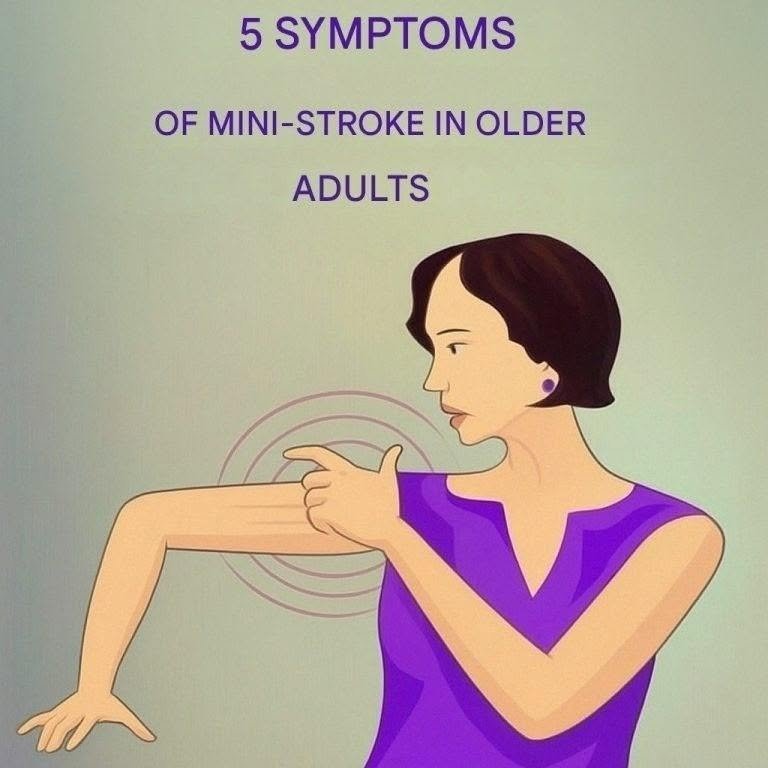
When a transient ischemic attack (TIA)—commonly known as a mini-stroke—occurs, it is a medical emergency that demands immediate attention. While a TIA shares the same underlying mechanism as a major stroke (a temporary blockage of blood flow to part of the brain), the crucial difference is that the blockage resolves quickly, and symptoms typically vanish within minutes to 24 hours.
However, doctors view a mini-stroke as a major warning sign or “dry run” for a full-scale stroke. Ignoring these temporary episodes is dangerous; statistics show that up to 10% of people who suffer a TIA will have a full stroke within three months, with the highest risk concentrated in the first few days following the attack.
In older adults, the signs of a mini-stroke can sometimes be subtle or mistakenly dismissed as normal signs of aging, fatigue, or dizziness. Recognizing the classic warning signs—using the universally recognized FAST framework alongside broader neurological symptoms—can save a life:
The 5 Critical Symptoms of a Mini-Stroke
-
Sudden Facial Droop or Asymmetry
-
What it looks like: One side of the face suddenly droops or feels numb. If the person tries to smile, the smile will appear uneven, and one corner of the mouth may sag.
-
-
Sudden Arm or Leg Weakness (Usually One-Sided)
-
What it looks like: Sudden weakness, numbness, or a heavy sensation in one arm or leg. If asked to raise both arms in front of them, one arm may drift downward or they may be completely unable to lift it due to a loss of muscular control on one side of the body.
-
-
Slurred Speech, Confusion, or Difficulty Finding Words
-
What it looks like: Speech becomes abruptly slurred, garbled, or difficult to understand. The person may struggle to form sentences, appear disoriented, or seem completely unable to comprehend what you are saying to them.
-
-
Sudden Vision Changes in One or Both Eyes
-
What it looks like: A sudden, temporary blurring or complete loss of vision in one eye (sometimes described as a dark shade coming down over their field of vision), or double vision that comes on without warning.
-
-
Sudden Loss of Balance, Dizziness, or Severe Coordination Loss
-
What it looks like: Abrupt, uncharacteristic dizziness, a sudden loss of balance, staggering while walking, or an inability to coordinate simple motor movements, often accompanied by a sudden, severe headache with no known cause.
-
Why You Must Call 911 Immediately (Even If Symptoms Disappear)
One of the most dangerous misconceptions about a mini-stroke is that because the symptoms went away on their own within 15 or 30 minutes, the crisis is over and medical help isn’t needed.
This is a critical error. There is no way to tell during a TIA whether the blood flow blockage will resolve on its own or progress into a permanent, debilitating stroke.
The Medical Takeaway: If an older adult (or anyone) experiences any of these sudden neurological symptoms—even if they vanish completely by the time you finish reading this sentence—call emergency services immediately. Emergency medical teams need to evaluate the patient, perform rapid neuro-imaging, and initiate preventative treatments to protect against a catastrophic stroke.
