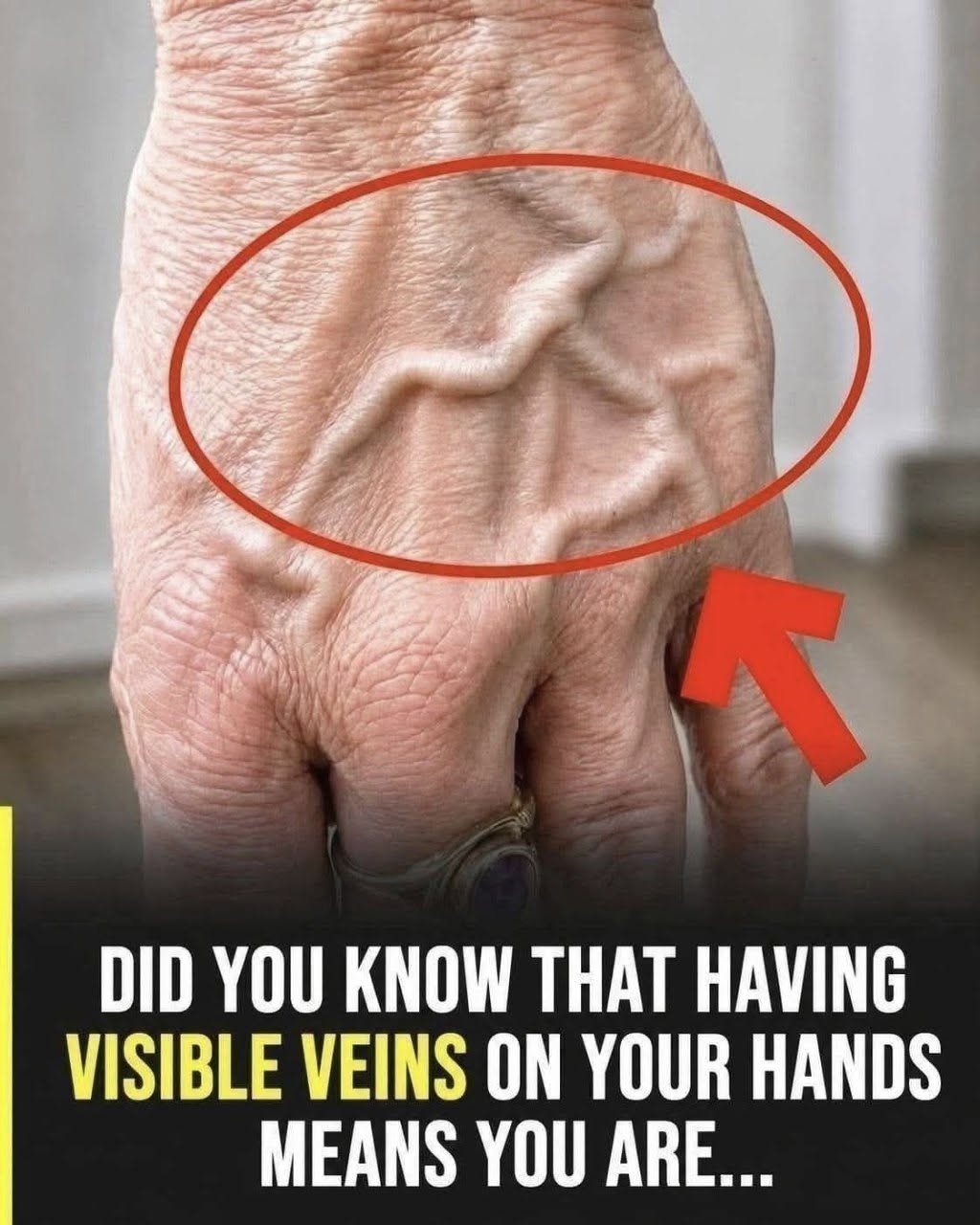
When a sensationalized headline trails off with “having visible veins means you are…”—usually baiting you with ominous warnings about terrible circulation, impending varicose veins, or severe underlying vascular disease—it is exploiting a completely normal physiological trait to trigger health anxiety.
In reality, having visible veins is extraordinarily common and, for the vast majority of people, an entirely normal anatomical variation rather than a medical emergency.
Why your veins show through your skin depends on several key physiological factors:
Why Are Some People’s Veins More Visible?
-
Naturally Thin or Fair Skin: The melanin in darker skin tones naturally masks the blue or green hue of surface blood vessels. If you have fair or translucent skin, your veins simply show through more easily.
-
Low Body Fat Percentage: Fat acts as a natural insulating layer beneath the skin. Individuals who are lean, athletic, or have a low body fat percentage naturally have less tissue between their skin and their vascular network, making veins more prominent (especially on the hands, arms, and legs).
-
Age and Loss of Skin Elasticity: As people age, skin thins out and loses collagen and subcutaneous fat. This age-related thinning allows superficial veins to become much more noticeable, particularly on the hands and foreheads.
-
Physical Exertion and Heat: When you exercise or when ambient temperatures rise, your body pumps more blood to the skin’s surface to cool you down (vasodilation), causing veins to temporarily swell and stand out.
When Visible Veins Do Warrant Medical Attention
While everyday visible veins are harmless, certain changes in your vascular pattern require a proper clinical evaluation:
-
Varicose Veins: If veins in your legs become painfully twisted, bulging, rope-like, or swollen, it indicates chronic venous insufficiency—meaning the tiny one-way valves inside those veins are weakening and failing to push blood efficiently back to the heart.
-
Sudden Spider Veins or Redness: A sudden, extensive flare-up of tiny, web-like capillaries on the face or legs can sometimes point to underlying dermatological or hormonal shifts (such as rosacea or venous pressure).
-
Pain, Warmth, or Swelling: If a prominent vein becomes hard, tender, red, or painful to the touch, it can signal superficial thrombophlebitis (a minor blood clot in a surface vein) that a doctor should check.
The Takeaway: Don’t let clickbait convince you that simply seeing the network of veins in your hands or legs means something is wrong with your health. If your veins are painless and you have no swelling or discomfort, it is almost certainly just your unique anatomy at work.
