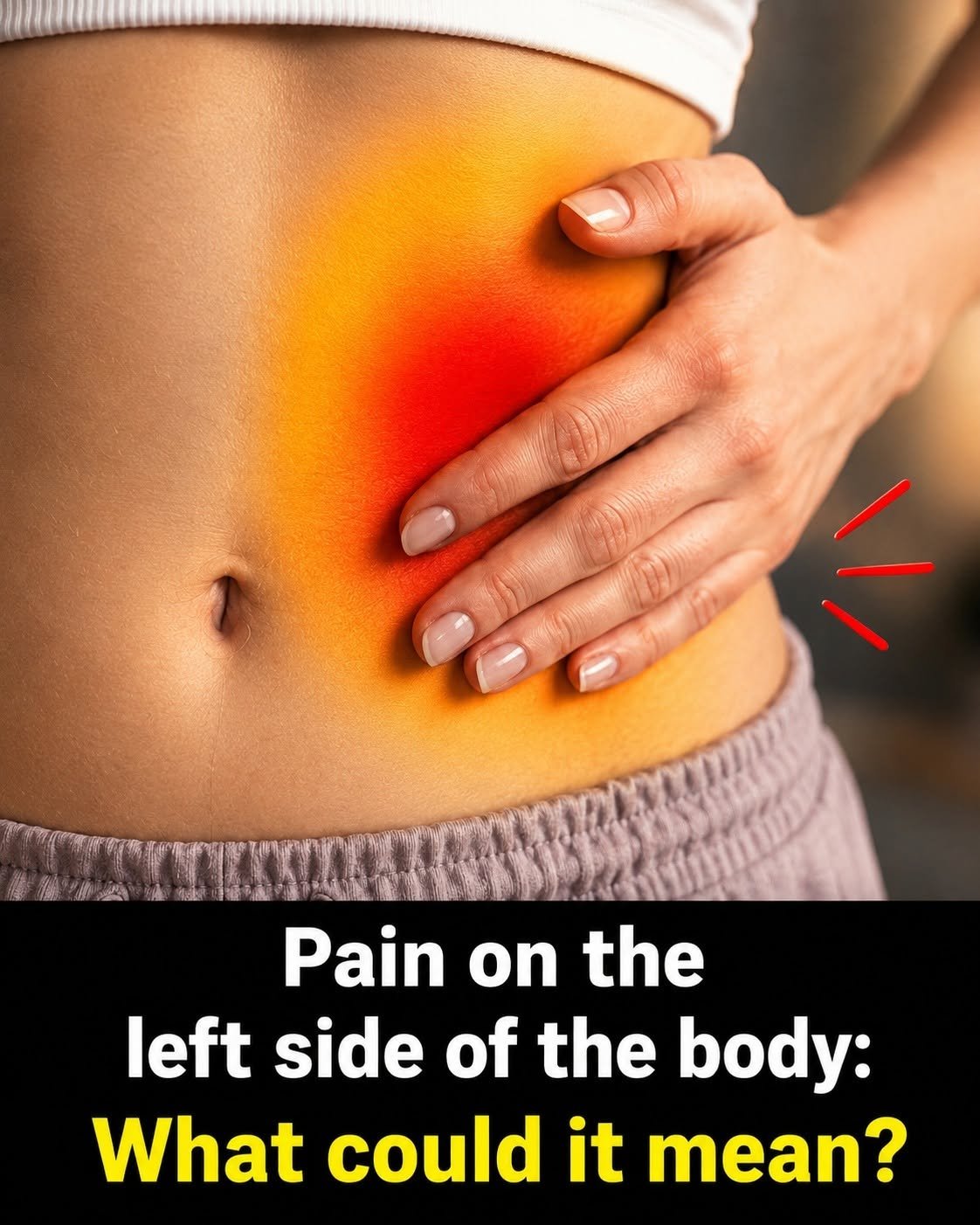
When viral medical videos or sensational health articles warn that left-side body pain is an immediate, guaranteed sign of a catastrophic medical emergency—or conversely, dismiss it entirely as simple gas—they rely on fear-mongering or oversimplification.
The underlying medical reality is that your left side encompasses several critical organs (including the heart, spleen, portions of the pancreas, stomach, and the left lung and kidney), alongside musculoskeletal structures. Because internal organs often refer pain to the skin, shoulder, or chest wall, figuring out the source requires looking at the pattern, accompanying symptoms, and timing.
An evidence-based guide separates harmless aches from signs that require immediate medical evaluation.
1. Left-Side Chest and Upper Body Pain
-
When to Worry (Cardiac Concerns): Discomfort, pressure, tightness, or aching in the left chest that radiates down the left arm, up into the jaw, or to the back—especially if accompanied by sudden shortness of breath, cold sweats, nausea, or lightheadedness—requires calling emergency services immediately. As established with emergency protocols, never wait to see if cardiac symptoms pass.
-
Non-Emergency Possibilities:
-
Costochondritis: Inflammation of the cartilage connecting your ribs to your breastbone. It causes sharp or aching pain on one side of the chest that worsens when you press on the area or take a deep breath, but it is not heart-related.
-
Acid Reflux / GERD: Stomach acid splashing into the esophagus can mimic cardiac pressure behind the breastbone, though it is often accompanied by a sour taste or burning sensation that worsens after eating or lying down.
-
2. Left Upper Abdomen and Flank Pain
-
Under the Ribs (Spleen or Stomach):
-
The spleen sits in the upper left abdomen. Sudden, sharp pain in this area—especially following physical trauma, an accident, or contact sports—can indicate a bruised or ruptured spleen, which is a medical emergency.
-
Gastritis or peptic ulcers can also cause a burning ache in the upper left abdomen, often relieved or aggravated by eating.
-
-
The Lower Back and Flank (Kidney Concerns):
-
Pain wrapping around your mid-to-lower left back, just under the ribcage, is often renal in origin. A kidney infection (pyelonephritis) or kidney stone typically causes intense, waves of severe flank pain, often accompanied by fever, chills, painful urination, or blood in the urine.
-
3. Left Lower Abdomen and Pelvic Pain
-
The Gastrointestinal Tract:
-
The lower left abdomen is home to the descending and sigmoid colon. Diverticulitis (inflammation or small pouches in the colon wall) frequently presents as localized cramping, tenderness, fever, and changes in bowel habits on the lower left side.
-
Trapped gas or constipation can also cause sharp, transient cramping in this region that resolves after a bowel movement.
-
-
Gynecological Considerations (For Women):
-
Pain on the lower left side can occasionally originate from the left ovary, such as a functional ovarian cyst or mittelschmerz (ovulation pain).
-
Red Flag Symptoms: When to Seek Urgent Help
Regardless of where the pain is located on your left side, seek immediate medical evaluation if the pain is accompanied by any of the following “red flags”:
-
Sudden, crushing, or tearing pain (especially in the chest, back, or abdomen).
-
Dizziness, fainting, confusion, or a sudden cold sweat.
-
Severe shortness of breath or unexplained difficulty breathing.
-
High fever accompanied by severe localized abdominal or back tenderness.
-
Blood in your stool or urine.
The Takeaway: Left-side pain can range from benign muscle strain and digestive gas to serious cardiac or organ issues. Pay close attention to how the pain feels, whether it spreads, and what other symptoms accompany it—and never hesitate to consult a physician for persistent or severe discomfort.
