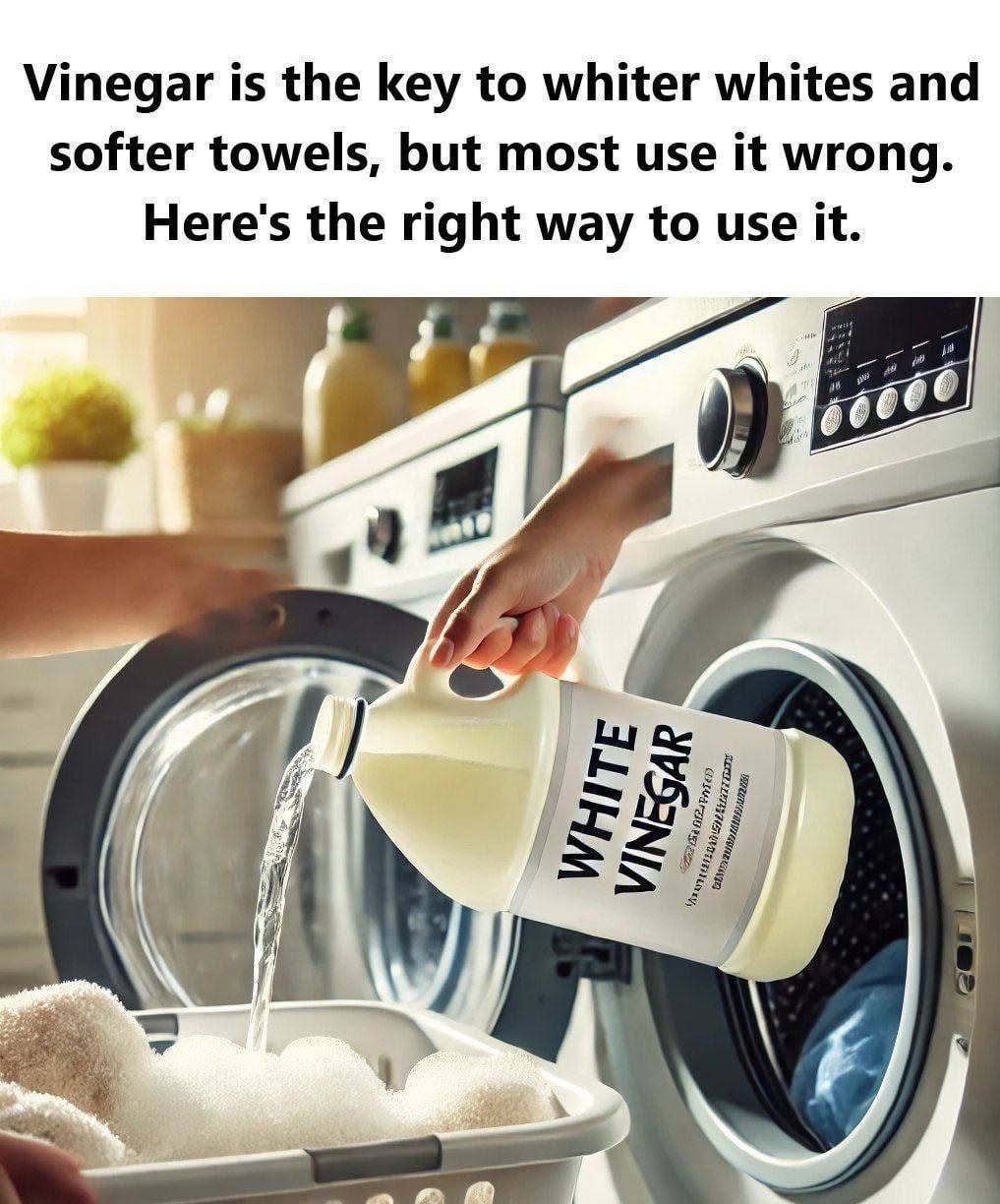
When lifestyle blogs and cleaning tutorials proclaim that “Vinegar: The Key to Whiter Whites and Softer Towels (But Most People Use It Wrong). Here’s the Right Way,” they lean heavily into the internet’s enduring obsession with turning a pantry condiment into a domestic miracle cure.
The underlying chemical and laundry reality is more modest: white distilled vinegar is a mild acetic acid that genuinely excels at certain laundry tasks—such as cutting detergent residue, neutralizing static, and eliminating stubborn odors—but it is not a universal chemical savior. It does not magically bleach fabrics white (in fact, it lacks oxidizing agents), and dumping it haphazardly into every load can damage certain machine components over time.
An evidence-based look at what vinegar can and cannot do in the wash helps separate viral exaggeration from sound laundry science.
1. What Vinegar Actually Does in the Laundry
Chemistry explains why vinegar works well for specific textile problems:
-
Stripping Soap Buildup (The Real Secret to Soft Towels): Over time, commercial laundry detergents and fabric softeners leave behind a waxy residue on textile fibers. This buildup traps body oils and makes towels stiff and water-repellent. The acetic acid in vinegar helps dissolve this mineral and detergent buildup, restoring the towel’s natural absorbency and fluffy texture.
-
Neutralizing Alkaline Odors: Mildew, sweat, and pet odors are often alkaline. The acid in vinegar neutralizes these alkaline compounds, effectively eliminating smells rather than just masking them with synthetic fragrances.
-
Preventing Static Cling: By lowering the pH of the rinse water, vinegar naturally reduces static electricity, serving as a clean, chemical-free alternative to commercial dryer sheets.
2. The Big Misconceptions: What Vinegar Cannot Do
-
It Is Not a Bleach: Vinegar does not whiten clothes by chemically altering or destroying stains the way chlorine bleach or oxygen bleach (sodium percarbonate) does. If your whites are dingy, vinegar alone won’t restore them; you need proper whitening agents or hot water.
-
It Doesn’t Disinfect Like Chlorine: While it has mild antibacterial properties, it is not a registered disinfectant that kills dangerous pathogens or heavy laundry mold spores.
3. The Right Way to Use Vinegar (And What to Avoid)
If you want to incorporate vinegar into your laundry routine safely and effectively, follow these guidelines:
-
Use It in the Rinse Cycle, Not the Wash Cycle: This is where most people go wrong. If you pour vinegar in with your detergent at the beginning of the wash, the acid will neutralize the alkalinity of the detergent, rendering both largely ineffective. Add about $1/2$ cup of white distilled vinegar to the fabric softener dispenser so it releases during the final rinse cycle.
-
Never Mix Vinegar with Chlorine Bleach: Mixing any acid (like vinegar) with chlorine bleach creates toxic chlorine gas. Always keep them completely separate.
-
Protect Your Machine: Pouring pure, undiluted vinegar directly onto rubber gaskets, hoses, or metal drums in high concentrations over many years can degrade rubber components. Always dilute it or let it disperse through the dispenser drawer.
The Takeaway
Ignore the hype that white vinegar is a magical whitening agent or an all-powerful laundry detergent replacement. Used correctly in the rinse cycle, it is a fantastic, inexpensive tool for stripping soap residue, softening stiff towels, and neutralizing odors—keeping your laundry fresh without the buildup.
