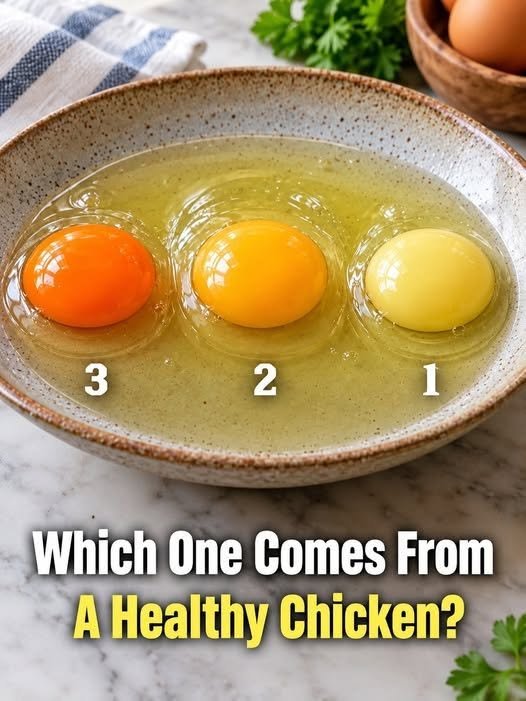
That classic clickbait guessing game is designed to make you believe that the color of an egg yolk—whether pale yellow, rich golden, or deep orange—is a direct scoreboard for how healthy the chicken was.
The truth is, egg yolk color is not a measure of a chicken’s health or disease risk; it is simply a reflection of what the bird ate.
Why Yolk Colors Vary
A chicken’s diet dictates the pigments (carotenoids) deposited into the yolk:
-
Pale Yellow Yolks: Come from hens raised primarily on a diet of wheat, barley, or white corn, which contain lower levels of plant pigments.
-
Deep Orange Yolks: Come from hens whose feed includes abundant carotenoids—such as fresh grass, alfalfa, marigold petals, or yellow corn.
A pale yellow yolk from a pasture-raised hen is just as nutritious and safe as a deep orange yolk from a caged hen.
What Actually Matters for Egg Quality and Hen Welfare
If you want to choose the “best” egg from an ethical and nutritional standpoint, skip the yolk color test and look at how the hens were raised:
-
Pasture-Raised: Hens spend their days outdoors on actual pasture, foraging for bugs, grass, and seeds while eating a supplemental feed. These eggs often contain higher levels of Omega-3 fatty acids and Vitamin D simply due to natural sunlight and varied foraging.
-
Cage-Free / Free-Range: Better than traditional battery cages (as hens can roam in a barn or have some outdoor access), though terms can vary widely in strictness.
-
Nutritional Content: Standard conventional eggs and specialty eggs (like organic or pasture-raised) have nearly identical protein, vitamin, and mineral baselines. The real differences lie in omega fatty acid profiles and animal welfare standards, not whether the yolk looks like a sunset.
