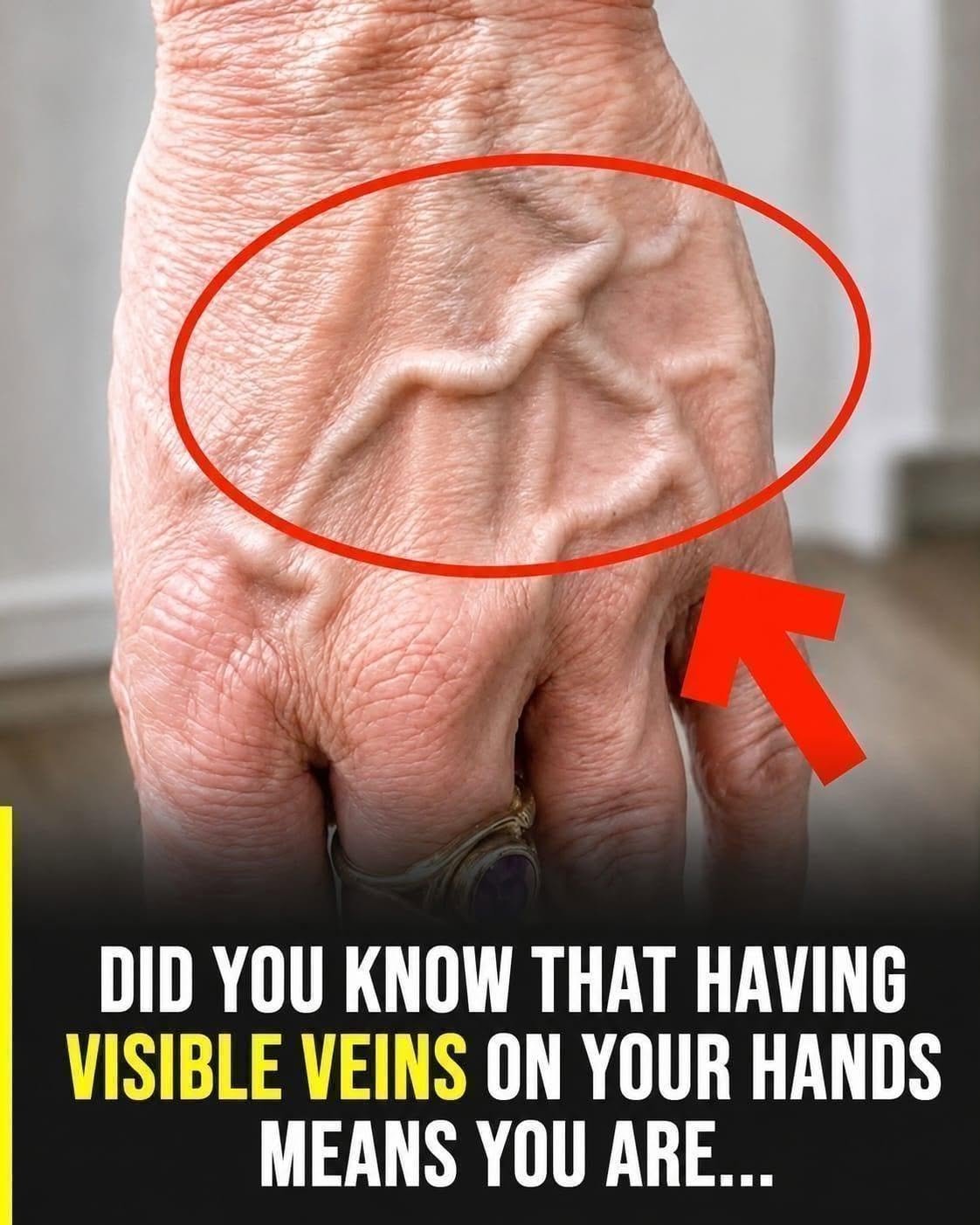
Headlines finishing that sentence with alarming claims like “you have toxic blood,” “your body is full of heavy metals,” or “you are severely deficient in essential vitamins” rely on viral wellness myths rather than medical reality.
In almost all cases, having visible veins is a completely normal, benign physical trait dictated by anatomy, genetics, and lifestyle factors, rather than a mysterious sign of internal disease or systemic toxicity.
Why Veins Become Visible
How prominent your vascular network appears depends on a complex interplay of physiological and inherited factors:
-
Low Body Fat Percentage: Fat sits directly underneath the skin as a soft layer of subcutaneous insulation. When overall body fat drops—particularly in endurance athletes, bodybuilders, or during warmer weather when blood vessels dilate closer to the surface to release heat—veins naturally become much more prominent.
-
Skin Thickness and Transparency: Fair, thin, or aging skin has less natural pigmentation and collagen density. As dermal thickness decreases over time, the blue-green network of superficial veins lying just beneath the surface becomes far easier to see.
-
Genetics and Structural Anatomy: Just like eye color, bone structure, or height, vein patterning and superficial depth are largely inherited. Some individuals are simply born with translucent skin or a superficial vascular architecture that makes veins clearly visible from childhood.
-
Vascular Pressure and Vasodilation: Exercise, heavy lifting, high ambient temperatures, and pregnancy temporarily increase blood volume and pressure. This pushes superficial veins outward, making them stand out sharply against the skin.
When Visible Veins Actually Warrant Medical Attention
While normal superficial veins are entirely harmless, certain types of visible or bulging veins indicate underlying venous pathology that requires clinical evaluation:
-
Varicose Veins: These are enlarged, twisted, and bulging superficial veins—most commonly appearing in the legs. They occur when the one-way valves inside the veins weaken or fail, causing blood to pool backward rather than flowing smoothly back to the heart against gravity. Symptoms often include aching, heaviness, cramping, or swelling in the lower extremities.
-
Spider Veins (Telangiectasias): Smaller, web-like clusters of red, blue, or purple capillaries visible close to the skin’s surface. While primarily a cosmetic concern, they can occasionally point to minor underlying venous insufficiency.
The Bottom Line
If your veins have always been visible, or if they show up more when you are lean, warm, or physically active, your circulatory system is simply doing its job efficiently. You do not need a “blood detox,” an expensive supplement, or a medical intervention—just a clear understanding of your body’s natural anatomy.
