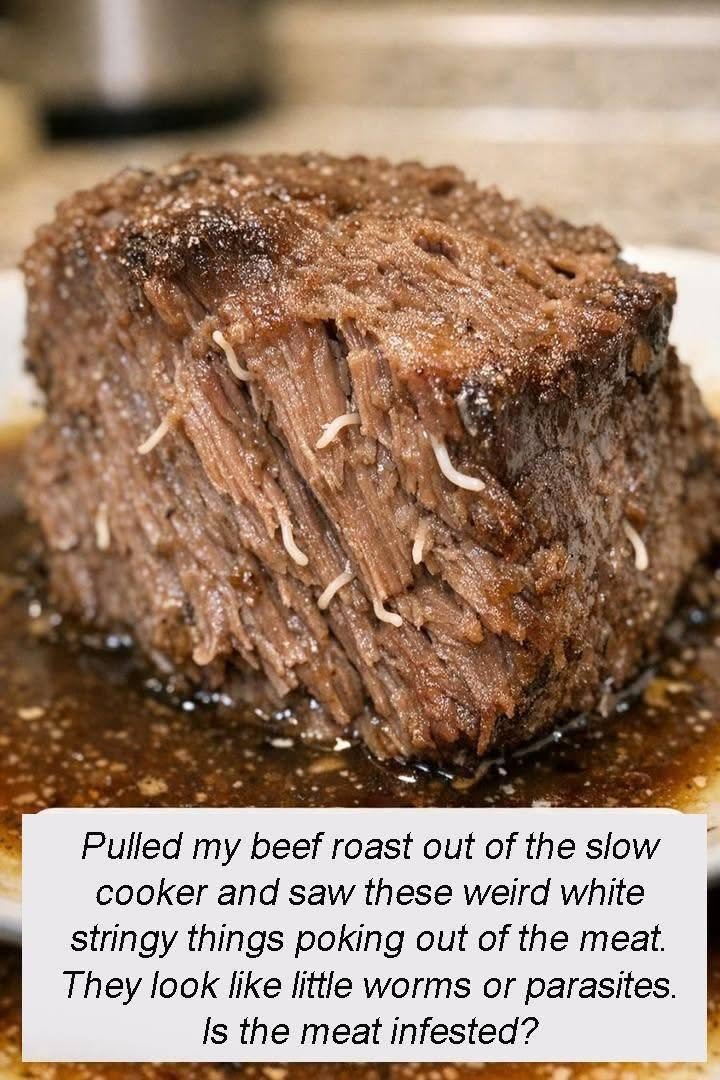
No, your beef roast is not infested with parasites.
Seeing weird white, stringy things poking out of meat after a long stint in the slow cooker can certainly be startling, but what you are looking at is entirely normal anatomy and a byproduct of the cooking process.
What Those “White Strings” Actually Are
-
Muscle Fibers and Collagen: Beef is made up of bundles of long muscle fibers held together by connective tissues rich in protein and collagen.
-
The Slow-Cooker Effect: When you cook a tough cut of beef (like a chuck roast) for hours, the muscle fibers contract, squeeze out moisture, and tighten up. As these fibers pull tight, they can push out or expose the underlying connective tissue bands, making them look stringy or worm-like.
-
Unaltered Cooking String: Depending on how the meat was packaged, double-check to ensure it isn’t fragments of kitchen twine or netting used by the butcher to tie the roast together before cooking.
Why You Don’t Need to Panic About Parasites
-
Commercial Safety: Parasites in commercially sold beef are exceptionally rare due to strict agricultural inspections and veterinary oversight.
-
The Thermal Destruction Point: Even in the unlikely event that a parasite was present, slow cookers maintain high internal temperatures over several hours. No parasite can survive sustained cooking temperatures.
If the strands are soft or gelatinous and part of the meat’s grain, it’s just your roast breaking down structurally. Shred it up, mix it with the juices, and enjoy your meal.
