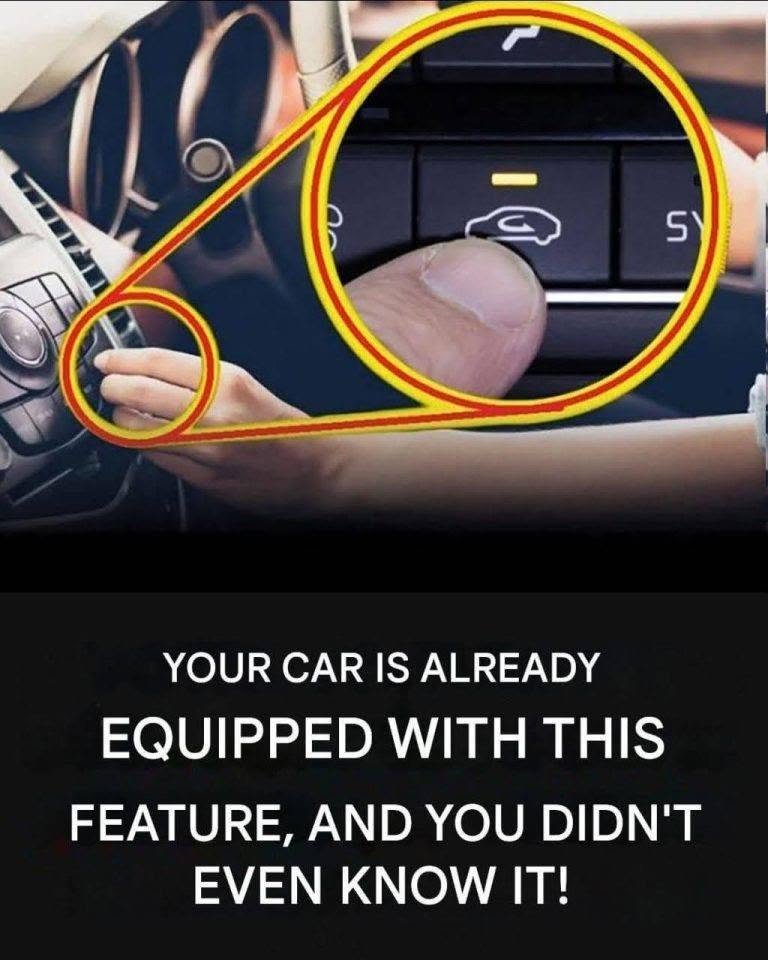
Modern vehicles come loaded with hidden, under-documented convenience and safety features built right into the factory electronics.
Hidden Automotive Features & Key Fob Functions
1. Global Window Roll-Down / Roll-Up
-
Mechanism: Holding the Unlock button on your key fob for 3 to 5 seconds sends a continuous radio frequency signal to the Body Control Module (BCM).
-
Function: Automatically rolls down all power windows simultaneously (and opens the sunroof on many models) to vent trapped summer heat before you enter.
-
Reverse Function: Holding the Lock button on many European and Asian vehicles rolls all windows up and closes the sunroof remotely.
2. Reversible Gas Cap Rest / Fuel Door Anchor
-
Mechanism: The inside of the fuel filler door features a small plastic notch, hook, or cradle designed specifically to hold the tethered gas cap.
-
Function: Prevents the dirty fuel cap from dangling against your car’s exterior paint, eliminating scratches and chemical staining while refueling.
3. Hidden Mechanical Emergency Key
-
Mechanism: Keyless entry key fobs house a physical, cut metal key hidden behind a small release latch or push-button slider.
-
Function: Provides physical access to the driver’s door lock cylinder when the key fob battery dies or the car’s main 12-volt battery fails.
-
Concealed Lock Cylinder: On many push-to-start vehicles, the driver door keyhole is hidden beneath a removable plastic cap next to the door handle.
4. Automatic High-Beam Assist Sensitivity Adjustments
-
Mechanism: Advanced Driver Assistance Systems (ADAS) use forward-facing windshield cameras to detect oncoming headlights and taillights.
-
Function: Holding the turn signal stalk forward or toggling the auto-light switch while starting the ignition often accesses a hidden setup menu to adjust dimming distance and sensitivity.
5. Rear Door Child Safety Lock Toggle
-
Mechanism: A physical mechanical switch or key slot located directly on the inner edge of the rear door frames, visible only when the door is open.
-
Function: Disconnects the interior door handle from the latch mechanism entirely, preventing children from opening the doors from the inside while allowing exterior opening.
Hidden Feature Quick Reference
| Feature |
Primary Trigger Method |
Key Benefit |
| Global Window Roll-Down |
Press & hold Unlock on key fob ($3\text{–}5\text{ sec}$) |
Rapid cabin cooling before entry |
| Emergency Physical Key |
Release latch/button on electronic key fob |
Manual entry when key fob battery dies |
| Concealed Door Keyhole |
Pop off driver door handle plastic end-cap |
Unlocks vehicle with dead 12V battery |
| Child Safety Lock |
Flip lever/slot on inner edge of rear door jamb |
Prevents accidental interior door opening |
| Rearview Mirror Dimming |
Flip manual tab or hold power button on auto-dimming mirror |
Eliminates nighttime headlight glare |
Access & Verification Protocol
1.Test Key Fob Long-Press Functions:
Stand near your vehicle, unlock it once, then immediately press and hold the Unlock button for 5 seconds to test for global window lowering.
2.Locate Your Physical Emergency Key:
Examine your key fob for a small mechanical slider switch. Slide it to release the hidden metal key blade.
3.Inspect Rear Door Jambs:
Open both rear passenger doors and look along the inner latch panel edge for the child lock icon and toggle switch.
4.Review the Owner’s Manual Convenience Section:
Check the “Instrument Cluster Setup” or “Personalization Settings” section of your vehicle manual to enable or disable hidden auto-locking, greeting lighting, and mirror-folding features.