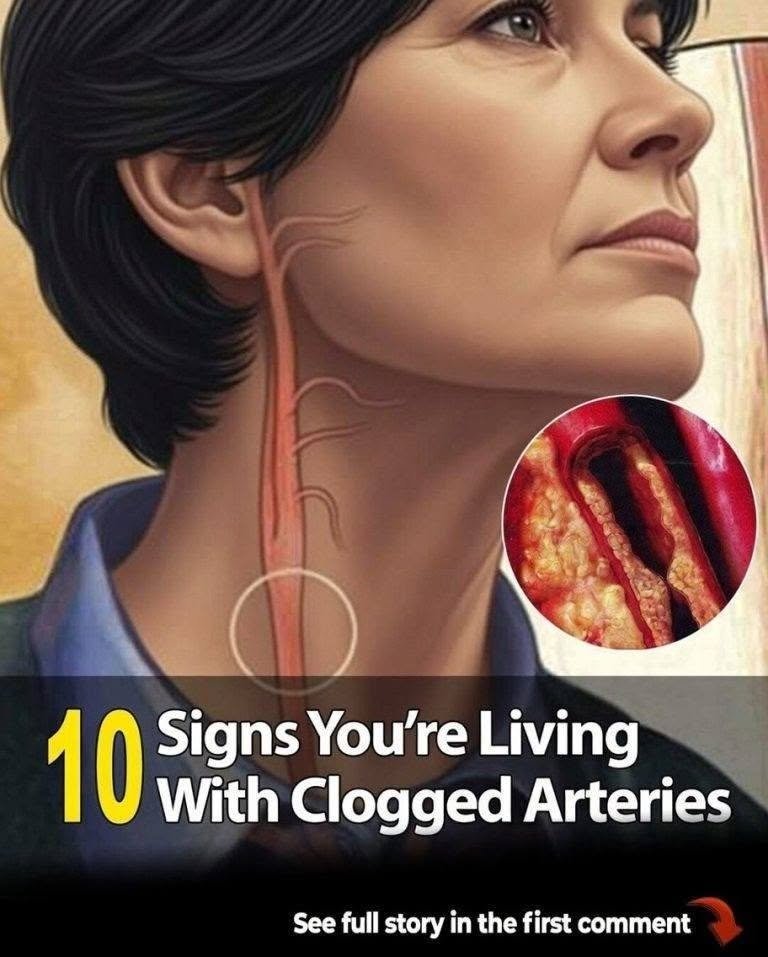
Artery blockage (atherosclerosis) occurs when fat, cholesterol, and calcium form plaque inside blood vessels, restricting oxygen-rich blood flow to vital organs and limbs.
🚨 RED ALERT SYMPTOMSCall emergency services (911) immediately if you experience crushing chest pain, sudden facial drooping, arm weakness, or sudden difficulty speaking.
10 Critical Warning Signs
-
Chest Pain or Pressure (Angina)A heavy, squeezing, or burning sensation in the center or left side of your chest—often triggered by exertion or stress and relieved by rest—is a hallmark sign of coronary artery disease.
-
Shortness of Breath with Minimal EffortIf your heart’s arteries cannot deliver enough oxygenated blood to meet demand, walking up a single flight of stairs or performing light chores can leave you gasping for air.
-
Leg Pain or Cramping While Walking (Claudication)Pain, tightness, or fatigue in the calves, thighs, or hips during movement that stops when you rest indicates Peripheral Artery Disease (PAD)—narrowing of the arteries supplying the legs.
-
Cold Feet or Hands (Unilateral Temperature Drop)Restricted blood circulation often leads to persistently cold feet or hands, frequently accompanied by pale or bluish-tinted skin on the lower extremities.
-
Erectile Dysfunction in MenArterial narrowing affects smaller blood vessels first. Difficulty achieving or maintaining an erection often serves as an early warning sign of systemic vascular disease up to 3 to 5 years before a cardiac event.
-
Unexplained Lower Back PainThe lumbar arteries feeding the lower back are among the first to develop plaque. Reduced blood flow to spinal discs can cause chronic, dull lower back tightness or pain.
-
Extreme, Unexplained FatigueWhen the heart strains to pump blood through narrowed vessels, everyday activities can leave you feeling unusually exhausted, even after adequate sleep.
-
Slow-Healing Sores or Wounds on Legs/FeetCuts, scrapes, or ulcers on your feet and toes that take weeks to heal—or turn dark—indicate severely restricted peripheral blood flow carrying necessary repair nutrients.
-
Dizziness, Lightheadedness, or Transient ConfusionBlockages in the carotid arteries (which supply blood to the brain) can cause brief episodes of lightheadedness, loss of balance, or transient ischemic attacks (mini-strokes).
-
Jaw, Neck, Shoulder, or Upper Back PainHeart distress doesn’t always stay in the chest; pain signals often radiate along shared nerve pathways up to the neck, jaw, left shoulder, or between the shoulder blades (especially common in women).
