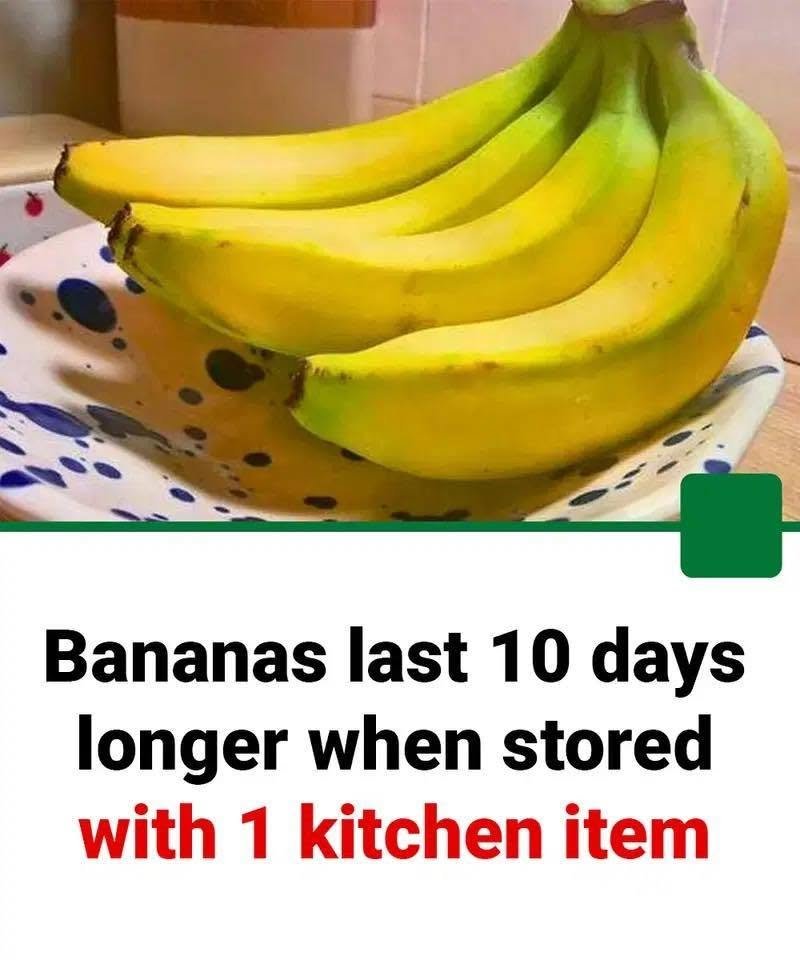
Viral storage hacks promising that bananas will last ten days longer by using a single kitchen item are classic clickbait exaggerations. While you can certainly slow down the ripening process, no household trick can stop the laws of plant biology for nearly two weeks.
Bananas ripen primarily because they release ethylene gas, a natural plant hormone that triggers softening, skin yellowing, and starch-to-sugar conversion.
What Actually Works to Extend Banana Life
The viral trick usually refers to wrapping the stem stems in plastic wrap or foil, or hanging the bunch up. Here is what science says about these methods:
-
Wrapping the Stem: Wrapping the crown (stem) tightly in plastic wrap or foil actually does have a modest, scientifically sound basis. Because the stem is where the highest concentration of ethylene gas escapes, sealing it off can slow down the gas diffusion process and prevent the rest of the bunch from ripening as rapidly. It might buy you an extra 2 to 4 days of freshness, not 10.
-
Hanging the Bunch: Using a banana hanger improves air circulation around the fruit and prevents bruising caused by bananas pressing against a flat countertop surface. Bruising accelerates decay, so hanging helps preserve them physically, though it doesn’t stop ethylene production.
-
Separating the Bananas: Tearing individual bananas apart from the main crown reduces the concentration of pooling ethylene gas, slowing down overall ripening compared to keeping them packed tightly in a bunch.
The Real Game-Changer: Temperature
If you want to drastically extend the life of yellow bananas past the normal 4-to-7-day window, cold storage is the only method that truly slows down the ripening enzymes:
-
In the Fridge: Once bananas reach your preferred level of yellow ripeness, you can put them in the refrigerator. The peel will turn completely black and ugly due to cold damage, but the fruit inside will remain firm and edible for another week or two because cold temperatures halt the ripening process.
