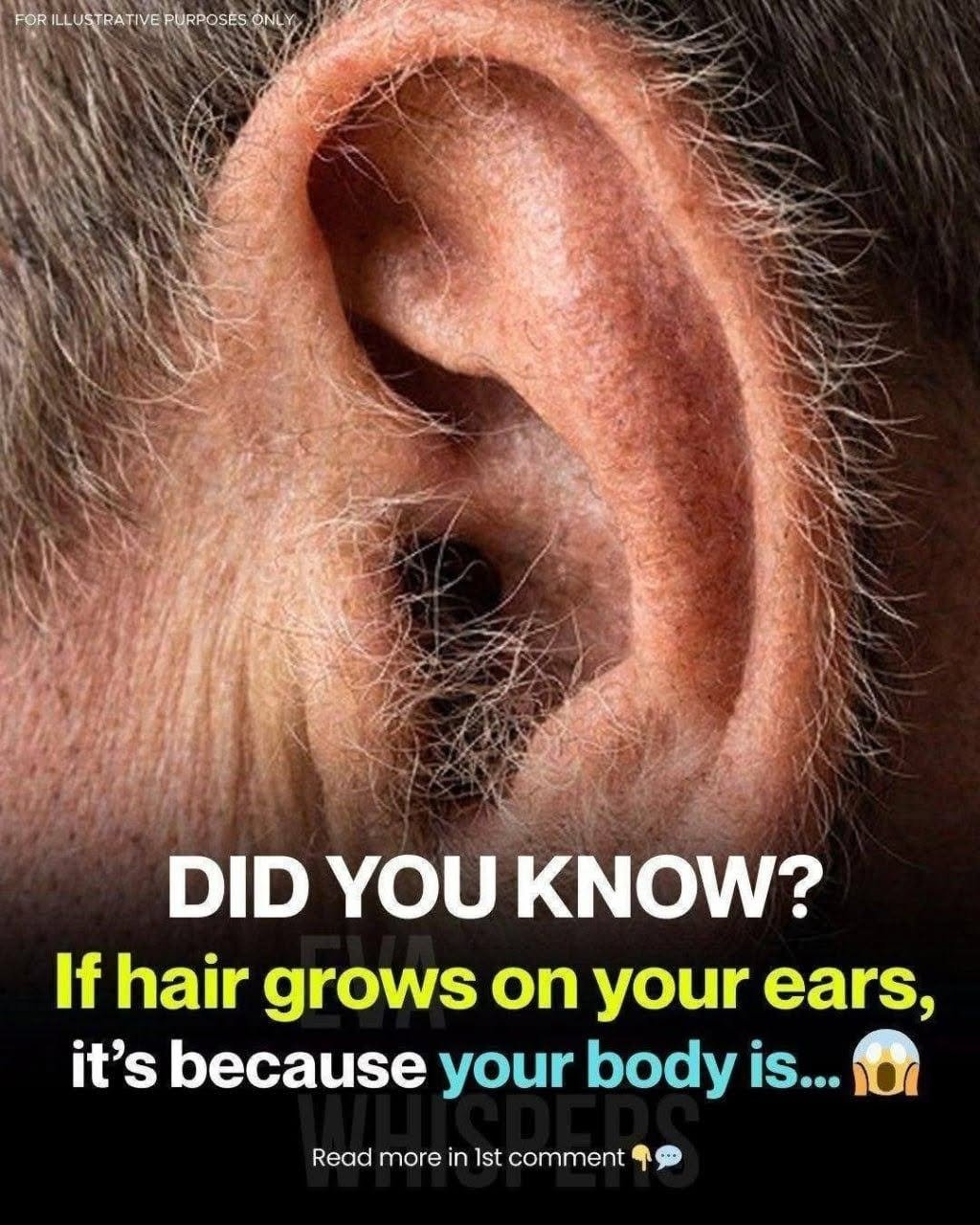
When sensationalized clickbait ads and articles tease headlines like “If hair grows on your ears, it’s because your body is…” followed by a dramatic ellipsis, they are weaponizing a completely normal human trait to manufacture unwarranted anxiety. They typically frame ear hair as a shocking sign of internal toxicity, failing organs, or runaway disease.
In reality, ear hair growth is a straightforward physiological response to aging and hormonal signaling. Understanding the actual biology of hair follicles helps separate harmless maturation from medical fiction.
The Real Biology of Ear Hair Growth
Hair growth across the human body is governed by genetics, age, and our endocrine system—specifically how hair follicles respond to androgens (hormones like testosterone).
-
Androgen Sensitivity and Aging: As people age (particularly men, though women experience hormonal shifts post-menopause as well), the sensitivity of hair follicles to androgens changes. While hair on the scalp may thin due to miniaturization, follicles in areas like the ears, nose, and eyebrows can paradoxically become more sensitive, causing terminal hairs to coarsen, darken, and lengthen over time.
-
The Role of Vellus vs. Terminal Hair: Everyone has fine, vellus hairs covering almost their entire body, including the outer ear. With age, hormonal signals stimulate these dormant or fine follicles to transition into thick, coarse terminal hairs.
-
Filtering Function: Even when ear hair becomes more prominent, it serves a biological purpose: microscopic hairs inside and around the ear canal act as a physical barrier, trapping dust, debris, and small foreign particles before they can reach the delicate tympanic membrane (eardrum).
What Clickbait Myths Get Wrong
Sensationalized wellness posts rely on fear-mongering to capture clicks:
-
The “Toxic Buildup” Lie: Articles often claim that unexpected hair growth in unusual places is a sign that your body is suffocating under toxins or that your metabolic organs are failing. In reality, hair follicles do not act as excretion channels for systemic toxins.
-
Pathologizing Normal Maturation: Framing ear hair as a sudden medical emergency ignores the fact that shifting hair patterns are a universal, genetically programmed part of human aging.
The Bottom Line
Finding coarse hair growing on or inside your ears is not a secret warning sign of organ danger; it is simply a normal, albeit sometimes annoying, milestone of biological aging and hormonal shifts. If it bothers you aesthetically, simple grooming (trimming or careful removal) solves the issue—no medical detox required.
