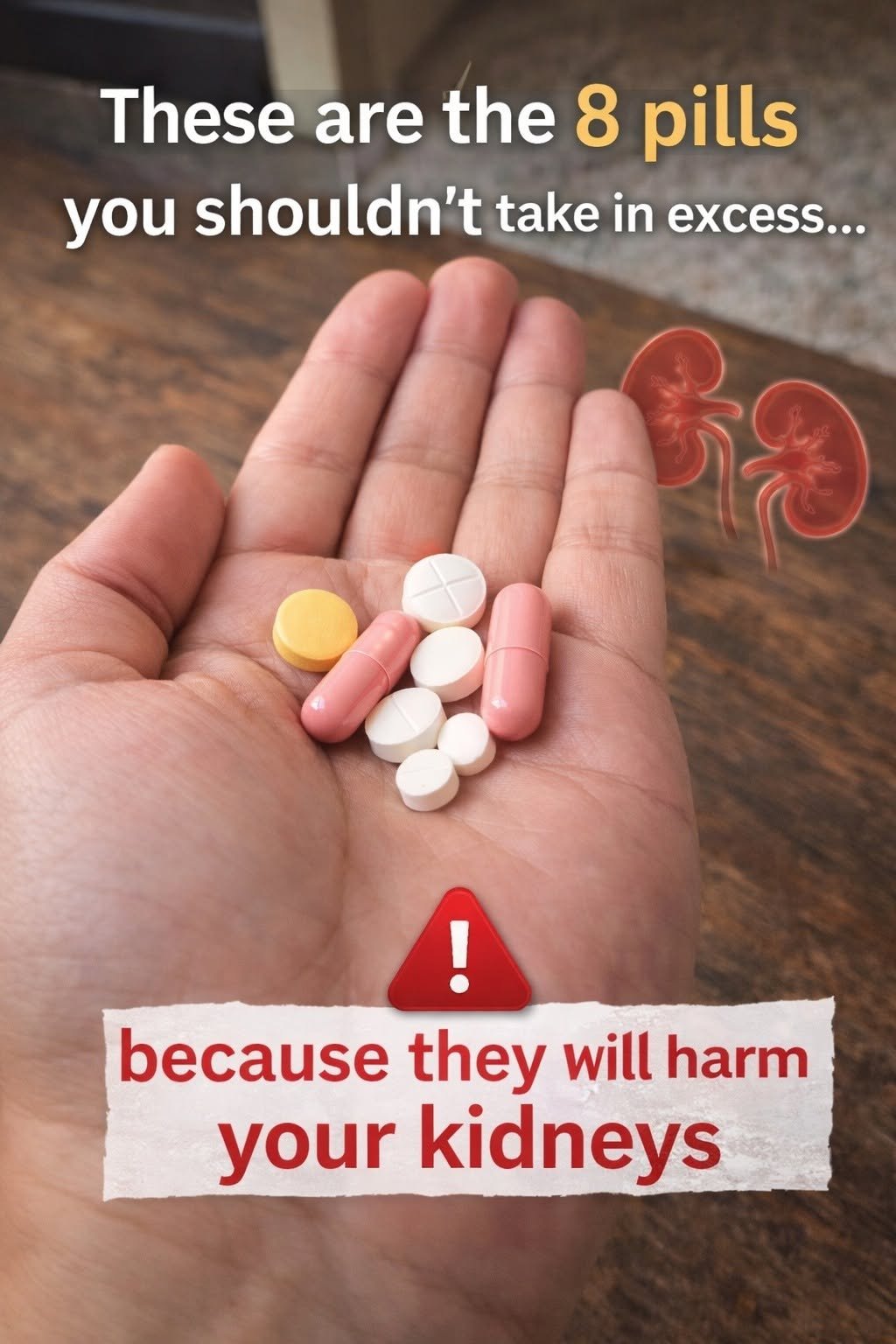
When health headlines warn about medications you should avoid taking in excess to protect your kidneys, they are addressing a genuine and important aspect of clinical pharmacology: nephrotoxicity (medication-induced kidney stress).
Your kidneys act as the body’s master filtration plant, processing and clearing out chemical byproducts, toxins, and medications 24 hours a day. Because of this high-volume filtration duty, taking certain substances in excess or combining them improperly can strain the delicate filtering units (nephrons) inside the kidneys.
Rather than viewing these medications with blind panic, understanding how specific classes of drugs interact with your kidneys helps you use them safely and effectively.
1. Over-the-Counter Pain Relievers (NSAIDs)
-
Common Examples: Ibuprofen (Advil, Motrin), Naproxen (Aleve), and high-dose Aspirin.
-
The Kidney Impact: Nonsteroidal anti-inflammatory drugs work by blocking hormones called prostaglandins. While this effectively reduces pain and inflammation, prostaglandins also play a vital role in keeping the blood vessels leading into your kidneys dilated and well-perfused. Taking NSAIDs in excess—or using them chronically—reduces blood flow to the kidneys, which can trigger acute kidney injury or chronic wear-and-tear.
2. Proton Pump Inhibitors (PPIs)
-
Common Examples: Omeprazole (Prilosec), Lansoprazole (Prevacid), Esomeprazole (Nexium).
-
The Kidney Impact: PPIs are widely used for acid reflux and ulcers. While generally safe for short-term relief, chronic, unmonitored excess use has been linked in clinical studies to an increased risk of chronic kidney disease and a condition called acute interstitial nephritis—an inflammatory reaction in the kidney tissue.
3. Certain Antibiotics
-
Common Examples: Aminoglycosides (like Gentamicin), Vancomycin, and certain high-dose penicillins or cephalosporins.
-
The Kidney Impact: Some antimicrobial agents are directly filtered through the kidney tubules where high concentrations can cause cellular stress or form microscopic crystals that temporarily impede urine flow. This is precisely why doctors calculate antibiotic dosages strictly based on body weight, age, and kidney function tests (like eGFR), and why “leftover” antibiotics should never be self-prescribed.
4. Blood Pressure Medications (ACE Inhibitors and ARBs)
-
Common Examples: Lisinopril, Enalapril, Losartan, Valsartan.
-
The Kidney Impact: This category represents a clinical paradox. When managed correctly by a physician, these drugs actually protect kidney function over the long term, especially in patients with diabetes or hypertension. However, taking them in excess, or combining them improperly with dehydration or other drugs (the infamous “triple whammy” with diuretics and NSAIDs), can sharply drop filtration pressure inside the kidney, temporarily spiking creatinine levels.
5. Diuretics (“Water Pills”) Taken to Excess
-
Common Examples: Furosemide (Lasix), Hydrochlorothiazide.
-
The Kidney Impact: Diuretics help the body shed excess fluid for conditions like heart failure or high blood pressure. However, taking excessive doses or using them while dehydrated strips the body of vital fluid volume, causing renal blood flow to plummet and placing sudden stress on the kidneys.
6. Contrast Dyes Used in Medical Imaging
-
Common Examples: Iodinated radiocontrast agents used in CT scans and angiograms.
-
The Kidney Impact: While not a daily pill, receiving high volumes of intravenous contrast dye—especially in patients with pre-existing underlying kidney vulnerability—can temporarily reduce blood flow and cause cellular oxidative stress in the kidneys (contrast-induced nephropathy). Physicians routinely check kidney function labs beforehand and ensure proper hydration to mitigate this risk.
7. Lithium and Certain Psychiatric Medications
-
Common Examples: Lithium carbonate, Amitriptyline.
-
The Kidney Impact: Lithium is a crucial mood stabilizer used for bipolar disorder, but it has a narrow therapeutic window. Taking it in excess or failing to maintain routine blood level monitoring can lead to long-term tubular changes in the kidneys, requiring close physician oversight.
8. High-Dose Mineral Supplements and Laxatives
-
Common Examples: Over-the-counter sodium phosphate bowel preps or excessive use of certain heavy metal/mineral supplements.
-
The Kidney Impact: Many people assume “natural” means completely harmless. However, excessive oral sodium phosphate solutions or unmonitored herbal/mineral concentrations can deposit crystals in the kidney tubules or severely disrupt electrolyte balances, occasionally leading to acute injury.
What Internet Clickbait Gets Wrong
Sensationalized wellness articles love to use words like “destroy” or “poison” to make standard medications sound like toxins. In clinical medicine, the adage “the dose makes the poison” applies directly:
-
Context Matters: Many of these drugs are life-saving when taken under medical supervision. The danger arises from excess, chronic self-medication, dehydration, or mixing incompatible drug classes without a doctor’s guidance.
-
Reversibility: Many forms of medication-related kidney strain are fully reversible if caught early through routine blood work and managed by adjusting doses or stopping the offending agent.
The Bottom Line
Protecting your kidneys doesn’t mean avoiding all medicine. It means avoiding casual overuse of over-the-counter painkillers, finishing or taking prescription drugs strictly as directed, staying well-hydrated, and keeping your healthcare provider informed about every supplement and pill you take.
