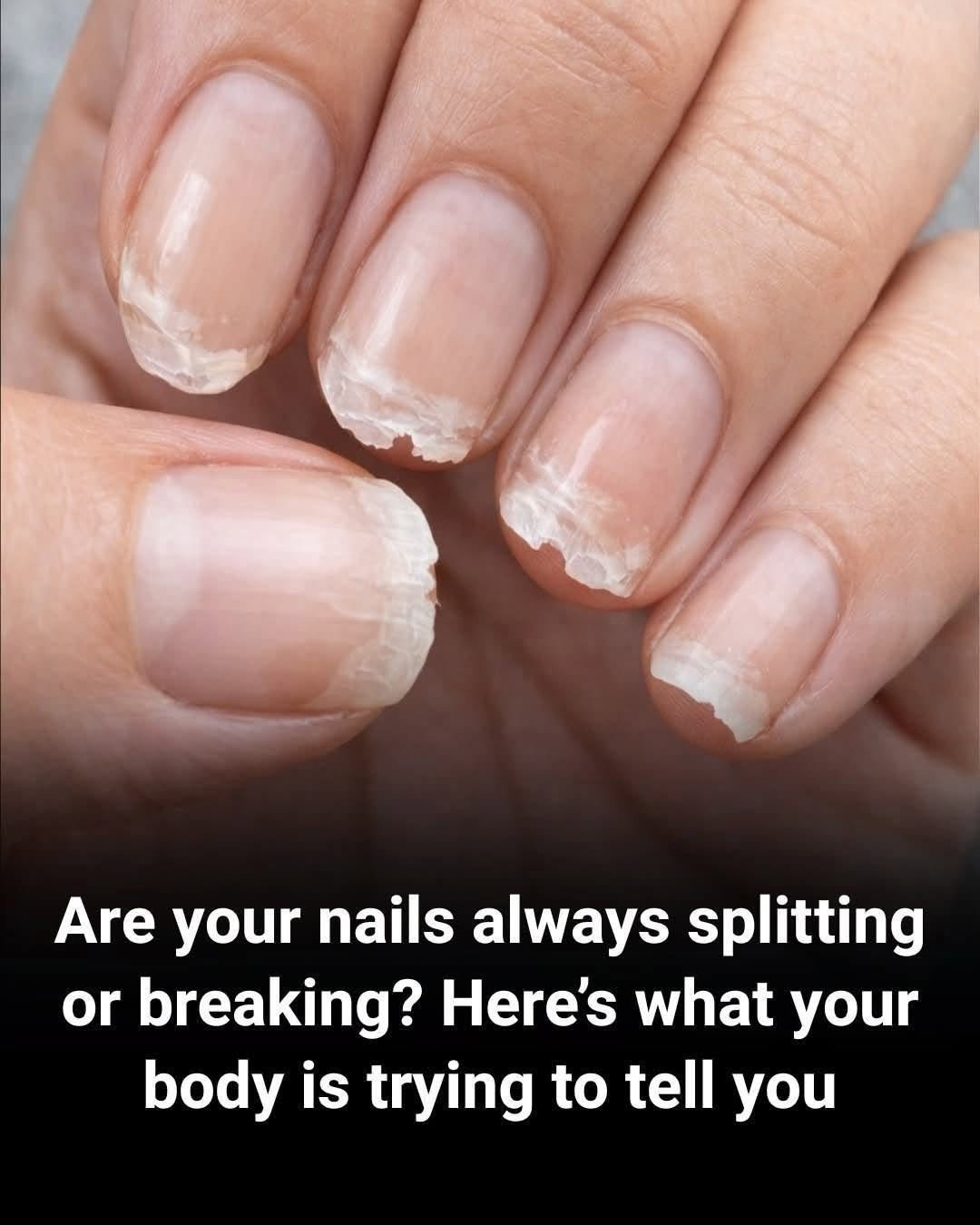
When beauty magazines and wellness blogs feature articles like “Weak or Brittle Nails: What Your Body Is Trying to Tell You,” they often jump straight to dramatic conclusions—implying that a split nail or a peeling tip is a secret neon sign for a severe systemic disease or a catastrophic vitamin deficiency.
While fingernails can offer subtle clues about your overall well-being, the reality of nail brittleness is usually far more grounded in everyday physical habits and environmental factors than in hidden medical emergencies.
The Reality of Brittle Nails (Onychoschizia)
Medically referred to as onychoschizia, brittle nails—characterized by splitting, peeling, or cracking at the free edges—are remarkably common.
The vast majority of nail weakness comes from external environmental wear and tear rather than internal pathology:
-
The Wet-Dry Cycle: The most frequent culprit is the repeated soaking and drying of hands. Water causes the nail plate to swell slightly; as it dries, the nail contracts. This constant expansion and shrinkage breaks down the cellular bonds holding the layers of keratin together, causing them to peel apart.
-
Chemical Exposure: Frequent contact with harsh dish soaps, household cleaning agents, acetone-based nail polish removers, or prolonged exposure to artificial nail products strips the natural oils and moisture from the nail bed.
-
Natural Aging: Just as skin changes over time, nails naturally tend to lose moisture and become drier or more fragile as people age.
What Internet “Warning Lists” Exaggerate
Sensationalized wellness articles love to spin simple physical wear into frightening internal diagnoses:
-
The “Instant Deficiency” Panic: Viral posts frequently claim that weak nails mean you are suffering from severe malnutrition or a dangerous lack of specific vitamins. While rare, profound deficiencies (such as iron-deficiency anemia) can impact nails—often accompanied by distinct signs like spoon-shaped nails (koilonychia) or systemic symptoms like chronic fatigue—occasional peeling nails in an otherwise healthy person are almost never caused by a vitamin shortage.
-
The Biotin Miracle Myth: The internet often treats biotin supplements as a mandatory cure-all for weak nails. Unless a genuine clinical deficiency is present, popping high-dose biotin rarely transforms nail strength overnight.
Practical Ways to Protect and Strengthen Your Nails
Instead of stressing over complex internal disease theories, you can protect your nails with a few simple, evidence-based habits:
-
Glove Up: Wear waterproof, cotton-lined rubber gloves when washing dishes, cleaning, or handling harsh chemicals.
-
Lock in Moisture: Apply a rich hand cream, lotion (especially those containing lanolin or alpha-hydroxy acids), or cuticle oil regularly—particularly immediately after washing your hands while skin and nails are still slightly damp.
-
Gentle Maintenance: File your nails in one direction rather than sawing back and forth, which can fray the keratin edges, and avoid using harsh metal tools under the nail bed.
The Bottom Line
Most weak or brittle nails are simply a reaction to water, weather, or work—not a medical emergency. By keeping your hands moisturized and protecting them from harsh chemicals, you can easily restore your nails’ resilience without falling for clickbait panic.
