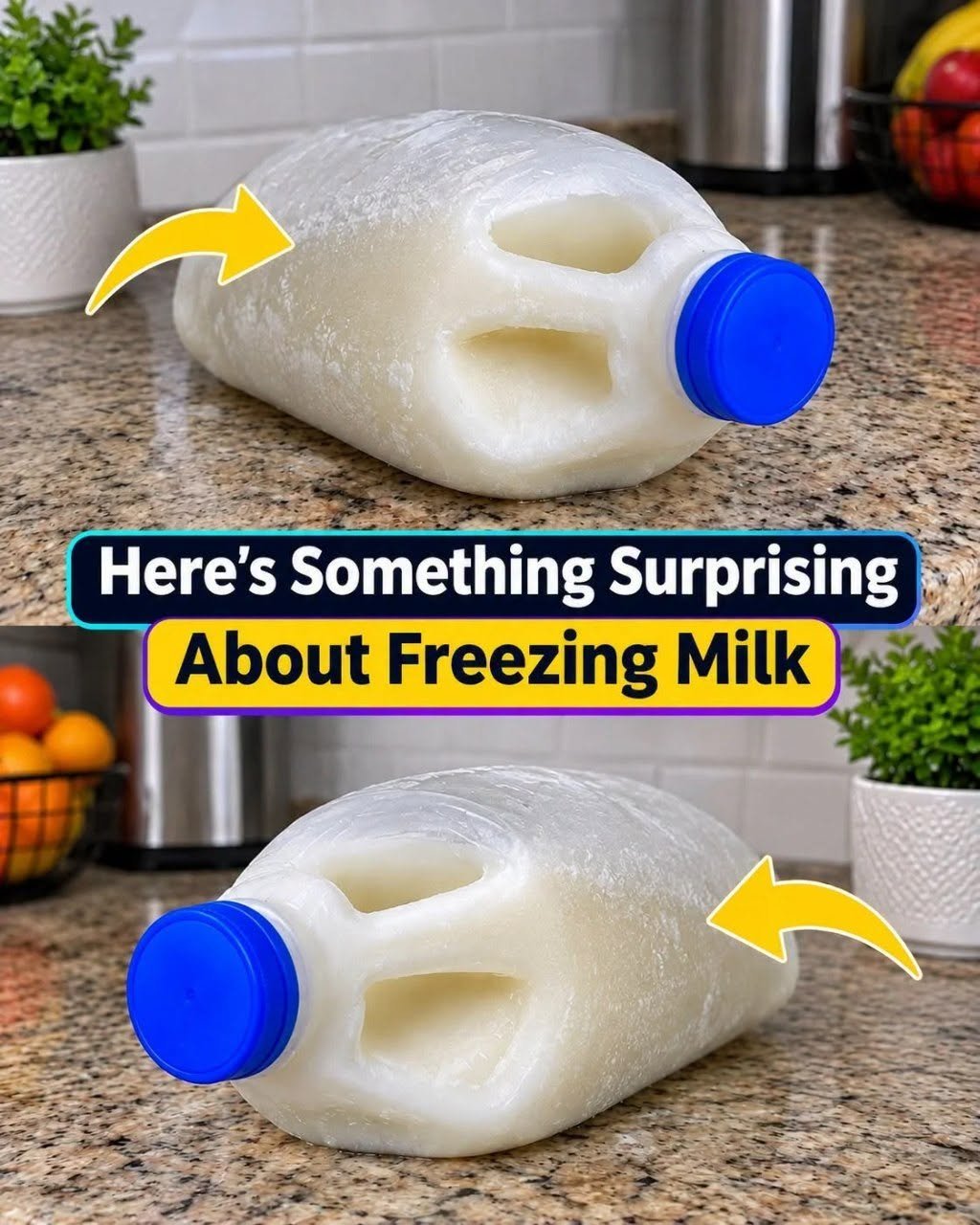
When viral social media posts or life-hack videos tease an incomplete sentence like “I never knew freezing milk could…” they often try to frame a completely normal kitchen trick as a shocking revelation or a hidden disaster.
In reality, freezing milk is a safe, practical way to extend its life and prevent food waste, provided you understand a few basic physical quirks about how dairy behaves in sub-zero temperatures.
What Actually Happens When You Freeze Milk
Freezing milk doesn’t ruin it or turn it toxic, but it does cause a few visible changes:
-
Expansion and Separation: Water expands as it freezes, and the milk fats tend to separate from the liquid. When you thaw it, the milk might look slightly watery, grainy, or separated.
-
The Fix: This separation is purely physical, not chemical or a sign of spoilage. Once the milk is completely thawed in the refrigerator, a vigorous shaking or a quick spin in a blender will pull the fats and liquids back together smoothly.
What Clickbait “Warning Hooks” Get Wrong
Sensationalized posts love to exploit the physical changes of frozen milk to create unnecessary alarm:
-
The “Ruined Chemistry” Myth: Clickbait articles often claim that freezing destroys the nutritional value of milk or transforms it into a chemical hazard. Aside from minor changes in texture if not mixed well, pasteurized cow’s milk retains its core nutritional profile safely in the freezer.
-
The Exploding Container Scare: While milk can expand and crack a rigid container, this isn’t a mysterious anomaly—it’s basic physics. Leaving an inch or two of headspace at the top of a freezer-safe container completely prevents it.
Best Practices for Freezing Milk
If you have extra milk and want to stock your freezer safely, keep these simple rules in mind:
-
Check the Date: Freeze milk while it is still fresh and well before its expiration date. Freezing pauses spoilage, but it cannot reverse milk that has already gone sour.
-
Choose the Right Container: Never freeze milk in standard glass jars unless they are specifically rated for freezers, as expanding ice will shatter them. Sturdy food-grade plastic containers or freezer bags work best.
-
Thaw Safely: Always thaw frozen milk slowly by moving it to the refrigerator (which can take 24 to 36 hours) rather than leaving it out at room temperature, which invites bacterial growth.
-
Best Uses: Because the texture can occasionally turn slightly grainy depending on the fat content, thawed milk is usually ideal for cooking, baking, oatmeal, or smoothies, though many people find it tastes completely normal after a good shake.
The Bottom Line
Freezing milk is a handy, low-stress trick for cutting down on grocery waste. You don’t need to worry about secret dangers—just leave room for expansion, thaw it in the fridge, give it a shake, and use it with confidence.
