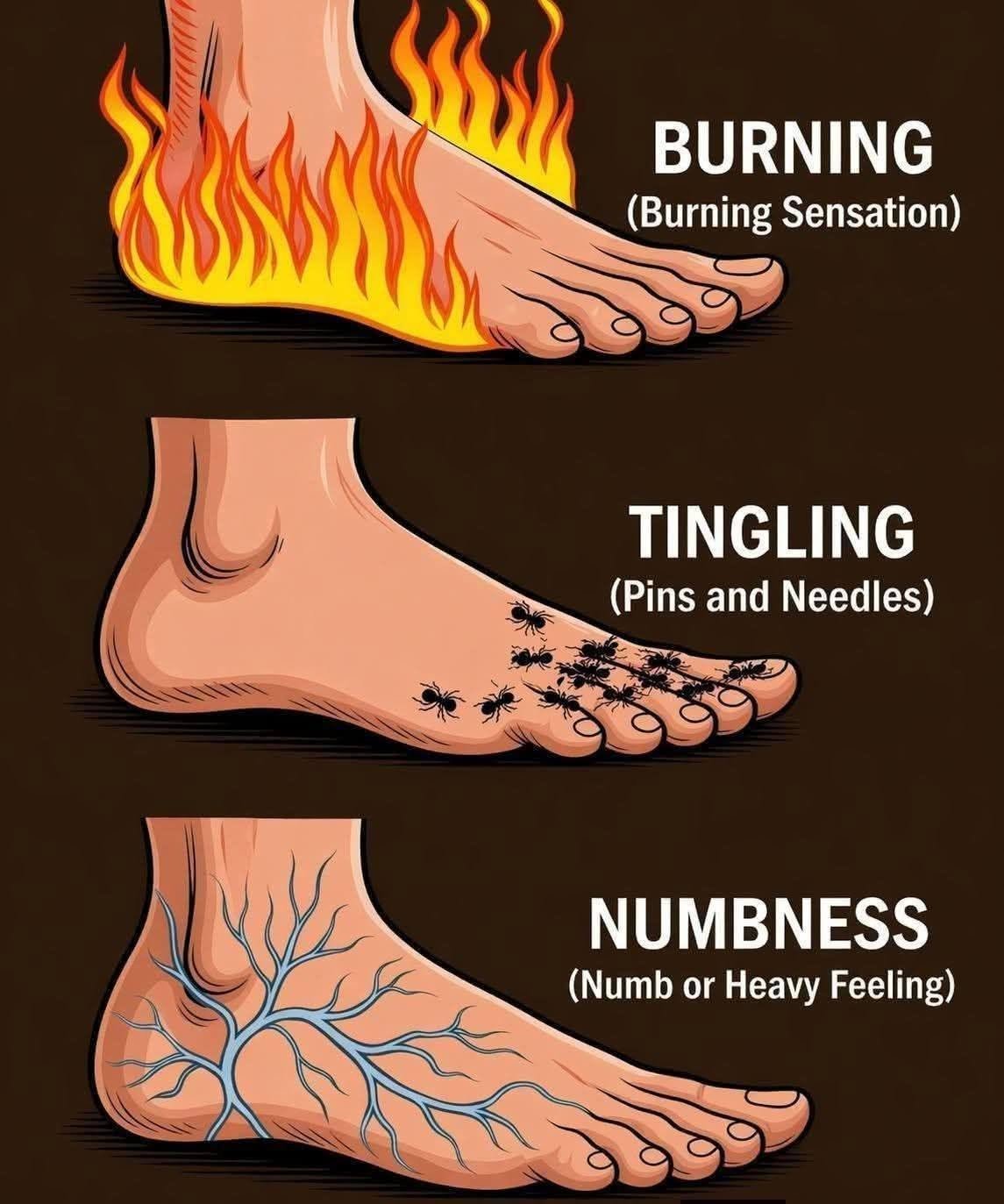
When sensationalized health articles or late-night ads pop up offering dramatic explanations for burning, numbness, and tingling in the feet, they often try to turn ordinary discomfort into an ominous medical cliffhanger.
In clinical reality, these sensations—medically known as paresthesias and neuropathic discomfort—are specific signals that the sensory nerves in your lower extremities are under stress, compressed, or damaged. Rather than a mysterious emergency, doctors evaluate these symptoms by tracking down the exact mechanical or metabolic source.
What Clickbait “Foot Numbness” Myths Get Wrong
-
The “Instant Paralysis” Fallacy: Clickbait feeds love to frame tingling feet as the immediate precursor to catastrophic systemic failure, ignoring the fact that many causes are localized, mechanical, or entirely manageable.
-
The “One-Size-Fits-All” Panacea: Sensationalized online remedies often push generic supplements or magical creams, assuming all foot discomfort stems from the exact same root cause.
The Clinical Reality: Why Feet Burn, Numb, and Tingle
Neurologists, podiatrists, and primary care physicians look at paresthesias through a grounded physiological framework. The sensory nerves running from your spinal cord to your toes require a constant supply of oxygen, blood, and vital nutrients. When that supply is disrupted or the nerve is physically pinched, it misfires—producing sensations of heat, pins-and-needles, or deadened numbness.
The most common clinical categories behind these symptoms include:
-
Peripheral Neuropathy (Metabolic and Diabetic):Long-standing high blood glucose levels can gradually damage the small blood vessels and delicate fibers that feed and protect peripheral nerves. This is why diabetic neuropathy is one of the most frequent drivers of chronic burning and tingling in both feet.
-
Nerve Compression and Entrapment: Physical pressure can cause localized symptoms. For example, tarsal tunnel syndrome occurs when the tibial nerve is squeezed as it passes through the narrow space inside the ankle, leading to burning and pain in the sole. Similarly, structural issues like Morton’s neuroma or poorly fitted footwear can compress local nerves.
-
Nutritional and Metabolic Deficiencies: Nerves require specific building blocks to function correctly. A deficiency in key vitamins—most notably Vitamin B12, as well as other B vitamins or copper—can directly impair nerve sheath integrity, causing characteristic tingling and burning (sometimes historically referred to as Grierson-Gopalan syndrome). Certain medications, such as long-term use of acid reflux drugs like metformin (which can impact B12 absorption), are also factored into clinical evaluations.
-
Circulatory and Vascular Factors:Conditions like peripheral artery disease (PAD) narrow the arteries supplying the legs and feet. When reduced blood flow fails to meet tissue demand—particularly at rest or when legs are elevated—it can trigger deep aching and burning sensations.
Evidence-Based Steps for Evaluation and Care
If you experience persistent burning, numbness, or tingling in your feet, skip the internet panic and approach it systematically with a healthcare professional:
-
Get a Targeted Clinical Workup: A physician can perform simple, non-invasive physical and neurological assessments—such as monofilament and tuning fork tests—alongside blood panels to check your blood glucose, kidney function, and vitamin B12 levels.
-
Protect Desensitized Feet: If you experience numbness, your ability to sense pain or temperature is compromised. Inspect your feet daily for cuts, blisters, or pressure sores, and wear well-fitting, supportive shoes to prevent secondary injuries.
-
Address the Root Cause: Effective management depends entirely on treating the underlying driver—whether that involves tighter glycemic control, adjusting a medication, correcting a vitamin deficiency, or relieving mechanical nerve compression through specialized footwear or physical therapy.
