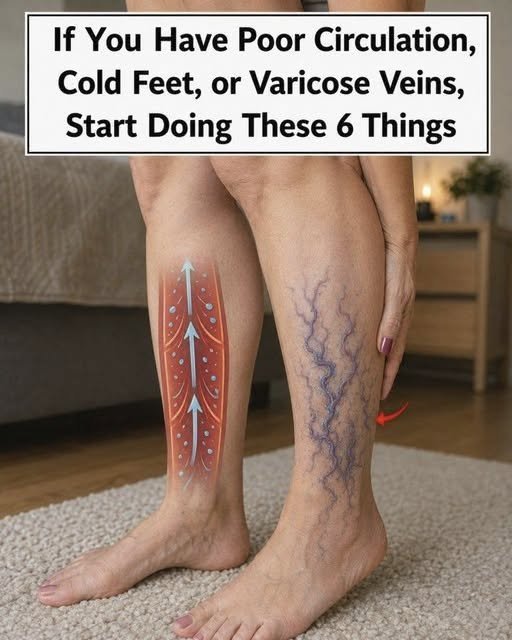
Daily Habits to Support Vascular Health and Circulation
Whether you experience persistent cold feet, heavy or aching legs at the end of the day, or visible varicose veins, your circulatory system relies heavily on daily lifestyle factors. Because veins must fight gravity to push blood back up from your lower extremities to your heart, small, consistent habits can make a significant difference in reducing venous pressure and keeping blood flowing smoothly.
Here are six everyday habits recommended by vascular specialists to support healthy circulation:
1. Activate the “Calf Muscle Pump” Regularly
-
Why It Helps: Your lower legs act as a secondary heart. Every time your calf muscles contract—such as when you walk, flex your ankles, or march in place—they mechanically squeeze the deep veins, pushing blood upward against gravity. Prolonged sitting or standing causes blood to pool in the lower limbs, increasing pressure inside the vein walls.
-
Actionable Habit: Take a short, 10-minute walk or set a timer to stand up, stretch, and perform 15 to 20 seated calf raises or ankle circles every 30 to 60 minutes during the workday.
2. Elevate Your Legs Strategically
-
Why It Helps: Gravity is the primary adversary of venous return. When you sit or stand all day, blood collects in the lower veins, straining the delicate one-way valves that prevent backflow.
-
Actionable Habit: At the end of the day or during breaks, lie down and prop your legs up on pillows so that your feet rest above the level of your heart for 10 to 15 minutes. This instantly relieves venous pressure and reduces swelling.
3. Maintain Consistent Hydration
-
Why It Helps: Blood is roughly half water. When you are dehydrated, your blood volume drops and blood can become slightly thicker or more viscous, forcing your heart and circulatory system to work harder to push fluid through narrow or distant micro-vessels in your hands and feet.
-
Actionable Habit: Keep a glass or reusable bottle of water nearby and sip fluids steadily throughout the day rather than drinking large amounts all at once.
4. Ditch Constrictive Clothing and Restrictive Footwear
-
Why It Helps: Tight trousers, restrictive shapewear, heavy elastic waistbands, or narrow, high-heeled shoes can physically compress surface blood vessels and hinder the natural return of blood from your lower body to your torso.
-
Actionable Habit: Opt for comfortable, looser-fitting clothing during long periods of sitting or travel, and choose supportive, low-heeled footwear that allows your feet and toes to move freely. If you are considering medical-grade compression stockings to assist with venous return, consult your doctor for proper sizing.
5. Warm Cold Feet Safely (Avoiding Direct Extreme Heat)
-
Why It Helps: Chronic cold feet are often a sign of peripheral vasoconstriction or reduced micro-circulation. When feet feel ice-cold, it is tempting to submerge them in very hot water or press them directly against a space heater or heating pad. However, if poor circulation has slightly dulled your nerve sensation, you may not realize when heat is intense enough to cause skin damage or burns.
-
Actionable Habit: Keep your feet warm using breathable, high-quality wool or cotton socks, and ensure your overall core body temperature is maintained. If using a warm bath, test the water temperature with your hand first and step in gradually.
6. Keep Sodium and Processed Fats in Check
-
Why It Helps: Excessive dietary sodium causes your body to retain fluid, increasing overall blood volume and putting extra hydrostatic pressure on your veins and arteries. Meanwhile, diets high in trans fats and heavily processed foods contribute to arterial plaque buildup, stiffening vessel walls over time.
-
Actionable Habit: Focus on a heart-healthy pattern rich in soluble fiber, leafy greens, berries, and healthy fats (such as the Mediterranean diet), while actively reading labels to keep sodium intake moderate.
