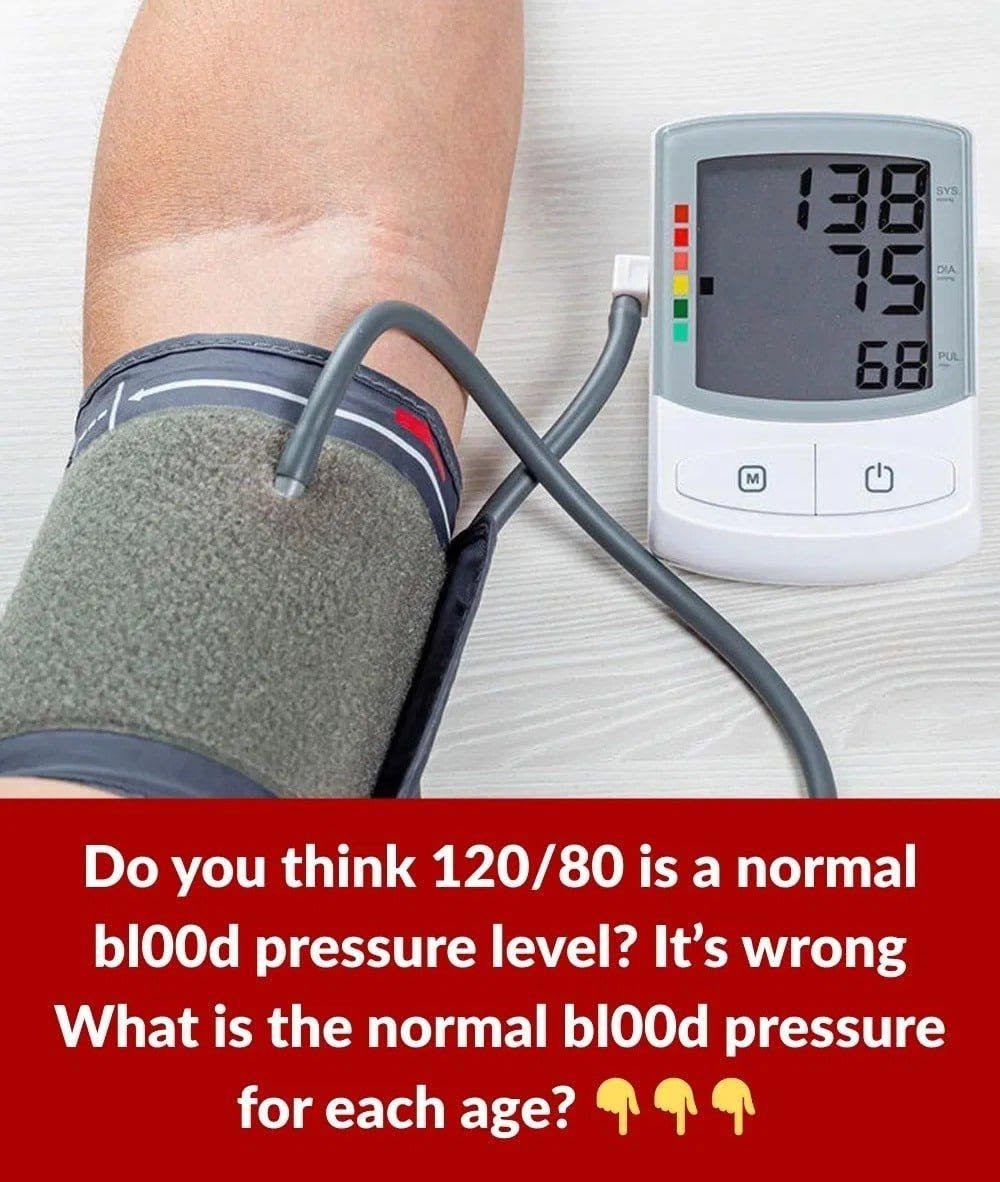
In clinical medicine, there is a distinct difference between what is average for an age group and what is clinically healthy.
While population averages tend to rise as people get older—due to the natural stiffening of arterial walls over time—major cardiovascular guidelines (such as those from the American Heart Association and American College of Cardiology) maintain that the ideal, healthy blood pressure target for all adults is less than 120/80 mmHg, regardless of age.
Here is a breakdown of blood pressure standards, categorized by age groups and clinical categories:
1. Adult Blood Pressure Categories (Ages 18 and Older)
For adults of any age, a single reading uses two numbers: systolic (the top number measuring pressure when the heart beats) and diastolic (the bottom number measuring pressure when the heart rests between beats).
-
Normal: Less than 120 / 80 mmHg
-
Elevated: Systolic between 120–129 and Diastolic less than 80
-
Hypertension Stage 1: Systolic 130–139 or Diastolic 80–89
-
Hypertension Stage 2: Systolic 140 or higher or Diastolic 90 or higher
-
Hypertensive Crisis: Higher than 180 / 120 mmHg (Requires immediate emergency medical attention)
2. How Blood Pressure Trends Across the Decades (Averages vs. Targets)
While the universal medical target remains below 120/80 mmHg, typical population averages shift as the body ages:
-
Young Adults (18 to 39 years):
-
Typical Average: Roughly 110–120 / 68–78 mmHg.
-
Clinical Reality: Younger adults generally have the most elastic blood vessels. Consistently registering readings in the Stage 1 hypertension range (130/80 or higher) at a young age is an important indicator to address early through lifestyle changes, as it predicts future cardiovascular strain.
-
-
Middle Age (40 to 59 years):
-
Typical Average: Roughly 120–132 / 74–82 mmHg.
-
Clinical Reality: Systolic pressure begins its slow upward climb during these decades due to cumulative vascular changes, making regular annual screenings essential.
-
-
Older Adults (60 years and older):
-
Typical Average: Roughly 130–140 / 68–80 mmHg.
-
Clinical Reality: It is very common for older adults to have average readings that drift into the 130s or 140s. However, “common” is not the same as “safe.” While treatment targets for patients over 80 are sometimes individualized by physicians to prevent dizziness or fall risks, maintaining controlled blood pressure significantly lowers the lifetime risk of stroke and heart attack at any age.
-
3. Pediatric and Adolescent Blood Pressure (Under 18)
Unlike adults, children and teenagers do not have a single fixed cutoff. Normal blood pressure in pediatric medicine is determined using age, height, and biological sex percentiles established by the American Academy of Pediatrics:
-
Newborns: Typically range from 60–90 / 20–60 mmHg (significantly lower because infant vascular beds offer very low resistance).
-
School-Aged Children (6–12 years): Average systolic pressures range roughly from 95 to 110 mmHg.
-
Adolescents (13–18 years): Average ranges approach adult levels, typically settling below 120/80 mmHg. Readings consistently exceeding 130/80 mmHg in a teenager are evaluated by pediatric standards as elevated.
