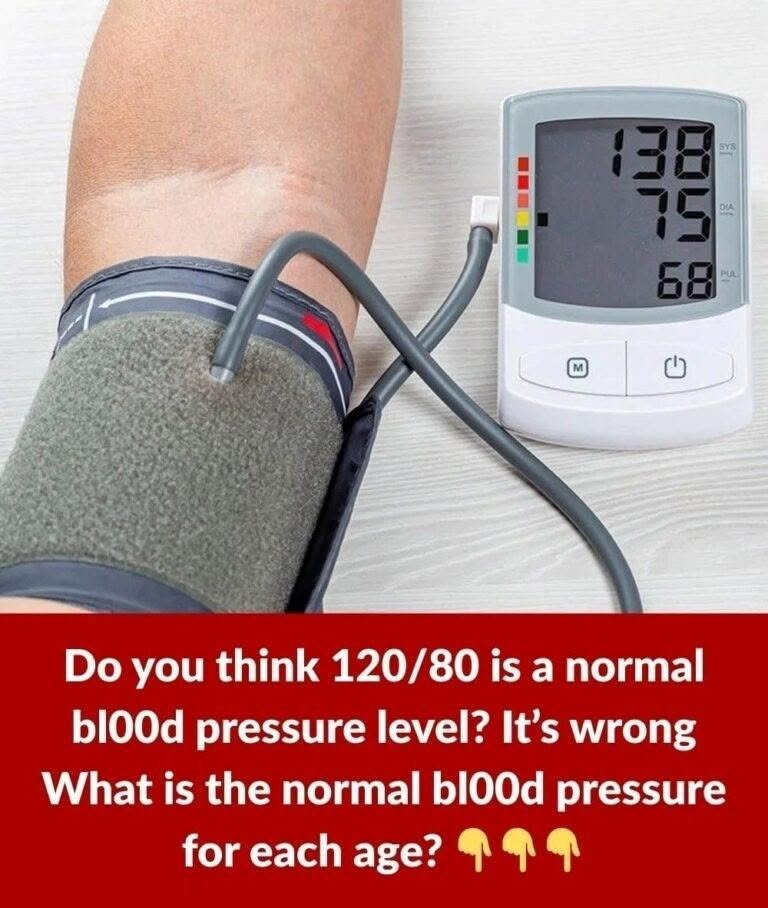
A common misconception is that a “normal” blood pressure reading increases as you get older (such as the old rule of thumb that your systolic pressure should be “100 plus your age”).
According to major medical organizations—including the American Heart Association (AHA) and the American College of Cardiology (ACC)—the target for normal blood pressure is less than 120/80 mm Hg for all adults, regardless of age.
Adult Blood Pressure Categories
For any adult (whether 20, 50, or 80 years old), blood pressure readings are classified into the following standardized categories:
| Blood Pressure Category | Systolic (Top Number) mm Hg | and/or | Diastolic (Bottom Number) mm Hg |
| Normal | Less than 120 | and | Less than 80 |
| Elevated | 120 – 129 | and | Less than 80 |
| Stage 1 Hypertension | 130 – 139 | or | 80 – 89 |
| Stage 2 Hypertension | 140 or higher | or | 90 or higher |
| Hypertensive Crisis (Seek immediate care) | Higher than 180 | and/or | Higher than 120 |
Why Do Averages Change with Age?
While the health standard remains under 120/80 mm Hg, statistical averages do tend to climb as people age.
-
Arterial Stiffening: As we get older, natural wear and tear causes blood vessels and arteries to become less elastic. This often leads to a rise in the top number (systolic pressure), a pattern known as isolated systolic hypertension.
-
Common vs. Healthy: Public health data shows that average readings for older adults often skew higher (e.g., averaging in the 130s for systolic pressure). However, medical experts emphasize that average does not equal optimal—higher readings still carry increased cardiovascular risks, which is why lifestyle adjustments or medications are often prescribed to keep older adults closer to the ideal range where tolerated.
Blood Pressure in Children and Teens
Unlike adults, pediatric blood pressure is not a fixed number. Because children grow at different rates, normal blood pressure for kids under 13 is determined using specialized percentiles based on a child’s age, sex, and height. Teenagers aged 13 and older are generally evaluated using the standard adult guidelines.
