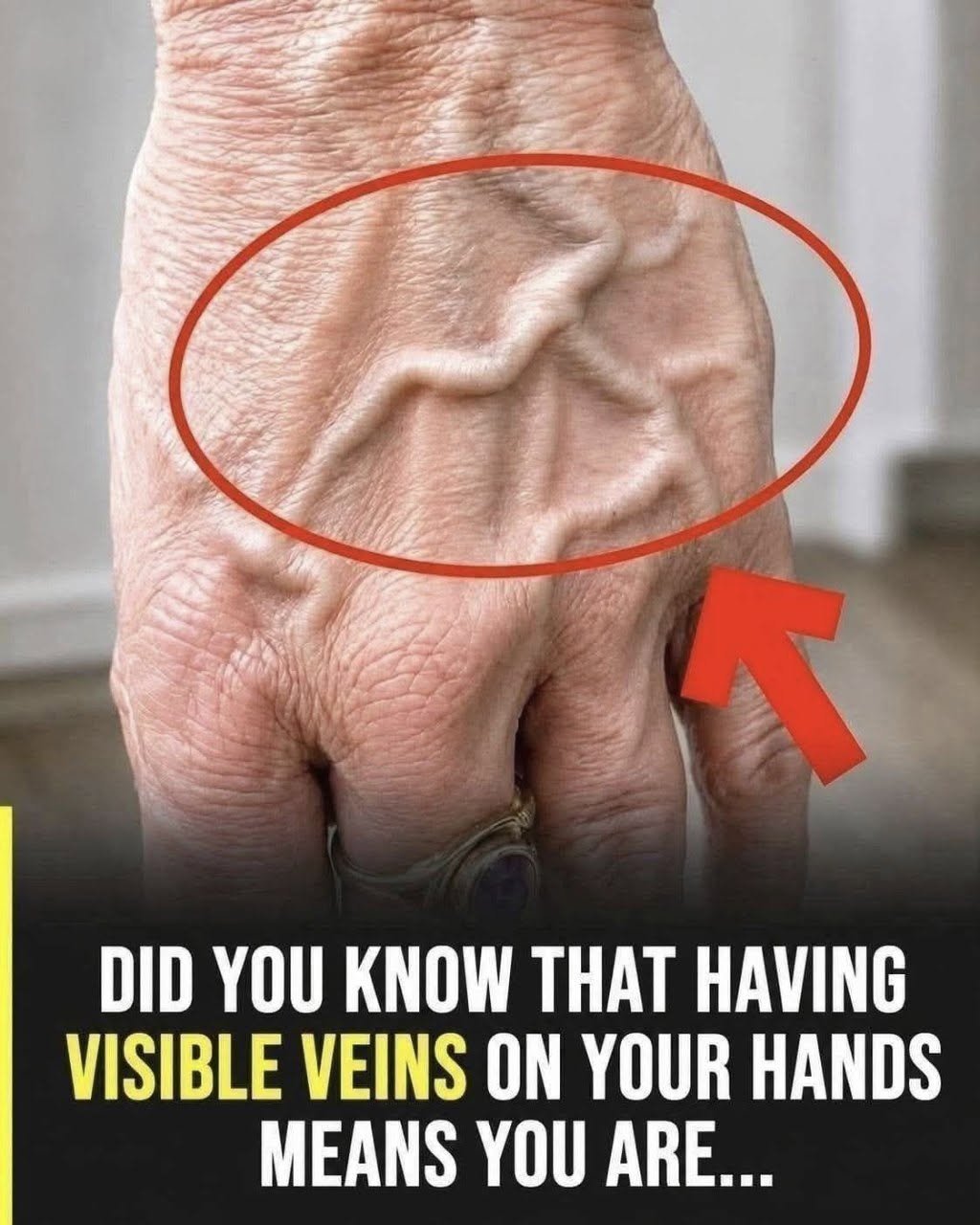
…often pegged in viral health trends as a definitive sign that you are in elite physical shape. While having prominent vascularity is frequently a badge of honor in the fitness world, relying on it as a singular health metric misses several key biological factors.
Beyond just having a low body fat percentage, several surprising physiological variables dictate why and when your veins show up:
1. Your Hydration and Electrolyte Status
There is a common misconception that being dehydrated makes veins pop out more. In reality, proper hydration and electrolyte balance are what keep your blood volume optimal and your blood pressure stable, pushing blood efficiently through your circulatory system and filling out superficial veins. Severe dehydration actually reduces plasma volume, making veins look flatter and less prominent.
2. Skin Thickness and Collagen Density
Genetics play a massive role independent of your fitness level. Some people naturally possess thinner dermis layers or lower concentrations of subcutaneous collagen, making their vascular network naturally visible even if they carry a moderate amount of body fat.
3. Ambient Temperature and Blood Shunting
When you are warm, your body undergoes vasodilation—blood vessels expand to bring warm blood closer to the skin’s surface to release heat. Conversely, in cold weather, your blood vessels constrict to conserve core body heat, causing visible veins to temporarily “hide.”
So, while visible veins often point to a lean physique and strong cardiovascular conditioning, they are just as much a reflection of your genetics, skin structure, temperature, and hydration as they are of body fat!
