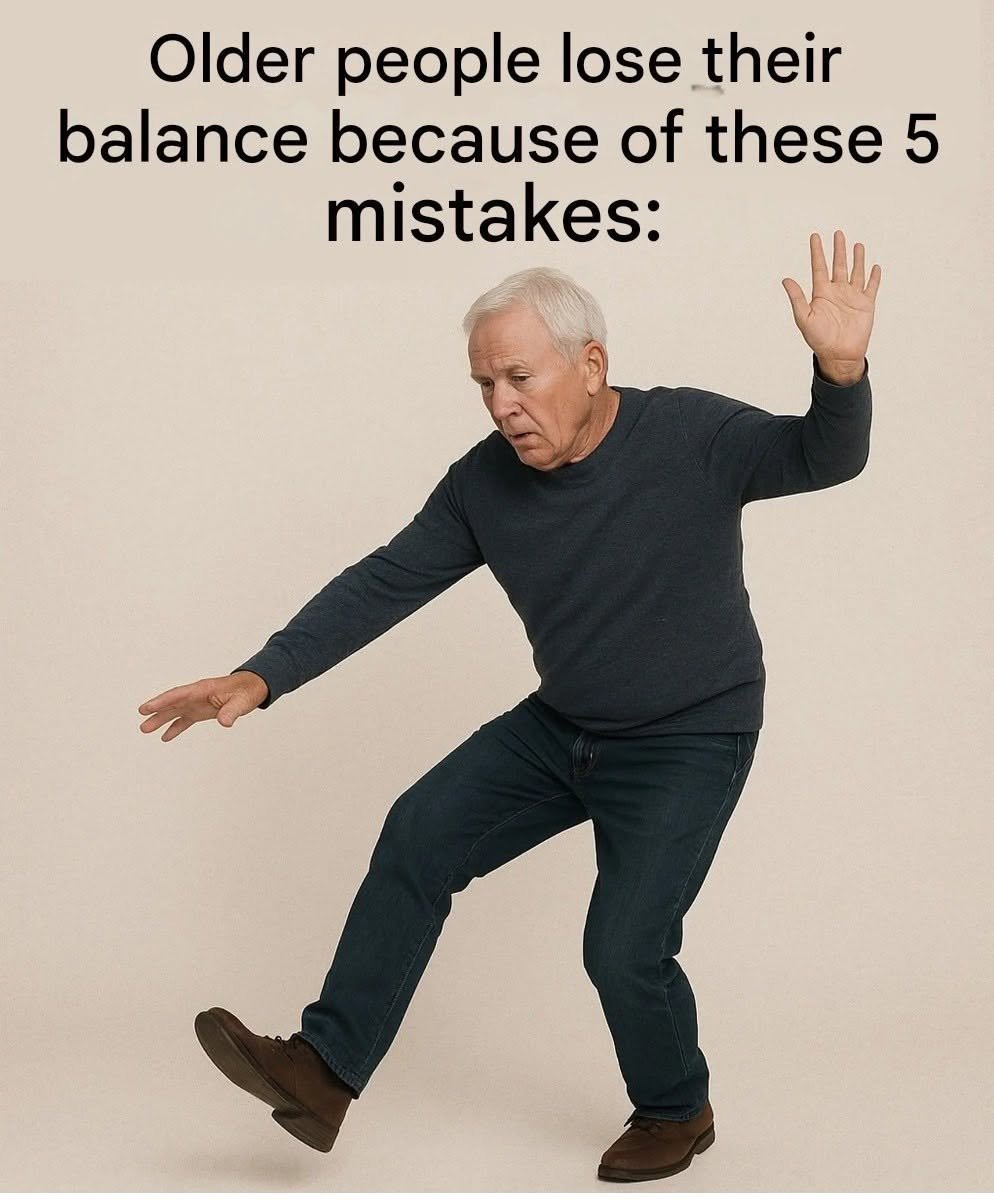
Maintaining balance and stability is vital for preserving independence and preventing dangerous falls as we age. While some age-related changes in balance are normal, many sudden losses of stability are actually triggered by everyday habits and oversights.
Here are 5 common mistakes that cause older adults to lose their balance, along with simple ways to correct them:
1. Wearing Improper, Unsupportive Footwear
-
The Mistake: Walking around the house in slippery socks, loose slippers with worn-out soles, or shoes with uneven heels.
-
Why It Causes Balance Loss: Your feet are your primary foundation; they contain thousands of tiny nerve endings (proprioceptors) that tell your brain where your body is in space. Thick, unbending soles or loose shoes rob your feet of this sensory feedback, making missteps, trips, and slips much more likely.
-
The Fix: Wear supportive, closed-heel shoes with non-skid rubber soles even indoors, and swap slick socks for slippers equipped with reliable grip treads.
2. Overlooking Vision Changes and Failing to Update Eyewear
-
The Mistake: Delaying regular eye exams or wearing outdated eyeglass prescriptions—especially multi-focal lenses (like progressive lenses or bifocals) while walking.
-
Why It Causes Balance Loss: Bifocals and progressives bend light in ways that can distort your perception of depth and the ground right in front of your feet, making a single step or curb look farther away or closer than it actually is.
-
The Fix: Get your eyes checked annually. Consider having a pair of single-vision distance glasses specifically for walking outdoors, and take extra care when navigating stairs if you wear multi-focals.
3. Neglecting Lower Body Strength and Core Stability
-
The Mistake: Maintaining a primarily sedentary lifestyle without incorporating intentional leg and core strengthening exercises.
-
Why It Causes Balance Loss: Balance isn’t just about inner ear function; it relies heavily on strong quadriceps, calves, glutes, and core muscles to make rapid micro-adjustments when you sway. Without regular use, these stabilizing muscles weaken, making it harder to catch yourself if you stumble.
-
The Fix: Incorporate safe, functional movements into your routine, such as chair squats (standing up and sitting down without using your hands), heel-to-toe walking, or gentle standing leg lifts while holding onto a sturdy counter.
4. Dehydration and Blood Pressure Drops
-
The Mistake: Not drinking enough water throughout the day, or standing up too quickly from a seated or lying position.
-
Why It Causes Balance Loss: Mild dehydration reduces overall blood volume. When you transition from lying down or sitting to standing, a sudden drop in blood pressure (orthostatic hypotension) can occur, starving the brain of oxygen for a few seconds and causing sudden dizziness or lightheadedness.
-
The Fix: Sip water steadily throughout the day, and practice the “pause rule”—take a moment to sit on the edge of your bed or chair for 10 to 15 seconds before standing up fully.
5. Cluttered Living Spaces and Poor Lighting
-
The Mistake: Navigating hallways or rooms with loose throw rugs, electrical cords stretched across walking paths, or dim overhead lighting.
-
Why It Causes Balance Loss: Even the most agile person can trip over an unsecured rug edge or miss a low-lying object if shadows obscure their path.
-
The Fix: Remove or securely tape down all loose area rugs, clear floor clutter, install motion-activated nightlights along pathways between the bedroom and bathroom, and ensure every room has bright, glare-free lighting.
