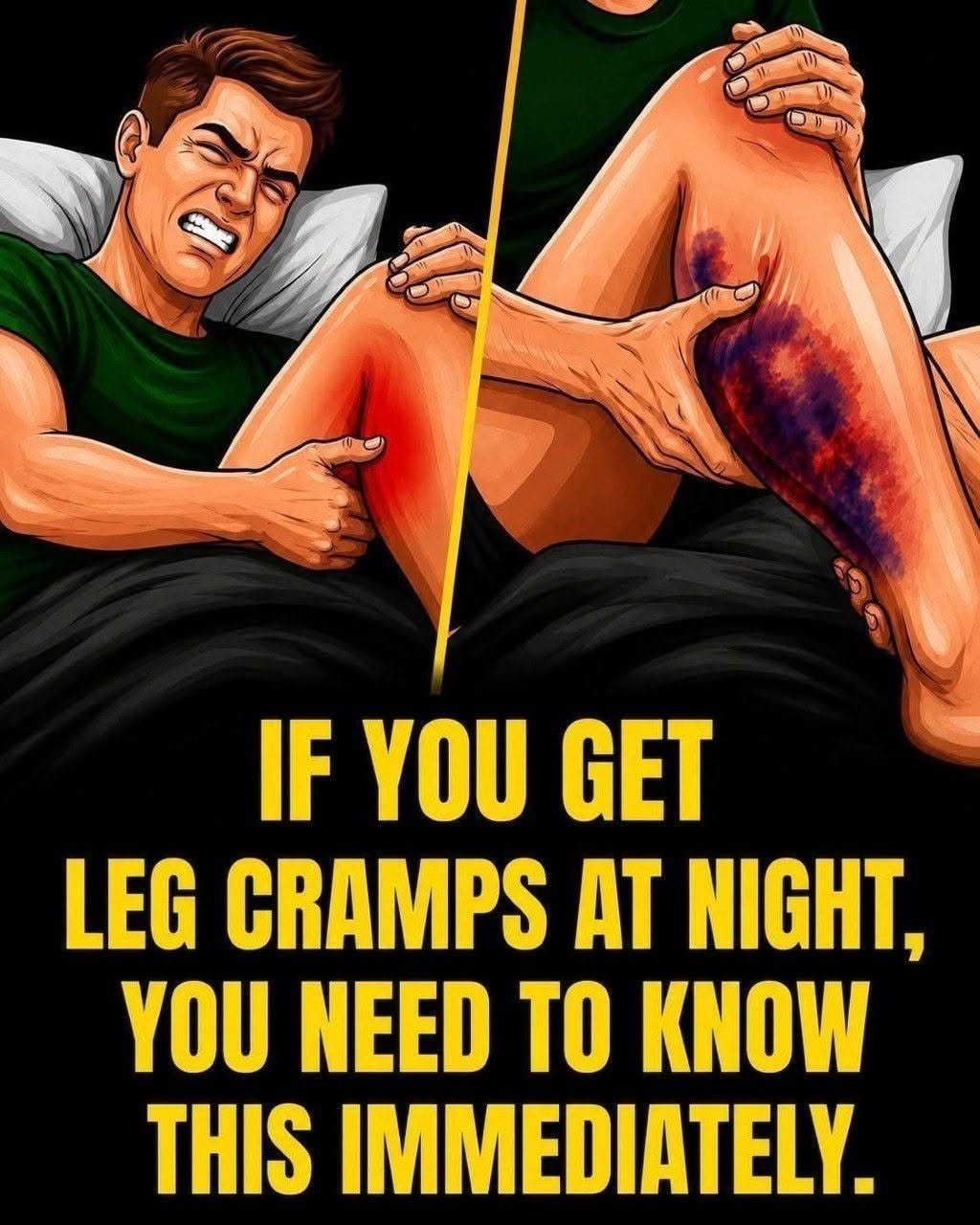
Nighttime leg cramps—those sudden, agonizing contractions that most commonly seize the calf muscles—can wrench you straight out of a deep sleep. While the spasm usually lets up after a minute or two, it often leaves behind a dull, aching soreness that lingers well into the morning.
Ignoring these cramps is a mistake, because they are frequently your body’s physiological alarm system signaling an underlying imbalance, circulatory hitch, or nutrient shortage.
Here is what you need to know about why nighttime leg cramps happen and how to address them:
The Root Causes of Nighttime Leg Cramps
1. Electrolyte and Mineral Deficiencies
-
The Mechanism: Your muscles rely on a precise, continuous electrochemical exchange of magnesium, potassium, calcium, and sodium to contract and relax on command.
-
The Warning: If your levels of these essential minerals dip too low, your motor neurons misfire, causing the muscle fiber to lock up into an uncontrolled, violent spasm. This is especially common in older adults, individuals taking certain medications (like diuretic water pills), or those on restrictive diets.
2. Dehydration and Low Blood Volume
-
The Mechanism: When your body lacks adequate fluids, your overall blood volume decreases and local circulation slows down. Dehydrated muscle tissue becomes hyper-irritable and far more prone to seizing up, particularly after a long day of standing or when exposed to cooler nighttime temperatures.
3. Poor Circulation and Vascular Restrictions
-
The Mechanism: Just as restricted arteries can starve your legs of oxygen during the day (as seen in Peripheral Artery Disease), sluggish nighttime blood flow means your calf muscles struggle to receive a steady stream of oxygen and nutrients while you rest. The physiological shift in blood pooling when you lie flat can trigger these spasms.
4. Nerve Strain and Overuse
-
The Mechanism: Spending hours on your feet, wearing unsupportive footwear, or maintaining sedentary postures that compress nerves in your lower back and legs can fatigue your muscular system, manifesting as painful cramps once you finally relax into bed.
Immediate Action Plan When a Cramp Strikes
-
Instantly Stretch the Muscle: Straighten your leg and pull your toes upward firmly toward your shin (dorsiflexion). This manually lengthens the seized calf muscle and breaks the spasm cycle.
-
Apply Gentle Pressure and Warmth: Firmly massage the cramped area to help the muscle fibers release, or apply a warm compress or heating pad to encourage local blood flow.
-
Walk It Out: Taking a few slow, deliberate steps around the room can help reset the muscle’s nerve signaling.
Proactive Steps for Long-Term Prevention
-
Hydrate Consistently All Day: Drink fluids steadily from morning through afternoon, rather than chugging water right before bed.
-
Prioritize Mineral-Dense Foods: Increase your intake of magnesium and potassium-rich whole foods—such as leafy greens, avocados, nuts, seeds, and bananas.
-
Bedtime Stretching Routine: Spend 5 minutes stretching your calves and hamstrings right before getting into bed to release the day’s accumulated tension.
When to Consult Your Doctor
While occasional night cramps are a common, harmless annoyance, you should speak with a healthcare provider if your cramps are severe, happen almost every night, are accompanied by swelling, redness, or skin discoloration, or if you notice signs of poor circulation in your lower limbs.
