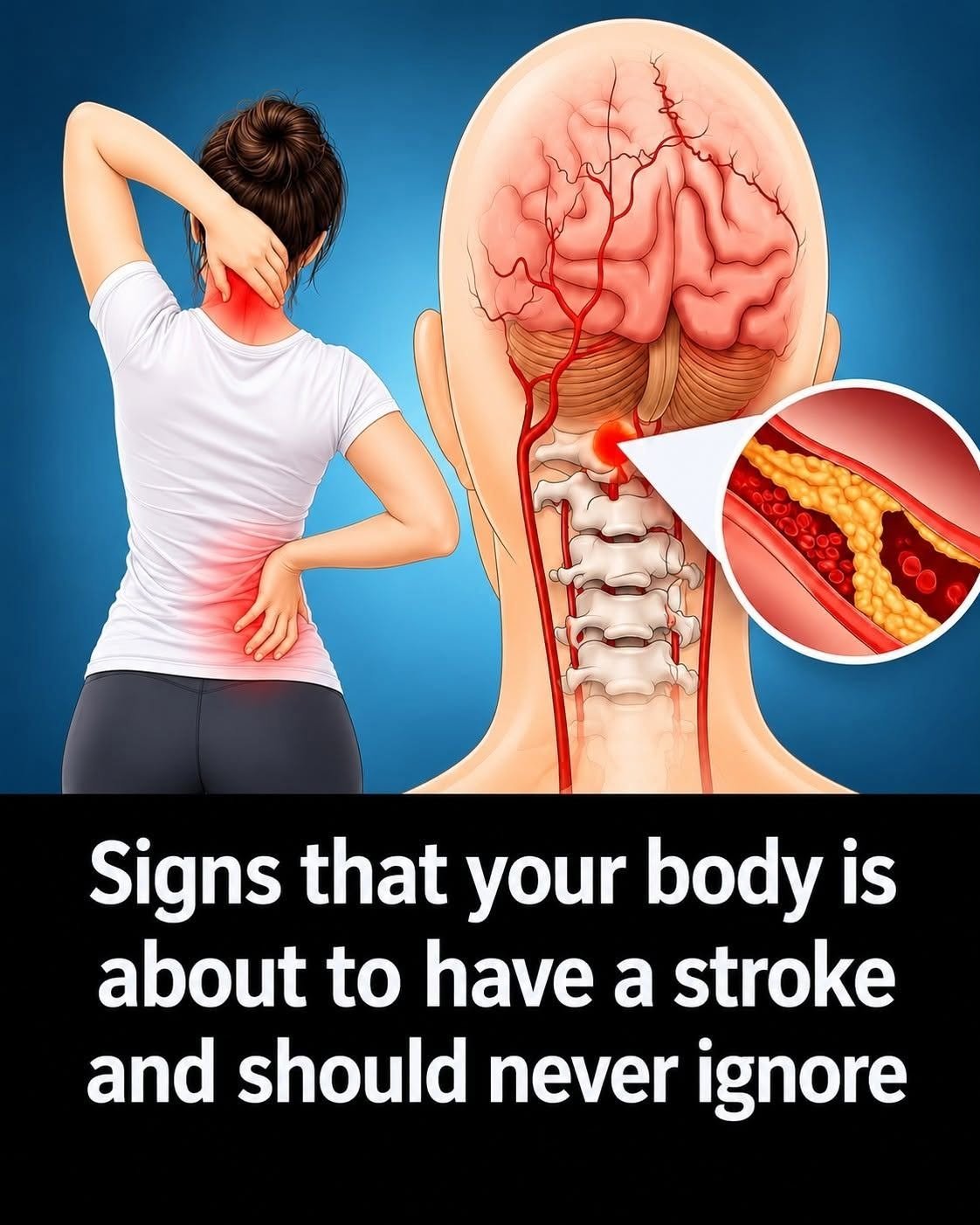
While a stroke often occurs suddenly, the body sometimes sends subtle warning signals days, weeks, or even months before a major event. These premonitory or transient episodes—frequently referred to as transient ischemic attacks (TIAs) or “mini-strokes”—happen when blood flow to a specific part of the brain is briefly blocked.
Recognizing these early warning signs can provide a critical window to seek immediate medical evaluation and prevent a full-scale stroke.
1. Transient Numbness or Weakness (The “Mini-Stroke” Warning)
One of the most significant early red flags is a brief, temporary episode of numbness, tingling, or weakness—typically affecting just one side of the body, such as one side of the face, an arm, or a leg.
-
What it feels like: You might suddenly drop a coffee cup, find that your leg feels unusually heavy for a few minutes, or notice one side of your mouth feeling numb or “thick” before it completely resolves.
-
Why it matters: These are classic signs of a TIA. While the symptoms disappear completely within minutes to an hour and leave no permanent damage, a TIA is a major medical warning sign that a full stroke may follow soon if underlying vascular issues are not treated.
2. Sudden, Unexplained Dizziness or Loss of Balance
A sudden wave of intense vertigo, unsteadiness, or feeling as though the room is spinning can originate in the brainstem rather than the inner ear. If this dizziness strikes abruptly without any history of inner-ear trouble, motion sickness, or dehydration, and is accompanied by clumsiness or difficulty walking in a straight line, it warrants immediate medical attention.
3. Brief Episodes of Blurred or Double Vision
Sudden visual disturbances affecting one or both eyes can signal a temporary disruption of blood flow to the visual cortex or the blood vessels supplying the eyes. This might present as a sudden blurring, a temporary dark curtain dropping over part of your vision, or double vision that comes on without warning and fades away shortly after.
4. Sudden Difficulty Speaking or Understanding Speech
Just as sudden slurred speech is a hallmark of a major stroke, minor or fleeting language glitches can happen beforehand. You might suddenly struggle to find the right word, feel your tongue stumbling over simple syllables, or experience a brief moment where you can hear people talking but cannot comprehend what they are saying.
5. The “Worst Headache of Your Life”
While not every stroke causes a headache, a sudden, exceptionally severe, and blinding headache—often described by patients as a “thunderclap” headache that peaks in intensity within seconds—can signal bleeding in the brain (hemorrhagic stroke) or a ruptured aneurysm. This requires emergency medical evaluation immediately, especially if it is accompanied by neck stiffness, confusion, or vomiting.
Why Early Warning Signs Are Often Dismissed
Because mini-strokes (TIAs) and early vascular warnings often resolve quickly—sometimes within 10 to 15 minutes—people frequently brush them off as fatigue, a pinched nerve, stress, or normal aging. However, up to 15% of people who suffer a major stroke will experience a TIA beforehand, most often within the preceding three months.
What to Do If You Notice These Signs
If you or someone nearby experiences any sudden, unexplained neurological symptoms—even if they vanish entirely within minutes—treat it as a medical emergency. Call emergency services or go to the nearest emergency room immediately to undergo a diagnostic evaluation (such as a CT scan or MRI) and check for underlying vascular blockages, high blood pressure, or cardiac irregularities.
