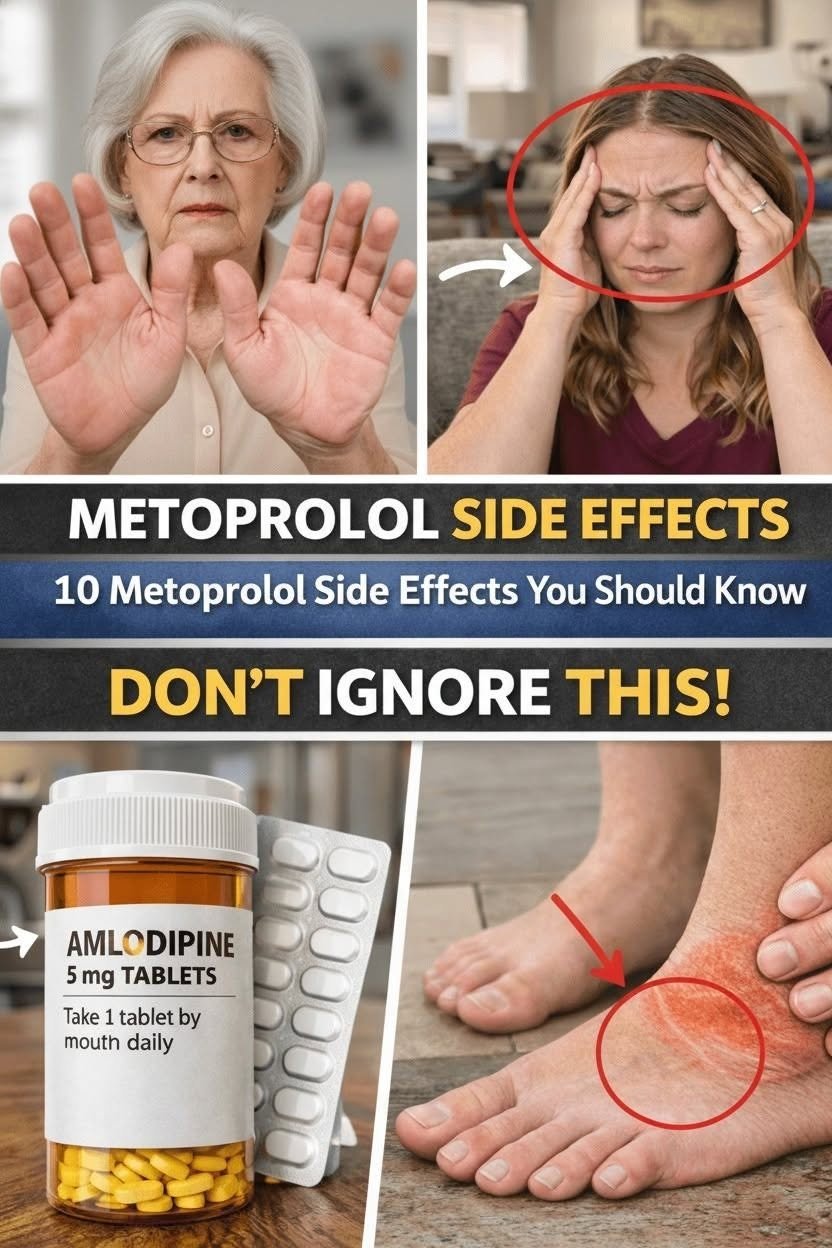
Metoprolol (commonly known by brand names like Lopressor or Toprol-XL) is one of the most widely prescribed beta-blockers in the world. By blocking the effects of epinephrine (adrenaline), it slows down the heart rate and lowers blood pressure.
While most patients are warned about common reactions like mild fatigue or lightheadedness, beta-blockers can affect tissues and receptors throughout the entire body.
Here are 10 side effects of metoprolol that often catch people off guard:
1. Extremely Cold Hands and Feet
Because metoprolol slows heart rate and relaxes blood vessels, it reduces peripheral blood circulation. Blood is prioritized for your core organs, which can leave your fingers and toes feeling icy, pale, or unusually sensitive to cold temperatures (sometimes mimicking or worsening Raynaud’s phenomenon).
2. Vivid Dreams and Nightmares
Beta-blockers can cross the blood-brain barrier. Metoprolol can interfere with REM sleep cycles and suppress natural melatonin production, leading to unusually intense, realistic, or disturbing dreams, as well as nighttime awakenings.
3. “Masking” Low Blood Sugar (Hypoglycemia) Signs
If you have diabetes, this is a critical safety warning. Normally, when blood sugar drops dangerously low, adrenaline triggers warning signs like a racing heart (tachycardia), tremors, and anxiety. Metoprolol blocks these adrenaline responses, masking classic low blood sugar symptoms. Diaphoresis (sweating) is typically the only warning sign that remains unblocked.
4. Unexplained Weight Gain
Many patients notice steady weight gain after starting metoprolol. This happens for two reasons: slowing your heart rate slightly lowers your baseline resting metabolic rate, and the fatigue caused by the medication often reduces daily physical activity. In some cases, rapid fluid retention can also signal worsening heart function.
5. Exercise Intolerance (Feeling “Heavy”)
Because metoprolol prevents your heart rate from spiking in response to exertion, you may feel like you’ve hit a wall during workout routines or simple physical tasks like climbing stairs. Your heart is simply restricted from speeding up to supply muscles with extra oxygenated blood.
6. Hair Thinning or Hair Loss (Alopecia)
While less common, metoprolol can trigger telogen effluvium—a temporary shift where a larger proportion of hair follicles enter a resting phase, leading to noticeable shedding or thinning weeks to months after starting the medication.
7. Mood Changes and Unexplained Sadness
Adrenaline and noradrenaline play key roles in mood regulation. By dampening these central nervous system pathways, beta-blockers can sometimes trigger feelings of apathy, low motivation, brain fog, or persistent sadness and depression in susceptible individuals.
8. Dry Eyes and Vision Changes
Metoprolol can reduce tear production, leading to dry, gritty, or irritated eyes—a surprise for contact lens wearers. Slight blurring of vision can also occur as blood pressure shifts.
9. Sexual Dysfunction
Reduced blood flow and suppressed nervous system stimulation can lead to decreased libido in both men and women, as well as erectile dysfunction. Because people rarely attribute this to a blood pressure pill, it often goes unreported.
10. Digestive Upsets (Diarrhea or Constipation)
Beta-receptors exist in the gastrointestinal tract as well. Altering these pathways can speed up or slow down gut motility, leading to unexpected digestive changes like chronic diarrhea, nausea, or abdominal cramping when starting or increasing doses.
⚠️ A Crucial Warning: Never Stop Suddenly
If you experience uncomfortable side effects, never stop taking metoprolol abruptly. Sudden withdrawal can cause a dangerous rebound spike in blood pressure, heart rate, or angina (chest pain), significantly increasing the risk of a heart attack. Always consult your prescribing physician; they can adjust your dose or safely transition you to an alternative medication.
