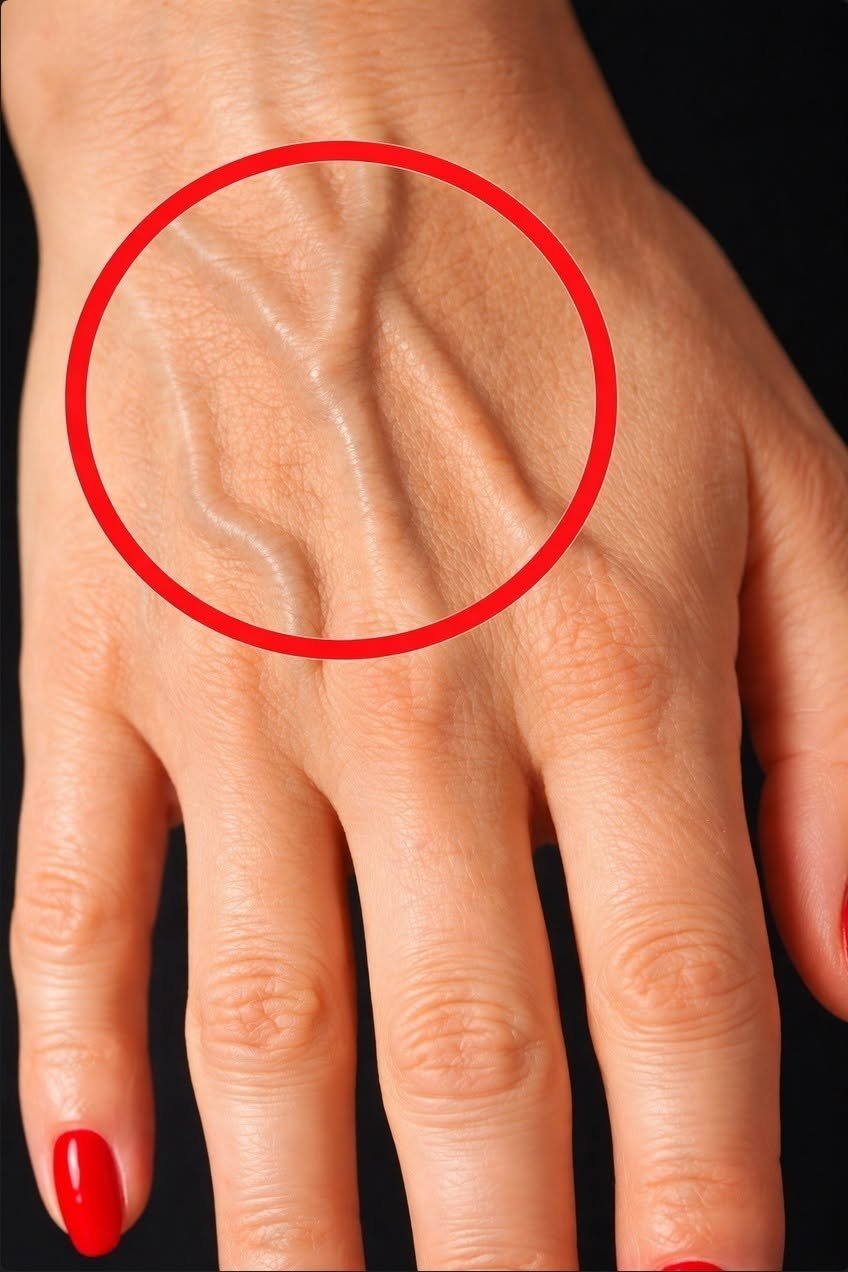
When you notice your veins appearing more prominent or clearly visible beneath the surface of your skin, it rarely points to just one single cause. Instead, visible veins are usually a sign of one of several completely normal physical traits, lifestyle factors, or occasional health shifts.
Depending on your body and context, visible veins usually mean you fall into one of the following categories:
1. You Have Low Body Fat (Lean Physique)
-
The Reason: Fat acts as a natural insulating layer beneath the skin. When your overall body fat percentage is low, that subcutaneous padding thins out, bringing the superficial blood vessels much closer to the surface so they appear clear and prominent.
2. You Have Naturally Fair, Thin, or Translucent Skin
-
The Reason: Skin thickness and pigment vary greatly from person to person. If you have fair or very thin skin, light passes through the upper layers more easily, making the blue or greenish tint of veins much more visible—especially on the hands, feet, chest, and temples.
3. You Are Well-Hydrated or Exercising (Increased Blood Volume)
-
The Reason: When you drink plenty of water or engage in physical activity, your blood volume increases and your heart pumps faster. To help cool the body down, blood vessels dilate (expand) and push closer to the skin’s surface, making veins look larger and more pronounced.
4. You Are Experiencing Natural Aging
-
The Reason: As we age, our skin naturally loses collagen, elasticity, and subcutaneous fat, particularly on the hands and legs. This thinning process causes veins to become naturally more noticeable over time.
5. You Are Exposed to Warm Temperatures
-
The Reason: Heat causes blood vessels to expand (vasodilation) to help release body heat. On a hot summer day or after a warm shower, you will often notice your veins standing out much more than usual.
6. When Visible Veins Indicate Something Medical
While the points above are entirely normal, prominent veins can occasionally signal an underlying medical issue if they are accompanied by other symptoms:
-
Varicose Veins: If veins in the legs become swollen, twisted, bulging, or painful, it can mean the tiny one-way valves inside the veins have weakened, causing blood to pool (venous insufficiency).
-
Increased Venous Pressure: Conditions that raise pressure in the upper body (such as frequent heavy lifting or persistent coughing) can temporarily or permanently make chest and neck veins more visible.
