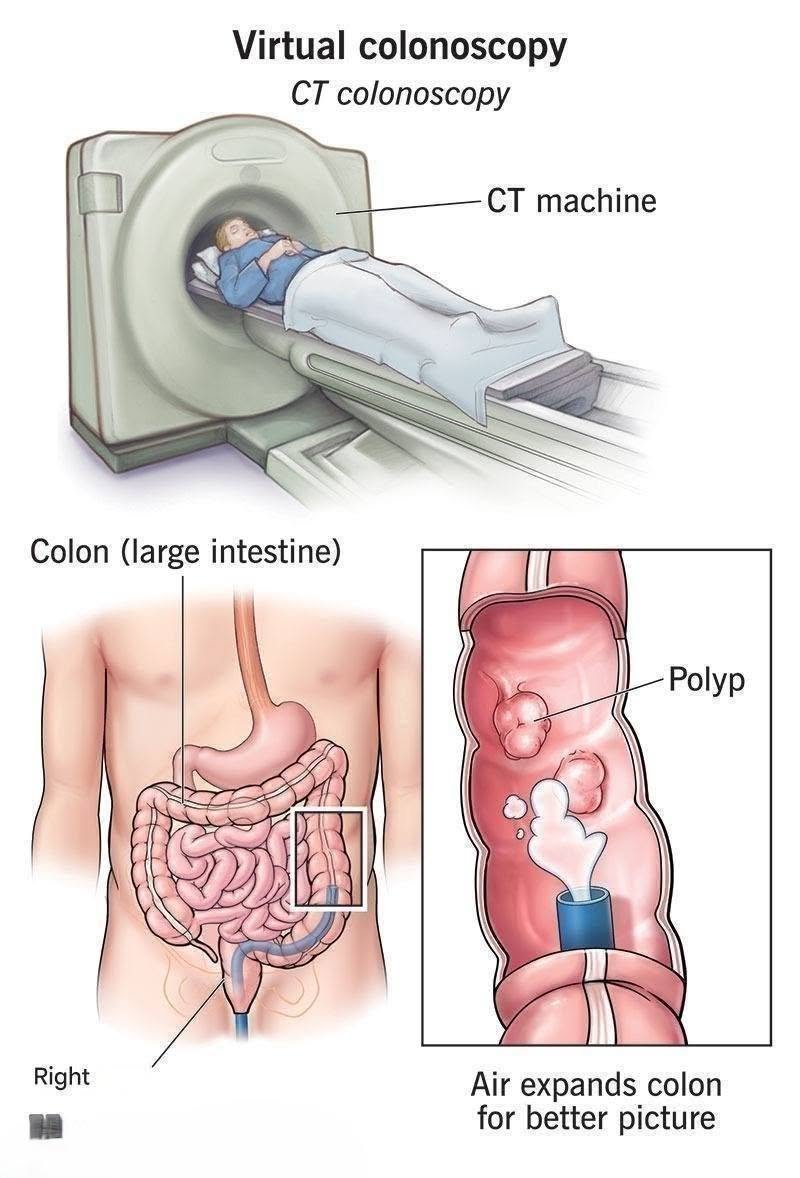
As we touched on in the first part, the dream of a completely non-invasive screening method that lets a doctor inspect your entire colon lining and remove polyps without any scope or preparation remains just that—a medical goal still on the horizon, not a current reality.
However, medical researchers are making incredible strides in making colon cancer detection far less burdensome. Let’s look at the cutting-edge technologies currently in development or entering clinical use that are transforming how we approach colorectal screening.
Cutting-Edge Developments in Colorectal Screening
While these methods are not yet ready to completely replace traditional colonoscopies across the board, they represent the future of less invasive diagnostics:
1. Advanced Liquid Biopsies (Blood Tests for Cancer DNA)
-
What They Are: Rather than looking at stool samples, scientists have developed highly sensitive blood tests (such as the FDA-approved Guardant Shield test) that detect circulating tumor DNA (ctDNA) and aberrant DNA methylation fragments shed by colorectal tumors into the bloodstream.
-
The Promise: A simple routine blood draw during your annual physical could one day screen for colorectal cancer without requiring stool samples or bowel preps.
-
The Current Limitation: While these blood tests are fantastic at detecting cancer, they are currently less effective at catching early-stage precancerous polyps (adenomas) before they turn malignant. Therefore, a positive blood test still requires a follow-up diagnostic colonoscopy.
2. Artificial Intelligence (AI) and Optical Enhancements
-
What It Is: AI algorithms trained on thousands of hours of colonoscopy footage are now being integrated directly into modern endoscopes.
-
The Impact: While this doesn’t make the colonoscopy non-invasive, AI acts as a real-time “co-pilot” for the gastroenterologist, highlighting flat or subtle polyps that the human eye might miss. This dramatically increases polyp detection rates and reduces the likelihood of missed lesions.
3. Capsule Endoscopy (Pill Cameras)
-
What It Is: A tiny, swallowable camera pill that takes thousands of high-definition images as it travels naturally through your digestive tract.
-
The Promise: Completely needle-free and sedation-free.
-
The Hurdle for the Colon: While capsule endoscopy is widely used and effective for examining the small intestine, using it for the colon has been challenging. It still requires a rigorous bowel prep so the camera isn’t blocked by debris, and—crucially—if the camera spots a polyp or bleeding site, it cannot remove it. You still have to undergo a traditional scope for the intervention.
Why the “Holy Grail” Is So Hard to Replace
To understand why a truly non-invasive, 100% replacement for colonoscopy is so difficult to engineer, consider what a gastroenterologist actually achieves during the procedure:
-
Visualization: Navigating tight, twisting turns and washing away minor residue to see 100% of the mucosal lining.
-
Intervention (The Game Changer): Spotting a millimeter-sized growth, instantly passing a tiny wire snare through the scope, electrocauterizing its base, and removing it from the body in real time.
Until technology can safely excise tissue from inside the body without a physical instrument, screening tests and diagnostic/therapeutic procedures will remain a two-step partnership: non-invasive tests to screen and flag risk, and the traditional colonoscopy when intervention is required.
