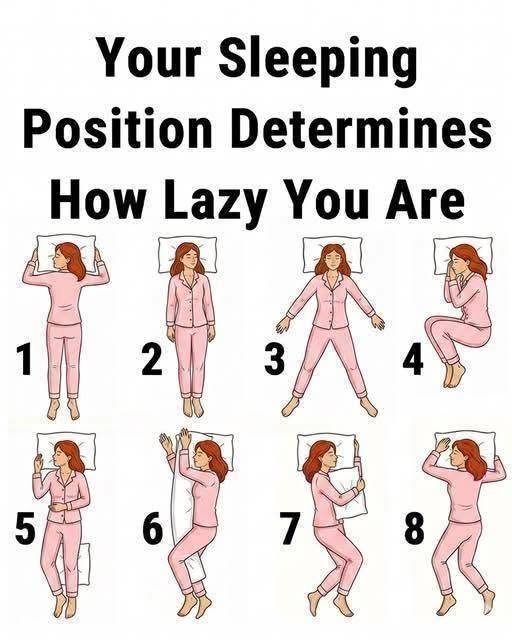
The idea that how we sleep reflects who we are has fascinated psychologists, sleep researchers, and body language experts for decades. While our conscious mind rests at night, our body defaults to positions that reflect our subconscious comfort levels, stress patterns, and baseline behavioral tendencies.
In the early 2000s, British sleep specialist Dr. Chris Idzikowski conducted a famous study analyzing six common sleep positions and discovered distinct personality traits associated with each one:
1. The Fetal Position (Side Curved Up)
-
The Posture: Lying on your side with knees pulled up toward your chest, similar to a baby in the womb.
-
The Personality: This is by far the most common sleep position, especially among women. People who sleep in the fetal position often present a tough, guarded, or stoic exterior to the world, but are deeply sensitive and warm on the inside. They can be shy or cautious when meeting new people, but quickly relax once they feel secure in a relationship or environment.
2. The Log Position (Side with Arms Down)
-
The Posture: Lying on your side with both legs straight and both arms resting down along your body.
-
The Personality: Log sleepers are generally easygoing, sociable, and trusting. They love being part of a crowd and naturally put people at ease. However, their open and trusting nature means they can sometimes be a bit gullible or easily persuaded by others.
3. The Yearner Position (Side with Arms Reaching Out)
-
The Posture: Lying on your side with your legs straight, but with both arms extended straight out in front of you as if reaching for something.
-
The Personality: Yearners tend to have an open yet cautious nature. They are eager for new experiences and connection, but they process decisions carefully and can be quite suspicious or cynical. Once a yearner makes a decision or commitment, however, they are notoriously stubborn and rarely change their mind.
4. The Soldier Position (Flat on Back with Arms at Sides)
-
The Posture: Lying flat on your back with legs extended and arms straight down by your sides.
-
The Personality: Soldier sleepers are typically quiet, reserved, and highly disciplined. They set high standards for themselves and those around them, expecting structure and efficiency. They tend to avoid unnecessary drama and prefer quiet, controlled environments. (Note: Back sleeping can also increase the likelihood of snoring or mild sleep disruptions).
5. The Freefaller Position (On the Stomach)
-
The Posture: Lying flat on your stomach with your head turned to one side and your hands wrapped around or resting near your pillow.
-
The Personality: Freefallers are often gregarious, energetic, and adventurous on the surface, but secretly sensitive to criticism. They can be bold and outspoken in social settings, yet they often feel an internal sense of anxiety or a desire to control their surroundings.
6. The Starfish Position (Flat on Back with Arms Up)
-
The Posture: Lying flat on your back with legs spread and arms bent upwards near the pillow.
-
The Personality: Starfish sleepers make exceptional friends. They are natural listeners, highly supportive, and always willing to offer help without seeking the spotlight for themselves. They value authentic connections and dislike being the center of attention.
Physical Health vs. Subconscious Habits
While personality associations with sleep positions are fascinating, sleep quality and physical comfort remain paramount:
-
Side sleeping (Fetal, Log, Yearner) supports spinal alignment and reduces acid reflux and snoring.
-
Back sleeping (Soldier, Starfish) is best for avoiding facial wrinkles and neck strain, but can exacerbate snoring or sleep apnea.
-
Stomach sleeping (Freefaller) puts heavy pressure on the lower back and neck, making it the least recommended position by physical therapists.
