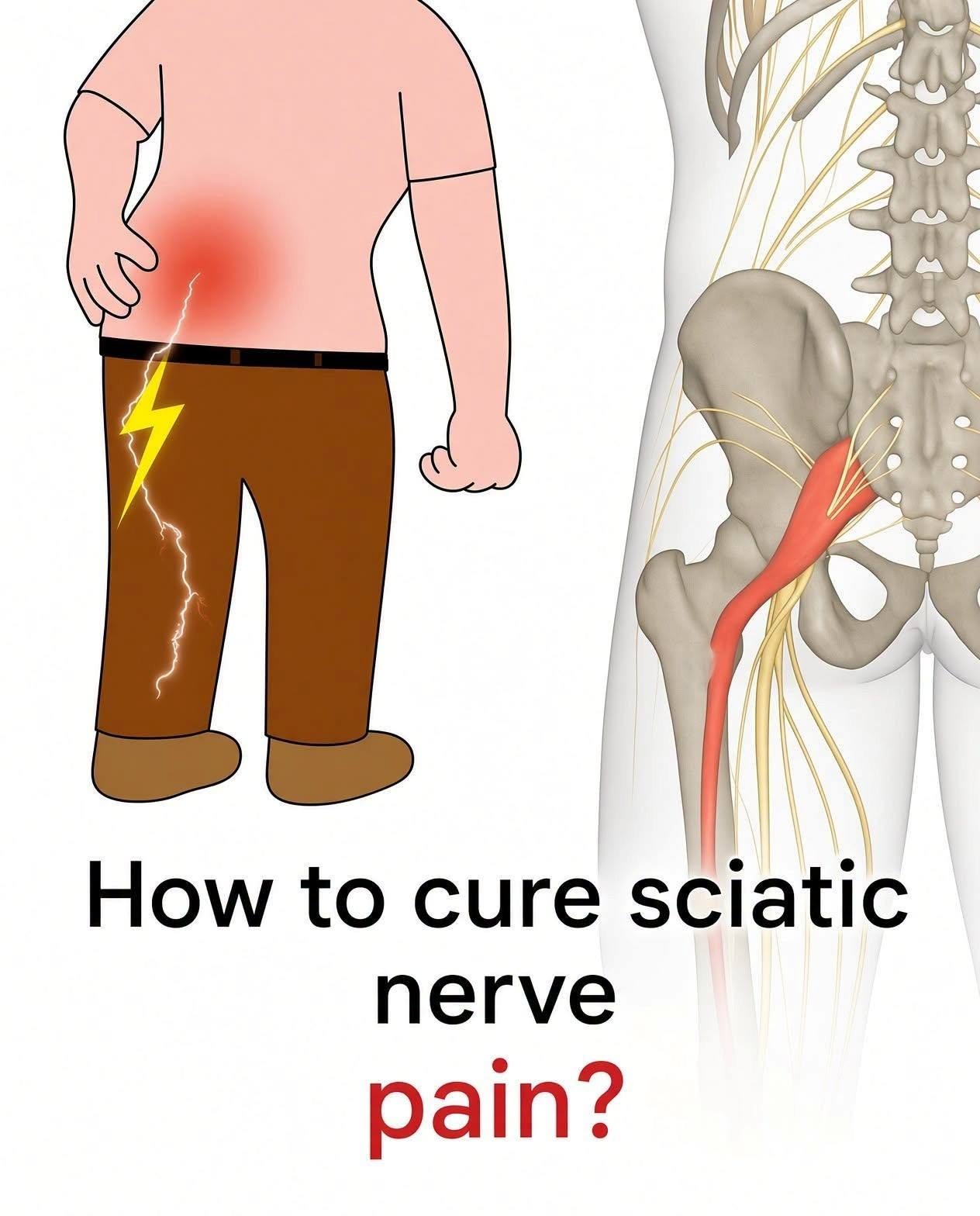
When dealing with the sharp, radiating discomfort of sciatica, finding relief can feel like an urgent mission. Physical therapists and spine specialists frequently recommend specific, low-impact movements to alleviate pressure on the sciatic nerve—whether that compression stems from a tight muscle deep in the hip or irritation in the lumbar spine.
Here are 3 practical, evidence-based exercises widely used to help relieve sciatic leg pain safely at home:
1. The Lying Piriformis Stretch (Figure-Four Stretch)
-
Why it helps: The piriformis is a deep muscle located in the buttock right over the sciatic nerve. When it becomes tight or goes into spasm, it can pinch the nerve and trigger that familiar shooting pain down your leg. This stretch targets that muscle directly.
-
How to do it:
-
Lie flat on your back with both knees bent and your feet flat on the floor.
-
Raise your right leg and rest your right ankle across your left knee, forming a “figure-four” shape.
-
Reach your hands behind your left thigh and gently pull it toward your chest until you feel a comfortable stretch deep in your right buttock.
-
Hold for 20 to 30 seconds, breathing deeply and keeping your head and back relaxed on the floor.
-
Switch sides and repeat 2 to 3 times.
-
2. The Knee-to-Chest Stretch
-
Why it helps: This gentle movement helps decompress the lower lumbar spine and relax the muscles in the lower back, easing the pressure that may be aggravating the nerve roots.
-
How to do it:
-
Lie flat on your back with your knees bent and feet flat on the floor.
-
Gently bring one knee up toward your chest, clasping your hands behind your thigh or over your shin.
-
Keep your lower back pressed gently into the floor and hold for 20 to 30 seconds.
-
Lower your leg slowly and repeat with the opposite leg. (Tip: You can also bring both knees to your chest at the same time if it feels more comfortable for your lower back).
-
3. The Cat-Cow Stretch
-
Why it helps: Moving the spine through a slow, rhythmic arc encourages fluid movement through the lower back discs, relieves stiffness, and gently activates your core stabilizers without putting heavy compression on your spine.
-
How to do it:
-
Get down on your hands and knees in a tabletop position, with your hands directly under your shoulders and knees under your hips.
-
Inhale (Cow): Let your stomach drop toward the floor, lifting your chest and tailbone gently upward.
-
Exhale (Cat): Slowly arch your back toward the ceiling, tucking your chin and tailbone downward.
-
Move smoothly and rhythmically back and forth between the two positions for 10 to 15 repetitions.
-
Important Safety Guidelines
-
Never Push Through Sharp Pain: A gentle pulling or stretching sensation is normal, but if an exercise causes sharp, electric, or worsening pain that shoots down your leg, stop immediately.
-
When to See a Doctor: If your sciatica is accompanied by sudden numbness, weakness in the leg, or loss of bowel/bladder control, seek immediate medical attention.
The Takeaway: Gentle, targeted movement can work wonders for easing sciatic tension, but consistency and listening to your body are key.
Are you currently managing sciatica flare-ups, or looking for long-term daily habits to protect your lower back?
