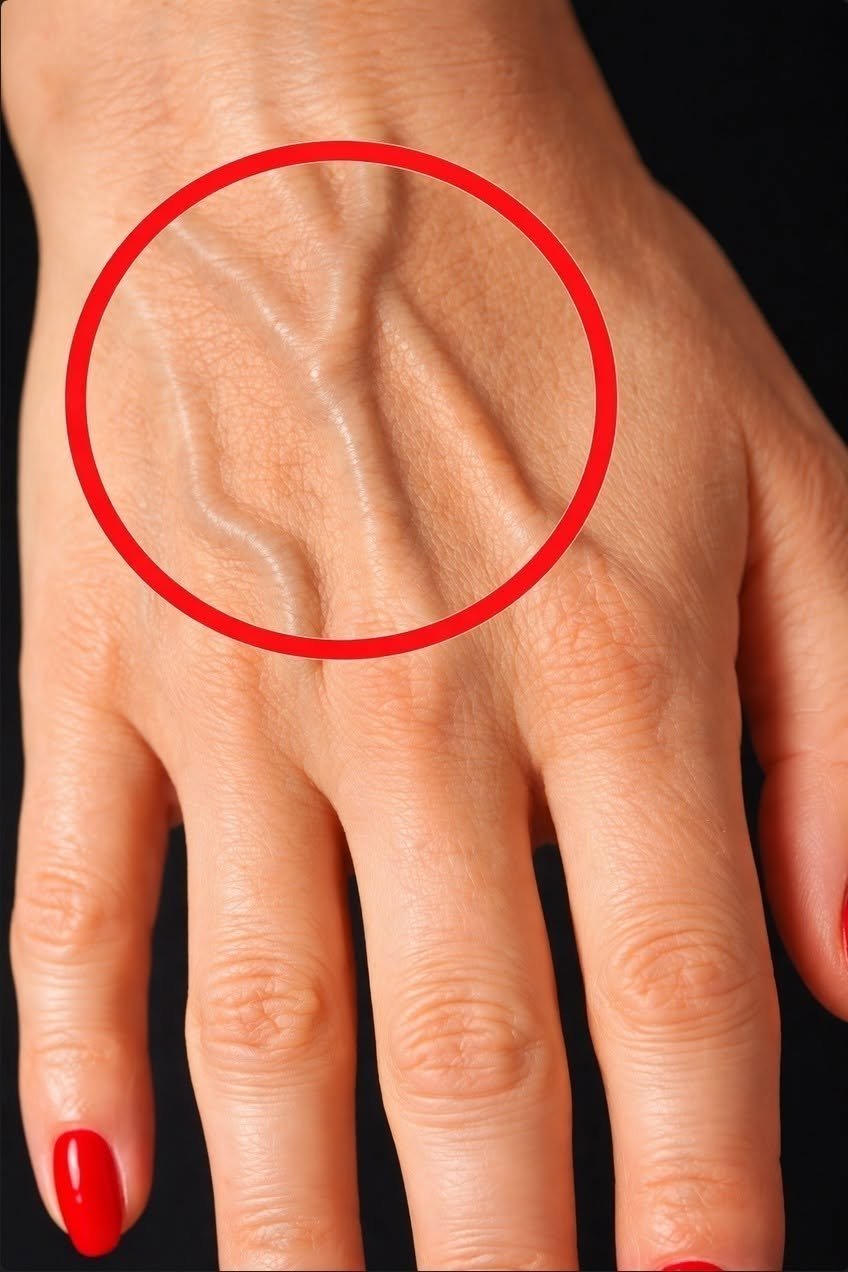
Health clickbait loves finishing sentences like “If your veins are visible, it means you are…” with dramatic, alarmist declarations—implying everything from an imminent cardiovascular collapse to a mysterious terminal illness.
Vascular specialists, dermatologists, and primary care doctors approach visible veins through a much more grounded, anatomical lens. The reality is that seeing your veins is exceptionally common, and the reason why they show depends entirely on your body composition, genetics, and lifestyle rather than a single ominous diagnosis.
Why Are Veins Visible in the First Place?
Your veins are simply the plumbing system carrying blood back to your heart. Whether they are visible through your skin is mostly a matter of physics: how much distance and tissue lies between the surface of your skin and the blood vessel.
4 Common Reasons for Visible Veins
1. Low Body Fat and High Muscle Mass (Athletic Vascularity)
-
The Reality: If you have a lower overall body fat percentage or have built up muscle mass (common in athletes and regular weightlifters), your subcutaneous fat layer is thinner.
-
The Effect: With less padding between your skin and your muscles, superficial veins naturally push closer to the surface and become clearly visible on the arms, hands, legs, or chest. This is typically a sign of fitness, not pathology.
2. Fair or Thin Skin Tone and Aging
-
The Reality: Skin naturally thins out over time as collagen and elasticity decrease, particularly on the hands, feet, and face. Additionally, people with very fair or translucent skin complexions naturally show superficial veins much more easily because light passes through the skin to the blood vessels beneath.
3. Genetics and Body Structure
-
The Reality: Just like eye color or height, how close your superficial veins sit to the skin’s surface is heavily determined by genetics. Some families naturally have more prominent hand or temple veins regardless of weight or fitness level.
4. Temporary Vasodilation (Heat, Exercise, or Pressure)
-
The Reality: When you exercise, work out in hot weather, or consume alcohol, your body expands your blood vessels (vasodilation) to help cool you down or pump more oxygen-rich blood. This temporarily increases blood volume near the skin, making veins pop out more prominently.
When Visible Veins Do Warrant Medical Attention
While typical surface veins are completely benign, vascular doctors differentiate normal vascularity from structural vein issues:
-
Varicose Veins: Enlarged, twisted, rope-like veins (usually in the legs) caused by weakened one-way valves that allow blood to pool backward. They can cause aching, heaviness, or swelling and are worth evaluating.
-
Spider Veins: Tiny, web-like clusters of red, blue, or purple blood vessels close to the skin’s surface, which are usually a cosmetic concern rather than a medical emergency.
The Medical Takeaway: Seeing your veins is rarely a sign of hidden doom—it is usually just a reflection of your skin thickness, genetics, body fat percentage, or a hot day. However, if veins become painful, swollen, twisted, or bulge significantly in your legs, a quick consultation with a vein specialist can clarify if your circulatory valves need support.
Are you noticing visible veins after workouts or changes in a specific area like your legs, or were you tracking down a particular health myth?
