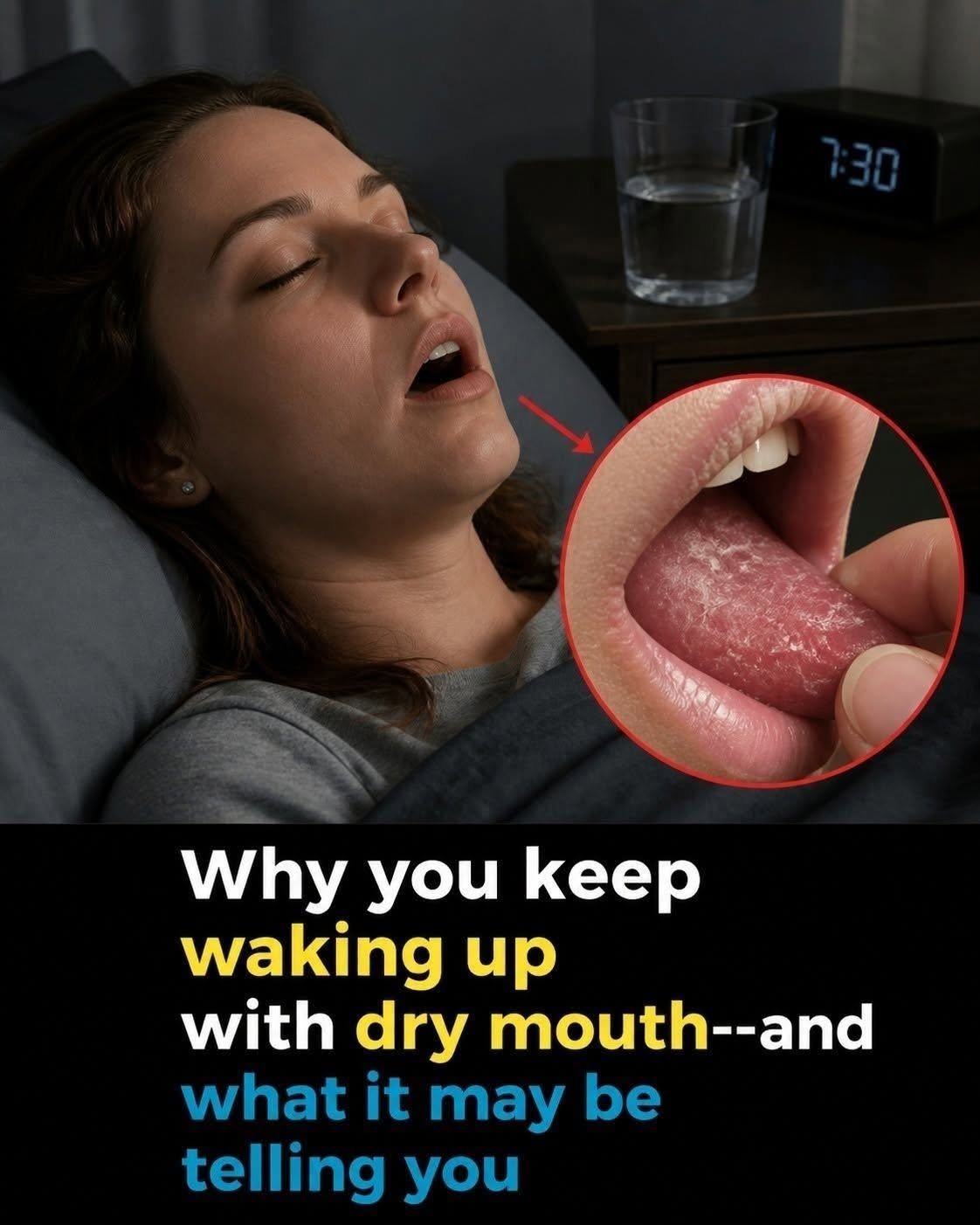
Waking up with a parched, sticky mouth—clinically known as xerostomia—is more than just an uncomfortable annoyance. Saliva plays a vital role in protecting your teeth, aiding digestion, and keeping oral tissues healthy. When production dips overnight, your body is often sending a specific signal about your environment, habits, or health.
What Your Body Might Be Telling You
-
1. You Are Breathing Through Your Mouth at Night
-
The Signal: If your nasal passages are blocked due to allergies, a deviated septum, sinus congestion, or sleep apnea, you naturally switch to breathing through your mouth while asleep. The constant airflow rapidly evaporates the natural moisture on your tongue and gums.
-
-
2. Medications or Polypharmacy Side Effects
-
The Signal: Hundreds of common prescription and over-the-counter medications—particularly those for high blood pressure, cholesterol, anxiety, depression, allergies (antihistamines), and bladder control—list dry mouth as a primary side effect.
-
-
3. Mild Dehydration or Evening Habits
-
The Signal: Not drinking enough fluids throughout the day, or consuming alcohol, caffeinated tea, or salty snacks close to bedtime, can deplete your body’s overall hydration levels and suppress salivary gland activity overnight.
-
-
4. Age-Related Changes in Saliva Production
-
The Signal: While dry mouth is not an inevitable part of aging on its own, older adults are statistically more likely to take multiple medications or experience underlying health conditions that naturally reduce saliva flow.
-
-
5. Underlying Health Conditions
-
The Signal: Persistent dry mouth can sometimes point to systemic conditions, such as Type 2 diabetes (where high blood sugar causes increased thirst and dryness), or autoimmune disorders like Sjögren’s syndrome, which specifically target moisture-producing glands.
-
Simple Ways to Find Relief
If morning dryness is bothering you, several gentle adjustments can protect your oral health and restore comfort:
-
Keep Water Close By: Keep a glass of water on your bedside table to take small sips if you wake up parched during the night.
-
Use a Bedroom Humidifier: Adding moisture to the air in your bedroom prevents your mucous membranes from drying out, especially if you live in a dry climate or run indoor heating/air conditioning.
-
Practice Nasal Breathing: Addressing nasal congestion with saline rinses or strips, or investigating potential sleep apnea with a physician, can dramatically reduce overnight mouth breathing.
-
Protect Your Dental Health: Saliva protects teeth from decay. If you experience chronic dry mouth, be extra diligent with fluoride toothpaste, alcohol-free mouthwashes designed for dry mouth, and regular dental checkups.
-
Avoid Irritants Before Bed: Limit alcohol, heavy caffeine, and smoking in the evening, as all three significantly dry out oral tissues.
When to Consult a Healthcare Professional
While occasional morning dryness is usually harmless, you should speak with your doctor or dentist if:
-
The dryness is severe, persistent, or worsening throughout the day.
-
It makes it difficult to swallow, chew, or speak.
-
You notice symptoms like frequent mouth sores, cracked lips, burning sensations on your tongue, or a sudden increase in dental cavities.
-
Your doctor can review your current medications to see if adjustments can be made, or screen for underlying conditions.
Have you noticed any other symptoms alongside the dry mouth, such as daytime thirst or snoring?
