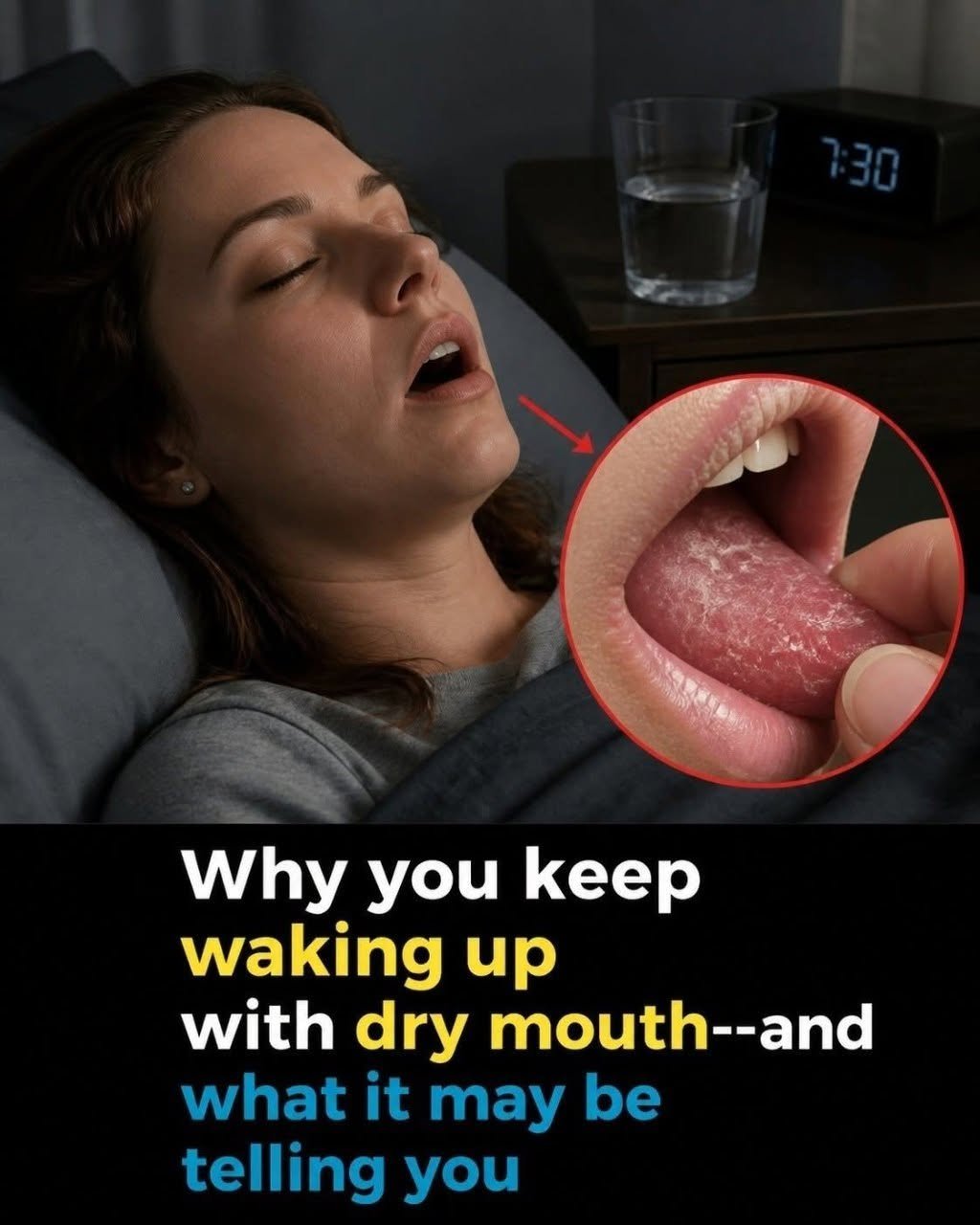
When clickbait health articles or late-night video clips pop up with urgent warnings about “waking up with dry mouth—here’s what your body might be telling you,” they usually try to frame a very common morning annoyance as a sign of an impending systemic crisis.
Let’s cut through the internet exaggeration, examine what actually causes dry mouth (clinically known as xerostomia), and look at what your body is truly signaling when you wake up parched.
The Clinical Reality: What Is Dry Mouth?
Saliva is far more than just moisture; it is a vital bodily fluid that aids in digestion, lubricates your throat, protects your tooth enamel from decay, and fights off oral bacteria. When your salivary glands slow down production—especially overnight—you wake up with that uncomfortable, sticky, cotton-mouth sensation.
While chronic dry mouth can sometimes point to underlying health considerations, most morning dry mouth comes down to simple anatomical and environmental factors.
Common Reasons You Might Wake Up with Dry Mouth
-
Mouth Breathing During Sleep:
-
The Mechanism: This is the #1 culprit for morning dry mouth. If you have a stuffy nose, allergies, a deviated septum, or mild sleep apnea, you may breathe through your mouth all night. As air continuously passes over your tongue and oral mucosa, it evaporates your saliva, leaving your mouth completely dry by morning.
-
-
Dehydration:
-
The Mechanism: If your overall daily fluid intake is too low, or if you had alcohol or salty foods close to bedtime, your body prioritizes internal hydration for vital organs, temporarily reducing salivary gland output.
-
-
Medication Side Effects:
-
The Mechanism: Hundreds of common prescription and over-the-counter medications—including antihistamines, blood pressure medications, diuretics, antidepressants, and decongestants—have anticholinergic properties that directly reduce saliva production.
-
-
Aging and Salivary Gland Changes:
-
The Mechanism: While aging itself doesn’t automatically stop saliva flow, older adults are much more likely to take multiple medications (polypharmacy) that cause dry mouth as a side effect.
-
-
Environmental Factors:
-
The Mechanism: Sleeping in a bedroom with forced-air heating, air conditioning, or very low humidity dries out the ambient air, accelerating moisture evaporation while you sleep.
-
Evidence-Based Ways to Manage and Prevent Dry Mouth
If waking up parched is disrupting your sleep or comfort, you don’t need expensive “miracle” rinses or internet detoxes. Simple, practical steps make a significant difference:
-
Hydrate Consistently: Sip water throughout the day rather than chugging a large amount right before bed (which can disrupt your sleep with nighttime bathroom trips).
-
Use a Humidifier: Running a cool-mist humidifier in your bedroom adds moisture back into the air, preventing the room from drying out your airways while you sleep.
-
Address Nasal Congestion: If nasal allergies or congestion force you to breathe through your mouth, treating the underlying congestion with saline rinses or consulting a doctor for allergy management can help you breathe comfortably through your nose.
-
Chew Sugar-Free Gum or Use Saliva Substitutes: During the day, chewing sugar-free gum or using xylitol-based lozenges stimulates natural saliva flow. Over-the-counter artificial saliva sprays can also provide immediate nighttime relief.
-
Review Your Medications: If you suspect a prescription medication is causing your dry mouth, talk to your doctor or pharmacist. They can often adjust the timing or dosage, or explore alternative medications.
When to See a Doctor
While occasional morning dry mouth is normal—especially after a warm night or a stuffy nose—persistent, severe, chronic dry mouth that interferes with swallowing, speaking, or wearing dentures warrants a medical evaluation. Chronic dry mouth can significantly increase the risk of tooth decay and gum disease, and in some cases, it can be associated with autoimmune conditions like Sjögren’s syndrome.
