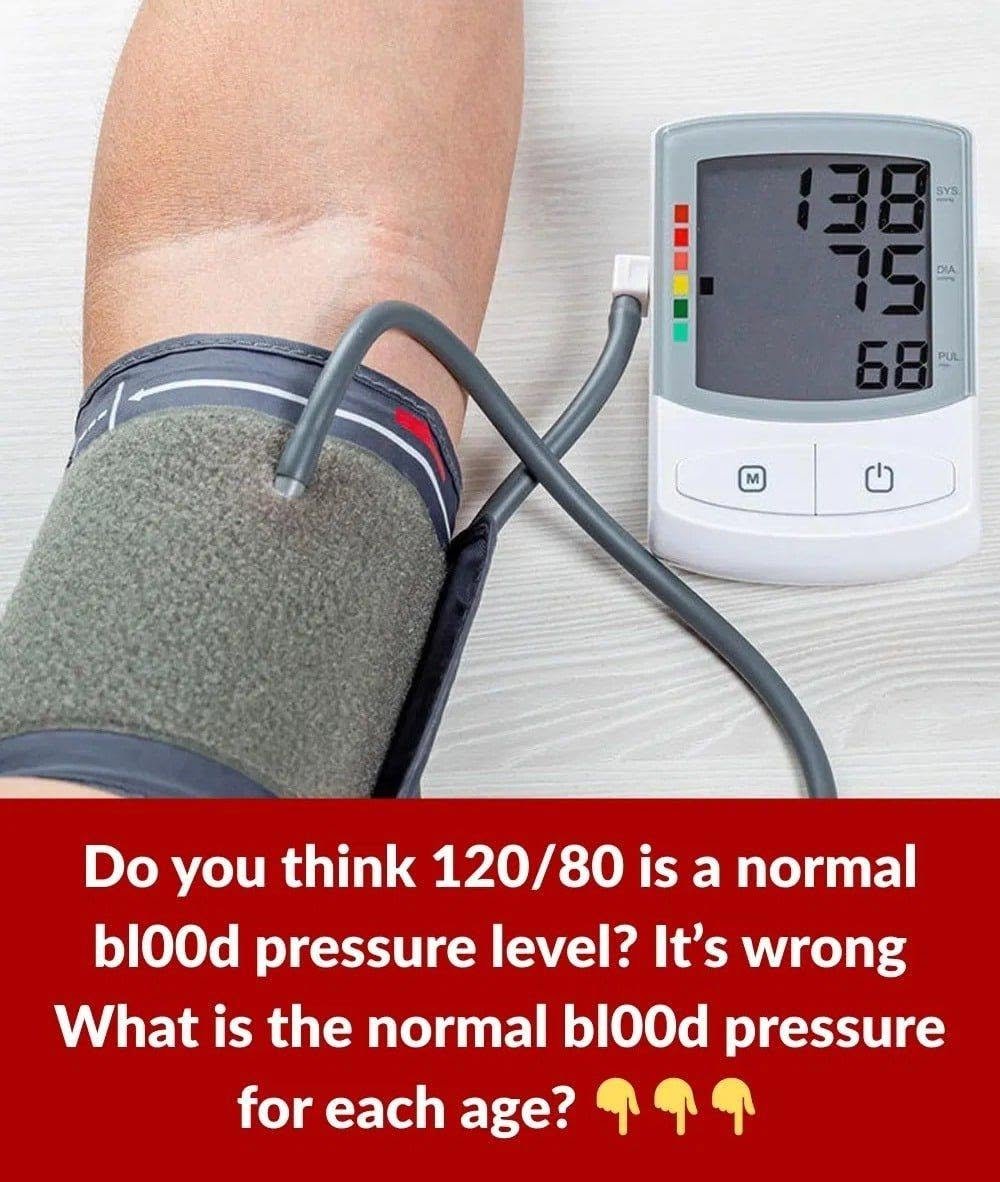
When discussing blood pressure, medical professionals make an important distinction: what is typical (average) for your age versus what is clinically healthy.
As people age, blood pressure naturally tends to drift upward because arteries stiffen over time. However, “common” does not automatically mean “safe” or ideal.
1. Standard Blood Pressure Categories for Adults (Ages 18+)
According to major guidelines (such as the American Heart Association), the clinical target for a healthy adult does not change as you get older:
| Category | Systolic (Top Number) | Diastolic (Bottom Number) | What It Means | |
| Normal | Less than 120 | and | Less than 80 | Ideal target for all adults |
| Elevated | 120–129 | and | Less than 80 | Needs lifestyle adjustments to prevent hypertension |
| Stage 1 Hypertension | 130–139 | or | 80–89 | High blood pressure; warrants monitoring and management |
| Stage 2 Hypertension | 140 or higher | or | 90 or higher | Significant high blood pressure |
| Hypertensive Crisis | Higher than 180 | and/or | Higher than 120 | Emergency: Seek immediate medical help |
2. Average Readings by Age Group (What Is “Typical”)
Population studies show how average blood pressure naturally shifts across the decades:
-
Young Adults (Ages 18–39):
-
Typical Average: Roughly 110–120 / 68–78 mmHg
-
Notes: Blood pressure is generally lowest during early adulthood. Readings consistently at or above 130/80 in this age bracket are a strong prompt to evaluate lifestyle habits early.
-
-
Middle Age (Ages 40–59):
-
Typical Average: Roughly 120–130 / 74–82 mmHg
-
Notes: This is the decade where the systolic pressure (the top number) begins its steady climb due to gradual changes in blood vessel elasticity.
-
-
Older Adults (Ages 60+):
-
Typical Average: Roughly 130–140 / 68–80 mmHg
-
Notes: It is very common for people over 60 to have averages that drift into the 130s or 140s because of arterial stiffening. However, clinical guidelines still view anything 130/80 or higher as high blood pressure that should be managed to protect against heart attack and stroke. For individuals in their late 70s or 80s, doctors often individualize targets based on overall health, frailty, and medication tolerance.
-
3. Blood Pressure in Children and Teens
Unlike adults, normal blood pressure for children (ages 1 to 17) is not a single fixed number. Pediatric guidelines rely on percentiles based on a child’s age, height, and gender, because a taller child naturally has a larger circulatory framework requiring slightly higher pressure. Pediatricians use specialized growth-chart percentiles to determine if a child’s reading is healthy.
