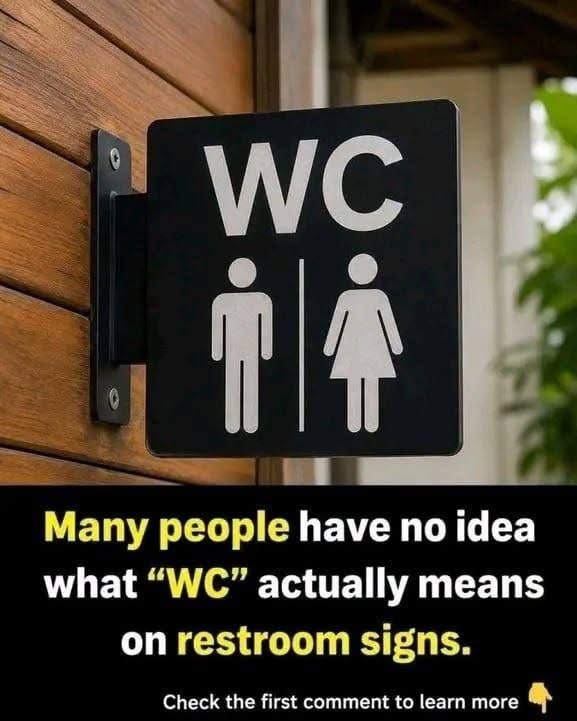
The letters WC stand for “Water Closet.”
While it sounds like a cryptic plumbing code today, the term is a literal historical description born out of 19th-century architecture, Victorian modesty, and the dawn of indoor plumbing.
The History Behind the Name
-
The “Water”: When indoor plumbing and modern flushing toilets first began replacing outdoor outhouses and chamber pots, the defining feature of these new contraptions was that they used running water to flush waste away.
-
The “Closet”: In the 1800s, the word “closet” didn’t just mean a wardrobe for clothes; it referred to any small, private room or cupboard. When architects first started installing indoor toilets into homes, they tucked them into tiny, unused storage spaces or small rooms near water lines.
Put them together, and you have a water-fitted closet—or a water closet.
Why Did the Abbreviation Stick?
In Victorian society, openly discussing bodily functions was considered deeply impolite. Terms like “toilet” or “privy” felt too coarse for polite company. Saying “water closet”—or simply pointing to a sign marked WC—acted as a polite, clinical euphemism that allowed people to talk about or locate the facility without uttering a vulgarity.
Today, while North Americans typically say “restroom” or “bathroom” and the British often say “loo”, the abbreviation WC remains a universally recognized international symbol on public restroom doors across Europe, Asia, and global architectural blueprints.
