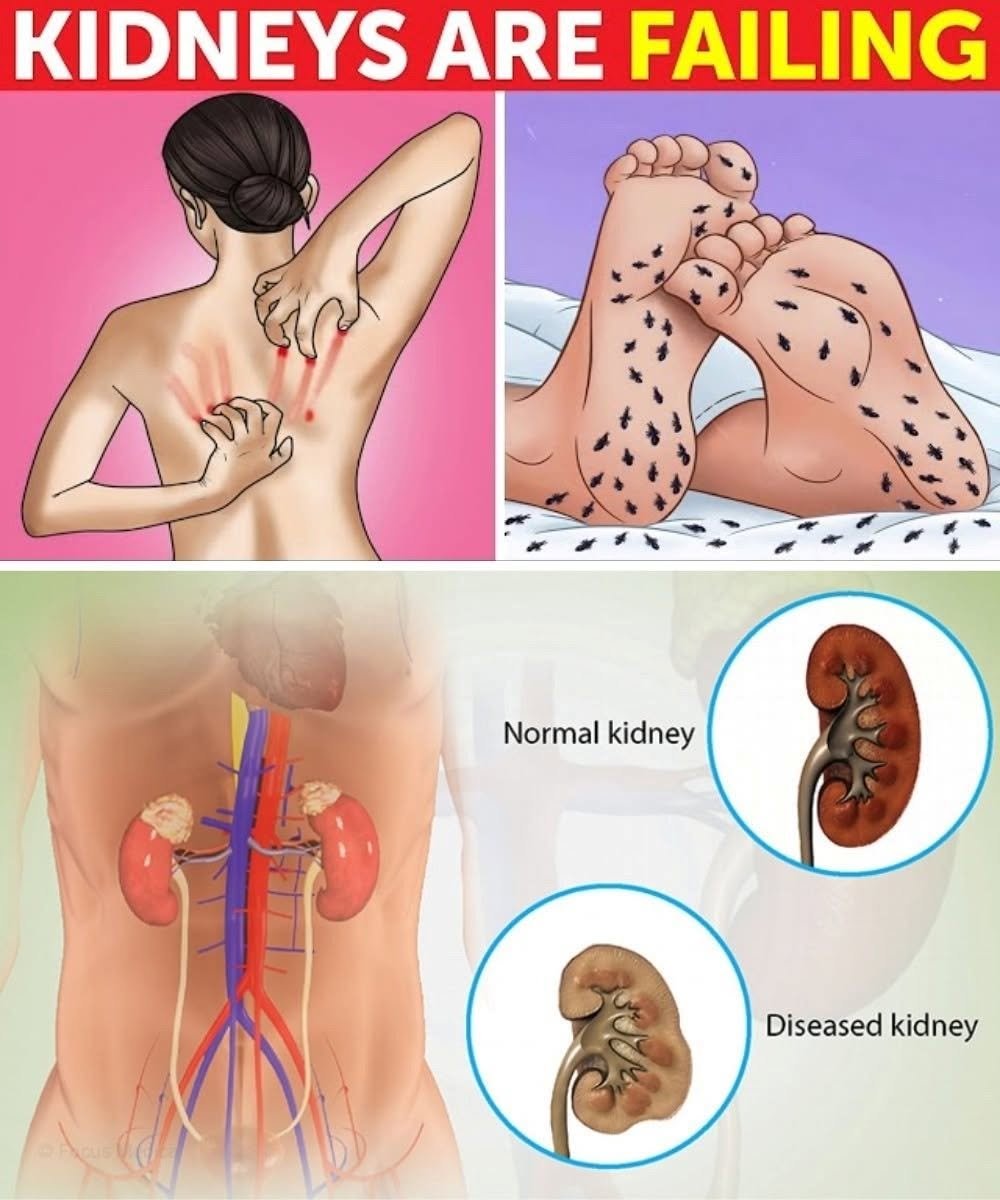
Sensationalist health articles love using alarmist language like “13 ALARMING Signs” to drive panic, often taking normal physiological variations and framing them as catastrophic warnings. In nephrology and internal medicine, chronic kidney disease (CKD) is notoriously known as a “silent condition” in its early stages because the kidneys compensate remarkably well until significant function is lost.
When kidneys do begin to struggle significantly with fluid balance, waste filtration, and hormone regulation, they communicate through a distinct set of clinical indicators.
The Medical Reality: Core Indicators of Kidney Dysfunction
Rather than a random list of disconnected quirks, clinical diagnostics group renal warning signs into a clear physiological framework:
-
Changes in Urination Frequency and Volume
-
The Sign: Waking up multiple times during the night to urinate (nocturia) or experiencing a noticeable drop in urine output.
-
Why: Impaired concentrating ability and filtration damage alter fluid regulation.
-
-
Foamy or Bubbly Urine
-
The Sign: Urine that consistently looks frothy, resembling scrambled egg foam.
-
Why: This indicates proteinuria—excess protein (primarily albumin) leaking through damaged glomerular filters into the urine.
-
-
Hematuria (Blood in the Urine)
-
The Sign: Urine that appears pink, brown, or cola-colored.
-
Why: Damaged kidney filters allow red blood cells to leak into the urinary tract.
-
-
Periorbital Edema (Facial and Eye Puffiness)
-
The Sign: Persistent swelling around the eyes, particularly noticeable in the mornings.
-
Why: Heavy protein loss in the urine lowers blood protein levels, causing fluid to pool in loose facial tissues.
-
-
Peripheral Edema (Lower Extremity Swelling)
-
The Sign: Swelling in the feet, ankles, lower legs, or hands, leaving a dent when pressed (pitting edema).
-
Why: The kidneys are failing to excrete sodium and excess fluid efficiently, leading to gravitational fluid retention.
-
-
Persistent Fatigue and Weakness
-
The Sign: Deep, bone-weary exhaustion that sleep does not resolve.
-
Why: Healthy kidneys produce erythropoietin (EPO), a hormone signaling bone marrow to make red blood cells. When kidney function declines, EPO drops, leading to anemia and reduced oxygen delivery.
-
-
Uremic Pruritus (Severe, Unrelenting Itchiness)
-
The Sign: Deep, pervasive skin itching that moisturizers cannot relieve.
-
Why: A buildup of phosphorus and other metabolic waste products in the blood (uremia) triggers intense nerve irritation in the skin.
-
-
A Metallic Taste in the Mouth or Ammonia Breath
-
The Sign: Food tasting unusually metallic (especially meats) or breath carrying a faint ammonia odor.
-
Why: Accumulating urea in the bloodstream alters taste buds and chemical balances.
-
-
Nausea, Vomiting, and Loss of Appetite
-
The Sign: Unexplained morning nausea or a total lack of interest in eating.
-
Why: Advanced uremic toxin buildup irritates the gastrointestinal tract.
-
-
Muscle Cramps and Restless Legs
-
The Sign: Painful nighttime cramps, particularly in the calves.
-
Why: Electrolyte imbalances (such as calcium, potassium, and phosphorus shifts) disrupt normal neuromuscular signaling.
-
-
Shortness of Breath
-
The Sign: Feeling winded with minimal exertion.
-
Why: Can be caused by fluid overload backing up into the lungs (pulmonary congestion) or anemia limiting oxygen-carrying capacity.
-
-
High Blood Pressure (Hypertension)
-
The Sign: Persistently elevated blood pressure readings.
-
Why: The kidneys play a primary role in regulating blood pressure through fluid volume and hormone signaling (the renin-angiotensin system). Kidney damage and hypertension are locked in a vicious feedback loop.
-
-
General Feeling of Malaise or “Brain Fog”
-
The Sign: Difficulty concentrating, mental clouding, or a general sense of being unwell.
-
Why: Chronic uremia and systemic inflammation affect neurological efficiency.
-
Understanding Your True Risk Profile
While these signs matter, waiting for symptoms is never the best strategy for kidney health. The primary risk factors for developing CKD are long-standing hypertension and poorly controlled diabetes.
If you want to monitor your renal health proactively, two simple, routine lab tests ordered by your physician tell the full story:
-
Serum Creatinine & eGFR (Blood Test): Measures how effectively your kidneys are filtering waste.
-
Urine Albumin-to-Creatinine Ratio (Urine Test): Checks for microscopic protein leakage long before physical symptoms appear.
Are you looking at how to support long-term kidney health through targeted nutrition, or reviewing specific lab work with a healthcare provider?
