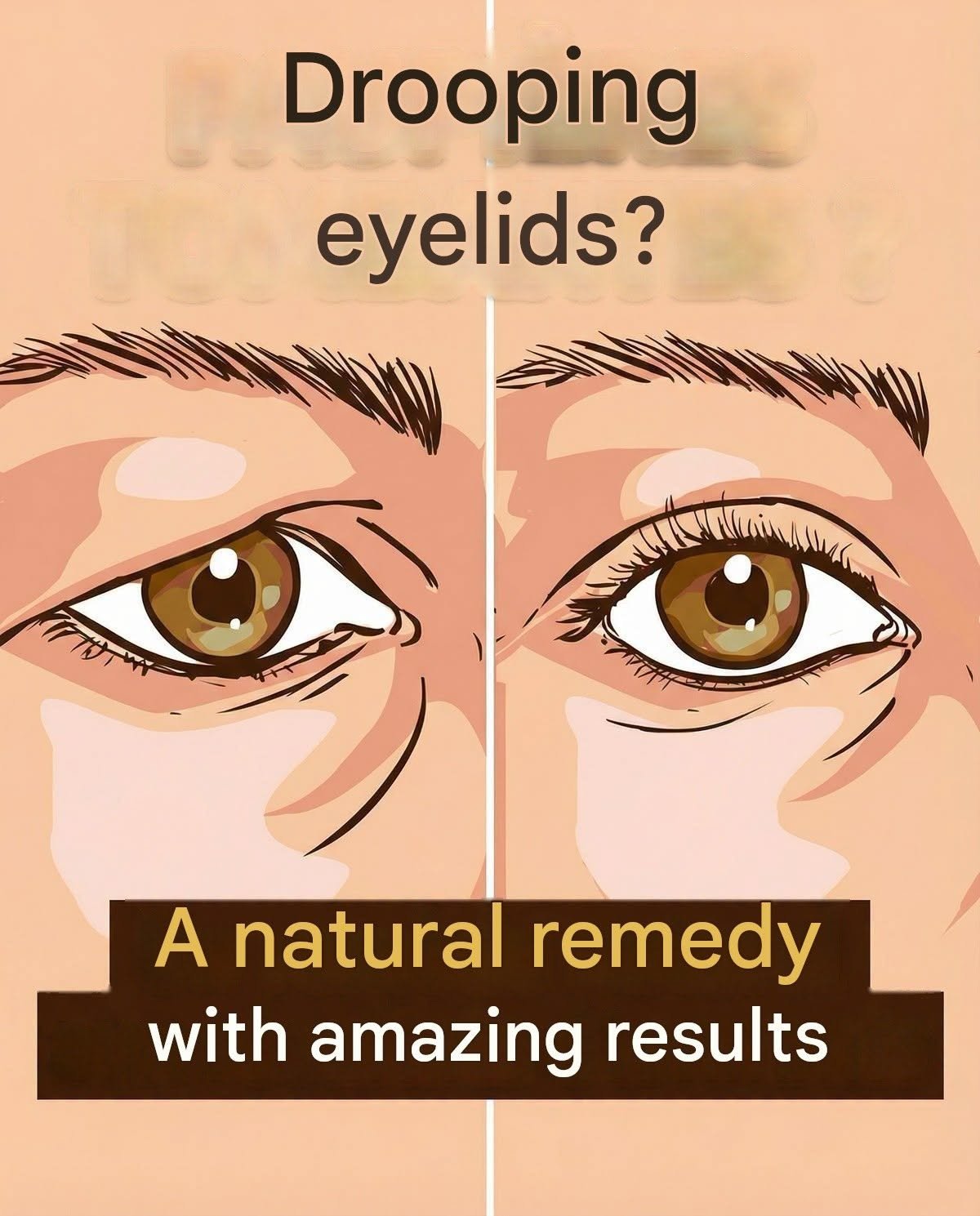
Droopy eyelids—clinically known as ptosis—are a very common part of the aging process. Over time, the delicate skin around the eyes loses its elasticity, and the tiny muscles or tendons that lift the upper eyelid can stretch or weaken. While this is often just a cosmetic concern, it can sometimes interfere with vision or signal an underlying medical issue.
Here is a look at what you can do naturally to support skin firmness, along with the crucial red flags that mean it’s time to see a doctor.
Natural Ways to Support Eyelid Appearance and Skin Elasticity
While non-surgical methods cannot physically repair a stretched levator muscle or replace lost structural support, they can significantly improve skin hydration, reduce puffiness, and help the eye area look more refreshed:
-
Targeted Eye Creams with Peptides and Retinoids:
-
Look for topical products containing peptides, hyaluronic acid, or gentle retinoids (formulated specifically for the eye area). These ingredients help boost collagen production, improve skin elasticity, and firm up thinning, crepey skin around the upper lid.
-
-
Cold Compresses or Chilled Teas Bags:
-
Temporary swelling and fluid retention can make sagging eyelids look much heavier. Applying a cool compress, chilled cucumber slices, or used caffeinated tea bags (like green tea) for 10 minutes can constrict local blood vessels, reduce puffiness, and give the upper lids a tighter, more lifted appearance.
-
-
Facial Exercises and “Face Yoga”:
-
Some people swear by targeted facial exercises—such as placing fingers under the eyebrows, gently pulling up while trying to close the eyes, or wide-eyed blinking drills—to tone the orbicularis oculi muscles around the eyes. While clinical evidence is limited, consistency can occasionally help improve local muscle tone.
-
-
Prioritize UV Protection and Sunglasses:
-
Sun damage breaks down collagen and elastin faster than almost anything else. Wearing UV-blocking sunglasses and applying a broad-spectrum SPF daily protects the delicate eye area from premature sagging.
-
-
Hydration and Collagen-Supporting Nutrition:
-
Staying well-hydrated and eating a diet rich in antioxidants, Vitamin C, and quality proteins supports overall skin matrix health from the inside out.
-
When Droopy Eyelids Require a Medical Evaluation
In many cases, drooping is simply age-related (involutional ptosis). However, you should consult a doctor or ophthalmologist promptly if you notice any of the following warning signs:
-
Sudden Onset: If a droopy eyelid develops overnight or over the course of just a few days, it can indicate a serious neurological issue, nerve damage, or a vascular event that requires immediate medical assessment.
-
Double Vision or Blurry Sight: If your eyelid is dropping far enough to block your visual axis, or if you experience double vision alongside the droop, it must be evaluated right away.
-
Accompanied by Neurological Symptoms: If ptosis comes with weakness in your face or limbs, difficulty swallowing, slurred speech, or a severe headache, seek emergency medical care immediately (as these can be signs of conditions like myasthenia gravis or a stroke).
-
Pain or Horner’s Syndrome Signs: Pain around the eye, a noticeably smaller pupil on the affected side, or a lack of sweating on one side of the face warrants a thorough medical workup.
Medical and Surgical Solutions
If sagging lids begin to obstruct your upper field of vision or if natural methods don’t provide the aesthetic improvement you desire, medical options like blepharoplasty (surgical removal of excess skin and fat) or ptosis repair surgery are safe, highly effective, permanent solutions performed by oculoplastic surgeons.
Are you noticing mild cosmetic changes around your eyes, or did a droopy eyelid develop suddenly alongside other symptoms?
