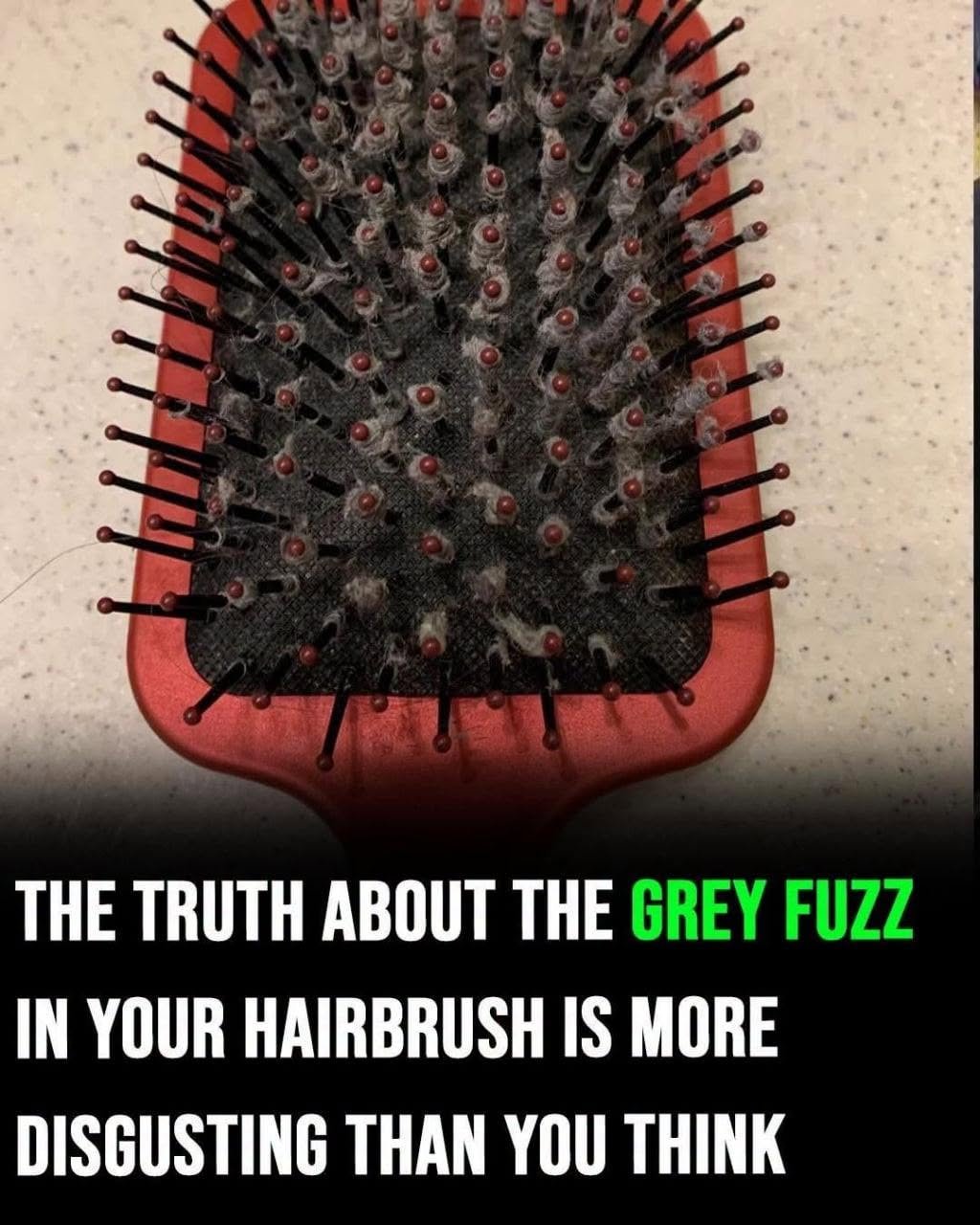
When sensationalized lifestyle articles warn that that grey fuzz in your hairbrush is more disgusting than you think, they love to lean into shock value about microscopic germs to grab your attention.
While the headline is dramatic, dermatologists and hygiene experts do agree on one thing: that accumulated greyish-white fuzz is worth paying attention to, not out of panic, but for the sake of your scalp and hair health.
What Actually Makes Up That “Grey Fuzz”?
That stubborn buildup at the base of your bristles isn’t some mysterious biohazard; it is a routine collection of everyday debris:
-
Shed Sebum and Scalp Oils: Your scalp naturally produces oils (sebum) to keep hair moisturized. When you brush, those oils transfer onto the bristles and trap microscopic dust particles in the air.
-
Dead Skin Cells: Just like the rest of your skin, your scalp constantly sheds microscopic dead skin cells, which get combed out and trapped in the hair mesh.
-
Product Residue: Traces of dry shampoo, hairsprays, conditioners, and styling serums accumulate on the brush over time, acting like a magnet for lint from clothing, towels, and dust.
-
Microscopic Flora: Because it’s a warm, dark, and organic environment, neglected brushes can harbor normal skin bacteria and yeast (like Malassezia) that feed on trapped oils.
Why It Matters for Your Hair and Scalp
If left uncleaned for months, a heavily congested brush can negatively impact your daily routine:
-
Reintroducing Dirt: Every time you run a dirty brush through freshly washed hair, you are essentially redistributing accumulated oils, old product, and dust back onto your clean strands, making hair look limp or greasy faster.
-
Scalp Irritation: Heavy bacterial or yeast buildup transferred back to a sensitive scalp can sometimes trigger mild irritation, itching, or dandruff flare-ups.
How to Keep Your Hairbrush Pristine
Maintaining a clean brush takes just a few minutes every couple of weeks:
-
Remove Hair Weekly: Pull out loose strands of hair from the bristles after every few uses (a wide-tooth comb or a small pen can help lift it out easily).
-
Deep Clean Monthly: Fill a bowl with warm water and a few drops of clarifying shampoo or mild dish soap. Submerge plastic or rubber-based brushes (keep wooden handles out of standing water) and scrub gently around the base with an old toothbrush. Rinse thoroughly and let them air dry completely face down.
Are you looking into home maintenance tips, or exploring routines to support healthy hair and scalp care?
