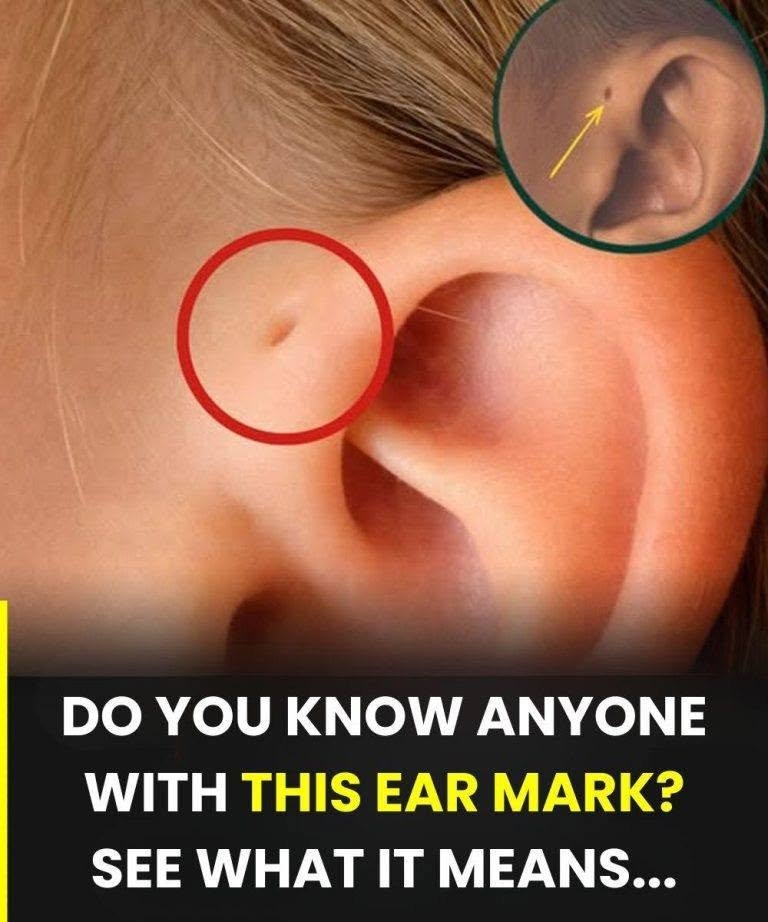
When people notice a specific diagonal line or wrinkle cutting across the flesh of the earlobe, it is medically known as Frank’s Sign (or a diagonal earlobe crease).
Named after Dr. Sander T. Frank, who first described it in 1973, this distinct crease runs at an angle from the tragus (the small cartilage projection near the ear canal) down to the outer edge of the earlobe.
What Does Frank’s Sign Mean?
For decades, medical researchers have studied a statistical association between this diagonal ear crease and an increased risk of cardiovascular disease, particularly coronary artery disease and cerebrovascular disease (stroke).
While it can simply appear as part of the normal aging process and loss of skin elasticity, clinical studies have noted that the crease can sometimes reflect generalized microvascular changes—meaning the tiny blood vessels supplying the earlobe and the heart may share similar structural shifts, such as loss of elastic fibers or arteriosclerosis.
Important Clinical Context
-
It is not a diagnostic tool on its own: Having Frank’s sign does not mean you definitively have heart disease, nor does it guarantee that you will experience a cardiovascular event. Conversely, many people with heart disease do not have an earlobe crease.
-
Age and Risk Factors Matter: Because skin changes and heart issues both become more common with age, the crease is naturally more frequent in older adults. However, when a deep, distinct crease appears in younger adults (under 60), clinicians sometimes view it as a helpful visual prompt to look closer at traditional cardiovascular risk factors.
Evidence-Based Next Steps
If you or a loved one has noticed Frank’s sign, there is no need to panic. Instead, treat it as a gentle reminder to focus on proactive heart health:
-
Review Standard Cardiovascular Risks: Check and manage key health markers with your physician, such as blood pressure, lipid panels (cholesterol), blood sugar (diabetes screening), and lifestyle habits like smoking cessation.
-
Maintain Regular Preventative Care: Routine checkups with your primary care provider allow for a comprehensive evaluation of your overall heart health rather than relying on any single physical marker.
