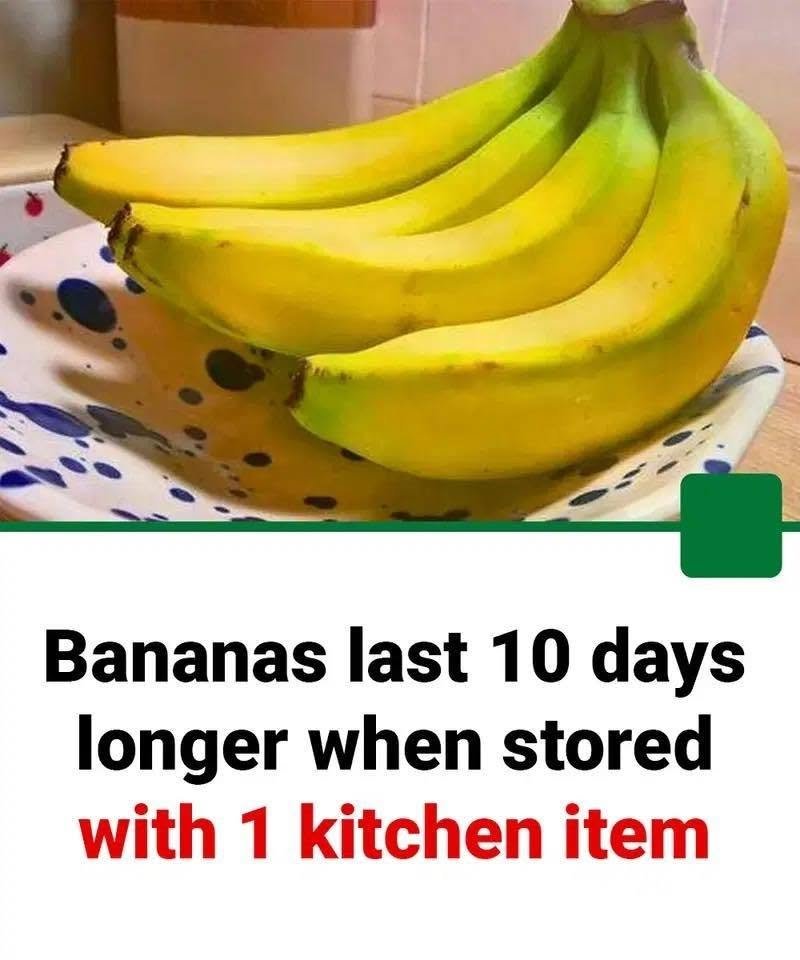
When sensationalized food and kitchen-hack clickbait flashes headlines like “Bananas Last 10 Days Longer When Stored with One Kitchen Item Instead of in a Fruit Bowl,” they love to frame basic produce storage like a magic trick. They want you to believe there is a secret household gadget or a bizarre trick that suspends the laws of botany.
From a post-harvest horticultural and food science perspective, there is no magical secret item, but there is a fascinating biological reason why bananas ripen so quickly—and how understanding plant physiology can dramatically extend their shelf life.
The Science Behind Banana Ripening
Why do bananas ripen faster than almost any other fruit on your counter?
-
The Ethylene Gas Factor: Bananas are climacteric fruits, meaning they naturally produce and release ethylene gas as a plant hormone that triggers and accelerates the ripening process.
-
The Stems Are the Source: Ethylene gas is produced and emitted primarily from the crown (the stem) where the bananas were cut from the bunch.
-
The Trap of the Fruit Bowl: When bananas sit piled together in a standard fruit bowl, they trap ethylene gas among themselves and expose nearby fruits (like avocados, apples, and tomatoes) to the gas, causing everything to over-ripen and spoil prematurely.
The “Kitchen Item” Reality (How to Store Bananas Properly)
When life-hack articles talk about the “one kitchen item” that makes bananas last longer, they are usually referring to one of two very simple, science-backed household tools: plastic wrap (or aluminum foil) and a kitchen hook or hanger.
-
1. Wrapping the Crown:
-
How it works: Wrapping the stem/crown tightly with plastic wrap or foil traps or slows down the escape of ethylene gas, effectively putting the ripening process “to sleep” for a few extra days.
-
-
2. Hanging the Bunch:
-
How it works: Suspending bananas from a fruit hook mimics how they hang on a tree, improving air circulation around the crown, preventing bruising from sitting on a flat surface, and dispersing ethylene gas into the open air rather than trapping it against the fruit.
-
Evidence-Based Produce Storage Tips
If you want to keep your bananas fresh, firm, and delicious for as long as possible without falling for exaggerated claims, apply these practical culinary strategies:
-
Separate Your Bananas: If you bought a large bunch, break them apart. Separating individual bananas slows down the localized buildup of ethylene gas.
-
Manage Refrigeration: Bananas are tropical fruit; storing them in a cold refrigerator will cause their peels to turn black due to enzyme breakdown (polyphenol oxidase), though the fruit inside remains edible and sweet. Use the fridge only when they are fully ripe if you plan to bake with them later.
-
Store Away from Ethylene-Sensitive Produce: Keep your ripening bananas away from leafy greens, berries, and broccoli, which wilt and spoil quickly when exposed to ethylene gas.
